
Key takeaways
- Find the best desk chair mat for a home office, plus five honest desk companions that keep the roll zone, lighting, and daily setup working smoothly.
A chair mat looks like a desk accessory, but it is really a floor decision. The right mat depends on what is under your chair, how far you actually roll during a workday, and whether your casters help or hurt the surface beneath them. Get the floor type wrong and even a well-made mat will crack, curl, or slide; get it right and the chair glides quietly, the floor survives, and rolling stops being a small daily fight.
To be plain about what follows: none of the five picks below is itself a chair mat. They are companions around the desk the chair rolls at — small, honest tools that handle the keys, lighting, mounting, carrying, and hydration side of a home office. The guidance first explains how to choose the mat itself, because that purchase protects your floor; then each companion is described for what it genuinely does, with its limits stated up front.
As an Amazon Associate, we earn from qualifying purchases.
How to Choose a Desk Chair Mat
Match the Mat to Your Floor Type First
Floor type decides everything else. On hard floors — hardwood, laminate, tile, or vinyl — a mat can be thin and flexible; its jobs are grip, scratch protection, and quieter rolling, and a smooth underside keeps it flat and in place without adhesive. On carpet the rules change completely. A carpet mat needs real thickness and stiffness matched to the pile underneath it. Low-pile carpet tolerates a thinner mat, but plush carpet compresses under the chair, and a mat that is too thin flexes at every caster point — the flexing that causes the classic failure of fine cracks radiating from where the wheels rest, followed by a split mat within a season or two. If your carpet is deep, choose a mat rated for medium or high pile and accept the extra stiffness — a rigid mat that feels overbuilt on day one is the one still intact in year three. When in doubt, press a thumb into your carpet beside the desk; the deeper it sinks, the stiffer the mat above it needs to be.
Size the Mat for the Whole Roll Zone
Most mats are too small for how far people actually roll. Buyers measure the footprint of the chair sitting still, then spend their days rolling backward to a printer, sideways to a shelf, and forward again — crossing the mat’s edge dozens of times, each crossing a small jolt that works the mat loose on carpet. Measure your real roll zone instead: sit in the chair, roll to your farthest regular reach in each direction, and note where the casters end up. The mat should extend several inches beyond that zone on every side you roll toward.
Beveled Edges Decide the Daily Feel
The edge profile sounds like a detail until you live with it. A beveled or ramped edge lets casters climb onto the mat smoothly from the floor, so transitions feel like nothing. A square-cut edge catches wheels, especially smaller hard casters, producing a clunk and tug that makes people avoid rolling. On hard floors a square edge also becomes a lip that catches feet and vacuum cleaners. If a listing does not mention the edge treatment, assume a plain cut edge and weigh that against how often you roll on and off the mat during the day.
Consider Your Casters Before Blaming the Floor
Chair casters are half the equation. Standard hard nylon wheels are fine on carpet but act like small chisels on hardwood, which is exactly the damage a hard-floor mat prevents. Soft-wheel or rollerblade-style casters, made with a polyurethane tread, roll quietly on hard floors and spread the load enough that some hard-floor users find a mat unnecessary — the wheels become the floor protection. On carpet, though, soft wheels sink and drag, and no wheel swap replaces a mat. So the honest fork is this: hard floor plus soft casters may let you skip the mat; carpet almost always needs one, whatever wheels you run.
Know What Happens on Carpet With No Mat
Skipping the mat on carpet has predictable costs. Casters tear and crush carpet fibers at the resting points, matting the pile into permanent dents. The chair also fights every move, because the wheels sit in little wells of compressed carpet, straining the chair base and your legs as you push. A mat spreads the load across its whole surface, keeps the pile upright, and turns rolling back into a glide.
SANY DAYO Jewelry Organizer With 30 Hooks

The mat protects the floor; this organizer protects the desk surface from the small clutter that migrates across it. The SANY DAYO is, honestly stated, a jewelry organizer: a hanging rail with thirty small hooks. Used beside a desk or by the door of a home office, it earns its place holding the light items that otherwise scatter — keys, lanyards, ID badges, charging cables, and earbuds cases. Hung where you enter, it gives those things a single home, so the desktop keeps only what the work needs.
Keep expectations matched to its build: the hooks are sized and spaced for jewelry and similarly light goods, so treat it as light-duty only. It should never be asked to hold consoles, drives, power bricks, or heavy tools — those belong on shelves and in drawers. Within its honest lane, it is a tidy answer to the pile-by-the-keyboard problem.
Specs
- Format: hanging organizer rail with 30 hooks
- Intended use: jewelry storage, repurposed for light desk-side items
- Good fits: keys, lanyards, badges, cables, small accessories
- Load character: light-duty only
- Placement: wall or door side near the desk
HEKEE Dusk-to-Dawn Light Bulbs, A19

Office lighting usually means a desk lamp, but the room’s ambient light matters too, especially in a home office that doubles as living space after hours. These HEKEE bulbs are plain automatic sensor bulbs: a built-in light sensor turns the bulb on at dusk and off at dawn, with no setup beyond screwing it in. They suit a floor lamp or ceiling fixture in or near the office, keeping the room gently lit in the evening without anyone remembering a switch.
Be clear about what they are not. They are explicitly not smart bulbs — no app, voice control, scheduling, or dimming scenes. They are also not task lighting; a sensor bulb in a room fixture will not replace the focused lamp you read and work by. Two practical notes: in a windowless room, the sensor may read the space as permanent dusk and simply stay on, and before using any bulb in a fully enclosed fixture, check it is rated for enclosed use, since trapped heat shortens bulb life.
Specs
- Format: A19 bulbs with built-in dusk-to-dawn light sensor
- Behavior: on at dusk, off at dawn, automatically
- Controls: none — no app, no voice, no dimmer scheduling
- Role: ambient room light, not task lighting
- Note: may stay on in windowless rooms; verify enclosed-fixture suitability
ULANZI Super Clamp

A clamp is the kind of companion that solves one specific problem: attaching a small accessory to a desk edge, shelf, or pole without drilling. The ULANZI super clamp grips a surface and provides a mounting point for a lightweight accessory such as a small light panel, a phone holder arm, or a webcam arm — useful when desk space is short and every item needs a deliberate home.
The honest framing matters: this is a mount only. It includes no light, no phone, and no camera — whatever it holds is a separate product you supply. Never clamp it onto a monitor screen; screens are not load-bearing and the pressure can damage the panel. And on finished wood or painted surfaces, pad the jaws with a cloth or the included pad so the grip does not leave marks when you move it.
Specs
- Format: heavy-duty clamp mount
- Includes: clamp only — no light, phone, or camera
- Good fits: desk edges, shelves, poles, stands
- Use case: mounting small, lightweight accessories
- Cautions: never clamp to a monitor screen; pad jaws on finished surfaces
tomtoc Laptop Case

A home office chair rolls between desk work and the rest of the house, and the laptop often travels with you — to the kitchen table, the couch, or a bag for the commute. The tomtoc case is a padded soft case built for that daily carrying, with cushioning against bumps, a lining that will not scuff the lid, and a profile slim enough for a tote or backpack.
Its limits are simple and worth stating. It is a padded soft case, not a hard shell, so it protects against everyday bumps and scratches rather than drops onto concrete or weight stacked on top. It is also not waterproof, so rain means keeping it inside a bag. Fit is the one real decision: measure your laptop and compare against the case’s internal dimensions before buying, because an oversized case lets the machine slide and an undersized one will not close.
Specs
- Format: padded soft laptop case
- Protection: everyday bumps and scratches
- Shell type: soft — not a hard shell
- Water resistance: not waterproof
- Fit note: compare laptop size with internal dimensions before buying
Hi-Lyte Electrolyte Drops
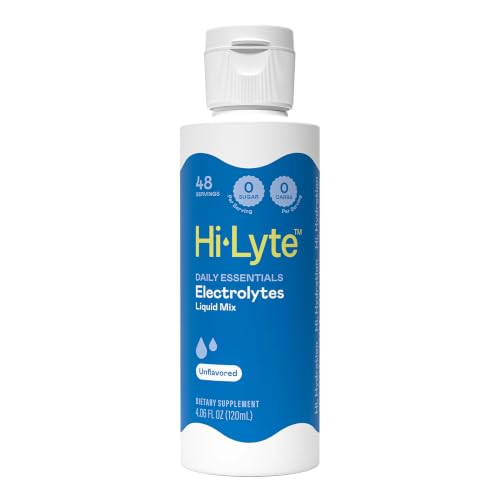
Long desk days have a quiet failure mode: hours pass, the water glass sits untouched, and the afternoon slump arrives. Hi-Lyte drops are a simple way to add electrolytes and trace minerals to a glass or bottle of water, which some people find helps them keep drinking steadily through a long sitting day, especially in a warm room or after a lunchtime workout.
The claims here stay modest. These drops are not a medicine, not an energy product, and not a treatment for anything; they will not fix a bad chair, a poor sleep schedule, or genuine dehydration symptoms. Plain water is fine for most people most of the time. If you use the drops, follow the label directions for dilution, and if you have a medical condition — particularly anything involving kidneys, blood pressure, or fluid balance — ask a clinician before making electrolyte drinks a daily habit.
Specs
- Format: liquid electrolyte drops added to water
- Use: long desk days, warm rooms, post-workout hydration
- Claims: modest — a hydration habit aid only
- Not: a medicine, energy product, or treatment
- Guidance: follow label directions; consult a clinician if you have a medical condition
FAQ
Do I need a chair mat on hardwood if I switch to soft casters?
Possibly not. Soft polyurethane casters spread the load and are gentle on hard floors, so many hardwood users roll comfortably without a mat. A mat still adds scratch insurance against grit trapped under wheels, so it becomes a preference rather than a necessity.
Why did my carpet chair mat crack so quickly?
The usual cause is a mismatch: a thin, flexible mat over plush carpet flexes at every caster point until it fatigues and splits. Deep pile needs a thicker, stiffer mat rated for that pile height. Replacing like with like repeats the failure, so step up in stiffness.
How big should my chair mat be?
Big enough to cover your whole roll zone, not just the chair at rest. Roll to your farthest regular reaches — printer, shelf, cabinets — and size the mat to extend a few inches beyond the casters at each extreme. Most disappointment with chair mats is disappointment with a mat that was one size too small.
Can one of these five picks replace buying a chair mat?
No. Each pick handles a different job around the desk — small-item storage, ambient light, mounting, carrying, and hydration. Floor protection only comes from the mat itself, matched to your floor type. Think of the picks as the supporting cast around the mat.
Final Verdict
Choose the mat by floor first and feelings second: thin and grippy for hard floors, thick and stiff for carpet, sized for the full roll zone, with beveled edges if you cross them all day. Then let the companions do their smaller jobs honestly — the SANY DAYO rail clearing light clutter, the HEKEE bulbs handling evening ambient light without any smart-home fuss, the ULANZI clamp mounting small gear without holes, the tomtoc case carrying the laptop safely around the house, and the Hi-Lyte drops supporting a plain, sensible hydration habit. None of them is the mat, and the mat is not any of them — together they make the corner where you work a calmer place to spend the day.
Product and ASIN Reference
| Product | ASIN |
|---|---|
| SANY DAYO jewelry organizer, 30 hooks | B07QFZSVQW |
| HEKEE dusk-to-dawn light bulbs, A19 | B07HGZMYZ4 |
| ULANZI super clamp | B09C882D4M |
| tomtoc laptop case | B073TVX735 |
| Hi-Lyte electrolyte drops | B01MXDAHIB |
FAQ
Do I need a chair mat on hardwood if I switch to soft casters?
Why did my carpet chair mat crack so quickly?
How big should my chair mat be?
Can one of these five picks replace buying a chair mat?
More from Amazon
Programs that pair well with the guide above. Offers and eligibility are set by Amazon and may change.
Free shipping on eligible items, Prime Video and more. Eligible new members can start with a free trial.
Start a Prime free trialAudiobooks and podcasts to listen to on the go. Eligible new members can start with a free trial.
Try Audible freeAd-free music streaming. Eligible new subscribers can start with a free trial.
Try Music Unlimited freeA free business account with business pricing and bulk-buying tools for work, shop or home office.
Create a business accountAs an Amazon Associate we earn from qualifying purchases.










Write Your Review
No reviews yet. Be the first to share your experience!