
Key takeaways
- Compare the best yoga block options for desk stretching, plus five desk corner companions that support calmer posture breaks through long workdays.
A yoga block is one of the simplest tools a desk worker can own. It is not fitness equipment theater, and it does not ask for an hour-long routine, special clothing, or a studio membership. It is a firm, lightweight prop that brings the floor a little closer, supports a limb at a comfortable height, and turns a five-minute posture break into something restorative. For someone seated most of the day, that small change in geometry matters: a supported forward fold, a gentle chest opener, or a seated stretch with the hands resting on a block instead of straining toward the floor all become easier to do and to repeat daily.
This guide explains how to choose the best yoga block for desk stretching — materials, sizing, and honest limits — and rounds up five companions for the desk corner where the stretching happens. To be plain about it: none of the five picks below is itself a yoga block. They are companions around the desk corner — small organizers, lighting, a mount, a laptop case, and a hydration aid that make the corner a calmer, tidier place. The block advice comes first, because choosing the block well matters more than any accessory around it.
As an Amazon Associate, we earn from qualifying purchases.
How to Choose a Yoga Block for Desk Stretching
Start With the Material: Foam, Cork, or Foam-Core
The first fork is material, really a fork between support and stability. Foam blocks are light, inexpensive, and forgiving under the body. That give makes them comfortable for supported stretches, where the block sits under the hips, back, or head and a little softness is welcome. Cork blocks are noticeably heavier and denser. They stay planted under load, grip hard floors, and feel steadier when weight presses through the hands. Foam-core and denser hybrid blocks sit between the two, trading a bit of softness for a firmer feel. For pure desk-side stretching, foam serves most people well; anyone pressing real weight through the block, or stretching on smooth flooring where a light block skates, should lean toward cork.
Buy Two Blocks, Not One
A single block is the common starter purchase, and it is the common regret. Most desk-worker stretches are symmetrical: both hands on blocks in a forward fold, a block under each knee, one under each shoulder blade. With one block, half the stretch is supported and half is improvised, and the body twists subtly toward the unsupported side. Two matching blocks keep the posture even and open up far more positions. If the budget forces a choice, two basic blocks usually serve a desk stretching habit better than one premium block.
Understand the Three Heights
A yoga block has no dials, straps, or moving parts. Its adjustment system is rotation. Laid flat, it offers its lowest height; stood on its long edge, a medium height; stood on end, its tallest height. Those three heights are how a stretch is scaled: the tall setting brings support up to stiff hips or tight hamstrings, and the flat setting lowers the demand as flexibility improves. Standard block dimensions work for most adults, but larger hands and broader shoulders can justify an oversized block, and smaller frames sometimes find a slim block easier to grip. The point is to use the three heights deliberately instead of treating the block as a single fixed prop.
Keep the Use Honest
A block supports gentle stretches and posture breaks. It does not fix a bad chair, correct a hunched monitor setup, or replace movement through the day. It is also not a standing platform, a step stool, or a seat; foam in particular can compress or tip under full body weight. Treat it as a prop for supported positions on the floor or against a chair, and it will do its job for years. The other rule is non-negotiable: pain during a stretch means stop. A mild sense of lengthening is normal; sharp, shooting, or joint pain is a signal, not a challenge. Persistent back, neck, or joint pain is a conversation for a clinician, not a problem another prop purchase can solve.
Store It Where You Will Use It
The best block is the one within arm’s reach when the afternoon slump arrives. Blocks stored in a closet, garage, or car trunk quietly stop being used. Beside the desk is the right home: stacked in the corner or standing next to the chair. Both foam and cork tolerate normal room conditions, wipe clean with a damp cloth, and ask for nothing else. A prop that looks at home in the corner stays in the corner, and a prop that stays in the corner gets used.
SANY DAYO Jewelry Organizer With 30 Hooks

The corner where stretching happens tends to attract small clutter: keys, a lanyard, charging cables, earbuds, a watch. This wall-mounted organizer gives those small items a fixed home. It is, plainly, a jewelry organizer with thirty hooks, repurposed here as a light-duty hanging rail for the desk corner. Used within its limits, it keeps the floor and desk surface clear, which matters when the space beside the desk doubles as stretching space.
The hooks suit necklaces, bracelets, keys, lanyards, and similar light items. It should never be asked to hold game consoles, hard drives, power bricks, or heavy tools; those belong on shelves and in drawers. Mounted near the door or desk edge, it turns the daily scatter of small essentials into a grab-and-go row.
Specs
- Thirty individual hooks on a single rail
- Designed for jewelry and small accessories
- Wall-mounted format for entryways and desk corners
- Suited to light items only
The value is indirect but real: clear floor, clear desk, fewer small things underfoot.
HEKEE Dusk-to-Dawn Light Bulbs, A19

Stretch breaks often happen at the edges of the day, when the room’s light sets the mood for slowing down. These A19 bulbs carry a built-in light sensor that switches them on at dusk and off at dawn. There is nothing to configure, which suits a corner lamp that should simply be on when the room darkens.
The limits deserve equal clarity. These are plain automatic sensor bulbs. They are not smart bulbs: there is no app, no voice control, no scheduling, and no color adjustment. They are also not task lighting; a proper lamp aimed at the work surface is still needed for reading and screen work. In a windowless room, the sensor may read permanent dusk and keep the bulb on, so they suit rooms with natural light best. Before fitting them in a covered fixture, check that the fixture and bulb are rated for enclosed use.
Specs
- Standard A19 bulb shape with a built-in dusk-to-dawn sensor
- Automatic on at dusk, off at dawn
- No app, hub, or voice control
- Best in fixtures exposed to natural daylight
As ambient evening light, they do one simple job reliably and ask for no attention in return.
ULANZI Super Clamp

A clamp earns its place in a stretching corner as a flexible mount for small gear: a phone propped for following a stretching routine, a small camera, or another lightweight accessory at a particular angle. This super clamp grips desks, shelves, and poles, and accepts common small accessories.
First, the clamp is a mount only; it includes no light, no phone, and no camera, so anything attached to it must be owned already or bought separately. Second, placement matters: never clamp it onto a monitor screen, which can crack under point pressure. Clamp to a desk edge, shelf, or stand instead, and pad the jaws when gripping finished or painted surfaces to avoid marking the furniture.
Specs
- Heavy-duty clamp mount for desks, shelves, and poles
- Standard mounting threads for small accessories
- Mount only; no light, phone, or camera included
- Jaws should be padded on finished surfaces
On the right surface with a light load, it keeps a phone at eye level during a guided stretch break.
tomtoc Laptop Case

A stretching corner beside a desk works better when the laptop has a place to go while the floor space is in use. This padded case gives the machine a protected slot on a shelf or in a drawer, clearing the desk and the floor. It also covers the commute, keeping the laptop cushioned against everyday knocks.
It is a padded soft case, not a hard shell, so it protects against bumps and scratches rather than drops or crushing weight. It is not waterproof; a spill or a rainy walk calls for more protection than this offers. Fit is the buyer’s responsibility: check the case’s internal dimensions against the laptop’s actual measurements, including thicker gaming or workstation models, rather than the screen size on the box.
Specs
- Padded soft case for laptops
- Protects against bumps and scratches
- Not a hard shell and not waterproof
- Fit depends on internal dimensions; measure before ordering
It keeps the machine safe and out of the way while the blocks are on the floor.
Hi-Lyte Electrolyte Drops
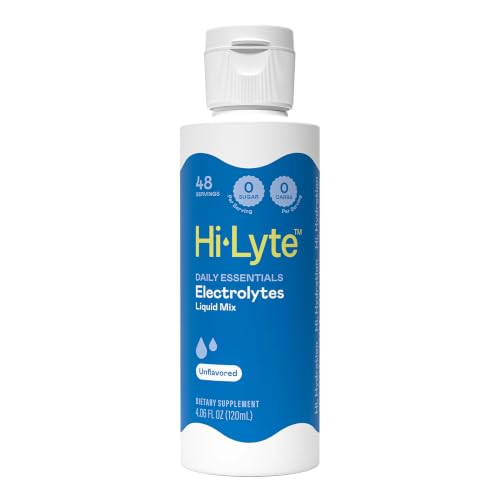
Long desk days often end with the vague flatness that comes from drinking too little, and stretching breaks pair naturally with a glass of water. These drops add electrolytes to plain water, which can make a hydration habit easier to keep during long seated work.
This is a way to add electrolytes to water; it is not a medicine, not an energy product, and not a treatment for anything. Plain water is fine for most people, most of the time, and these drops are an optional extra rather than a necessity. Follow the label directions, and anyone with a medical condition, including conditions affecting fluid or sodium intake, should ask a clinician before using electrolyte supplements regularly.
Specs
- Liquid drops added to water
- Designed for everyday hydration support
- Follow label directions for use
- Not a medicine or treatment product
Kept beside the desk, the drops are a small nudge toward the simplest posture-break habit of all: standing up, stretching, and drinking a glass of water.
FAQ
Is foam or cork better for a beginner?
Foam is the friendlier starting point for most desk workers. It is lighter, softer under the back and hips, and cheaper to buy in a pair. Cork suits people who press significant weight through their hands or stretch on smooth floors where foam slides. Either material works; comfort and stability in the positions actually used should decide.
How often should a desk worker use a yoga block?
Short and frequent beats long and rare. A few minutes of supported stretching several times across a workday does more for stiffness than a single long session once a week. The block’s job is to make those short breaks comfortable enough to repeat.
Can a yoga block help with back pain?
A block can make gentle, supported stretches more comfortable, which many people find eases stiffness from sitting. It is not a treatment for back pain. Pain that persists, worsens, radiates, or follows an injury needs a clinician’s assessment rather than a new prop.
What size block should be bought?
Standard blocks suit most adults and offer the three heights by rotation. People with larger hands or broader shoulders may prefer an oversized block, while smaller frames sometimes find a slim block easier to handle. Buying two keeps stretches symmetrical.
Final Verdict
Choosing the best yoga block for desk stretching comes down to a few decisions: foam for softness or cork for stability, two blocks rather than one, the three heights used deliberately, and a storage spot beside the desk rather than in a closet. Kept honest — a prop for gentle supported stretches, never a platform, never a cure — a block earns its corner. The five companions support that corner in their own ways: the SANY DAYO organizer clears small clutter, the HEKEE bulbs handle evening light, the ULANZI clamp mounts a phone for guided routines, the tomtoc case gives the laptop a safe home, and the Hi-Lyte drops encourage a water break with each stretch. None of them is a yoga block; together with a well-chosen pair of blocks, they make the desk corner a place where posture breaks actually happen.
Product and ASIN Reference
| Product | ASIN |
|---|---|
| SANY DAYO jewelry organizer, 30 hooks | B07QFZSVQW |
| HEKEE dusk-to-dawn light bulbs, A19 | B07HGZMYZ4 |
| ULANZI super clamp | B09C882D4M |
| tomtoc laptop case | B073TVX735 |
| Hi-Lyte electrolyte drops | B01MXDAHIB |
FAQ
Is foam or cork better for a beginner?
How often should a desk worker use a yoga block?
Can a yoga block help with back pain?
What size block should be bought?
More from Amazon
Programs that pair well with the guide above. Offers and eligibility are set by Amazon and may change.
Free shipping on eligible items, Prime Video and more. Eligible new members can start with a free trial.
Start a Prime free trialAudiobooks and podcasts to listen to on the go. Eligible new members can start with a free trial.
Try Audible freeAd-free music streaming. Eligible new subscribers can start with a free trial.
Try Music Unlimited freeA free business account with business pricing and bulk-buying tools for work, shop or home office.
Create a business accountAs an Amazon Associate we earn from qualifying purchases.










Write Your Review
No reviews yet. Be the first to share your experience!