
Key takeaways
- Compare Cat6 and Cat6a ethernet cables for a home desk, with honest notes on length, pure copper builds, flat versus round designs, and wired reliability.
Most home offices run on Wi-Fi because it is convenient, not because it is the most reliable option. A video call that freezes mid-sentence, a file upload that stalls at the worst moment, or a cloud document that lags on every save usually traces back to a wireless link fighting walls, distance, and every other device in the house. A single ethernet cable from the router to the desk removes most of that uncertainty in one step. It is one of the cheapest reliability upgrades a home office can make, and it asks for nothing more than a free port and a few minutes of routing.
This guide explains how to choose the right cable for a desk run, from category ratings to conductor quality and length. One point of honesty up front: none of the 5 picks below is itself an ethernet cable. They are companions around the wired desk — small organizers, lighting, a clamp, a case, and a hydration staple that make a hardwired workspace tidier and easier to spend long days at. The cable advice comes first; the picks support the setup it creates.
As an Amazon Associate, we earn from qualifying purchases.
How to Choose an Ethernet Cable for a Home Desk
Start with the category, and ignore the marketing ladder
For nearly every home desk, Cat6 is the sensible default. It carries gigabit speeds across any distance a house will ask of it, and it can handle short 10-gigabit runs between nearby devices. Cat6a extends that faster performance over longer distances and adds better shielding, which suits long runs through walls or a home with a genuinely fast local network. Cat7 and Cat8 cables are surrounded by heavy marketing, but most home routers, switches, and computers cannot use anything beyond what Cat6a already delivers. The ports on your equipment cap the speed long before the cable does, so paying for a higher category rarely buys real performance at a desk.
Buy the length you need, plus a little slack
Measure the actual route the cable will take — along the baseboard, around the door frame, up the desk leg — rather than the straight-line distance across the room. Then add a modest amount of slack so the cable can curve gently and reach the port without tension. Excess cable is its own problem: coils of spare cable behind a desk collect dust, tangle with power cords, and make every later change harder. A cable that is too short is worse in a different way, because a tight run pulls sideways on the port every time the desk shifts or the laptop moves, and ports and plugs wear out under that stress. A cable that fits the route with a little to spare is the goal.
Check what the conductors are made of
Fixed runs should use solid pure copper conductors. Copper carries the signal cleanly, handles tight installations well, and ages slowly. The cheaper substitute is copper-clad aluminum, often shortened to CCA, which is an aluminum core with a thin copper skin. CCA cables run hotter, are more brittle at the connectors, and tend to fail earlier, especially on longer runs. Reputable listings state “pure copper” or “bare copper” plainly. If a listing is vague about conductor material while advertising a suspiciously capable cable, that vagueness is the answer. For the short patch cables between a wall jack and a laptop, stranded copper is fine and more flexible; for anything permanent, solid copper is the standard to hold out for.
Flat versus round is a routing decision
Flat cables have a genuine use: they slide under carpets, hug baseboards, and pass through tight gaps where a round cable would bulge. In a rented home office where drilling and stapling are off the table, a flat cable can be the difference between a wired desk and no wired desk at all. The trade-off is durability. Flat cables kink more easily, and repeated sharp bends age them faster than a round cable. Round cable is the durable default for most routes — tougher jacket, gentler bends, longer life. Choose flat when the route demands it, not as the automatic first pick.
Shielding matters less at a desk than in a wall
Shielded cable protects the signal where interference is a real risk: long runs bundled with power lines, runs through walls and ceilings, or spaces full of electrical equipment. On a typical desk run of a few meters, away from heavy power cabling, unshielded Cat6 performs perfectly well. Shielding also only works as intended when the rest of the chain supports it. So treat shielding as a solution to a specific routing problem rather than a general upgrade, and spend attention on category, conductors, and length first.
Know what a wired connection can and cannot fix
Ethernet removes the two weaknesses Wi-Fi cannot escape: jitter and dropouts. A wired desk gets the same steady latency at 9 a.m. and 7 p.m., unaffected by a neighbor’s network or a microwave two rooms away. That steadiness is what video calls, remote desktops, and large uploads actually feel. But a cable is not magic. It cannot deliver more speed than the internet plan provides, and it cannot rescue a failing or overloaded router. If the connection is unreliable everywhere in the house, on every device, the router is the suspect — wire the desk anyway, because it rules out the wireless link and makes the real problem easier to find.
SANY DAYO Jewelry Organizer, 30 Hooks

A wired desk quickly grows a small crowd of light items that need a home: spare patch cables, keys, lanyards, a badge, the short charging lead that always goes missing. The SANY DAYO organizer is a rail with 30 hooks that mounts by the door or at the desk edge and gives those items a fixed place to hang. It is a jewelry organizer by design, and it should be framed that way — a light-duty hanging rail for small things, nothing more. It will not hold consoles, drives, power bricks, or heavy tools, and it should never be asked to. Within its honest limits, it keeps the desk surface clear and the spare cable you need hanging in sight instead of buried in a drawer.
Specs
- 30 hooks on a single hanging rail
- Designed for jewelry and other light, hangable items
- Suited to keys, lanyards, badges, and spare patch cables
- Light-duty use only; not a shelf or heavy storage
HEKEE Dusk-to-Dawn Light Bulbs, A19

The HEKEE bulbs are plain automatic sensor bulbs: a built-in light sensor turns them on at dusk and off at dawn, with no app, no hub, and no schedule to configure. That simplicity is the point. They are explicitly not smart bulbs — there is no voice control and no remote dimming — and they are not task lighting for close desk work. Fitted in a hallway, porch, or room fixture near the office, they simply keep the space lit in the evening without anyone thinking about a switch. Two practical notes: in a windowless room, a sensor bulb may stay on because it never sees daylight, and before using any bulb in an enclosed fixture, check that the fixture is rated for it.
Specs
- A19 bulb with built-in dusk-to-dawn sensor
- Turns on at dusk and off at dawn automatically
- No app, hub, or voice control; not a smart bulb
- Ambient lighting only; not a substitute for task lighting
ULANZI Super Clamp

The ULANZI super clamp is a mounting tool and only a mounting tool: it includes no light, no phone, and no camera. What it provides is a strong jaw that grips a desk edge, shelf, or pole and offers a mounting point for an accessory you supply yourself. Around a wired desk, that can mean holding a small accessory off the work surface and keeping the area around the ethernet run tidy. Use it with respect for its limits. Never clamp it onto a monitor screen, and pad the jaws when gripping finished wood or any surface that could be marked. Treated as honest hardware rather than a gadget, it earns its place in a desk setup that values clear surfaces.
Specs
- Clamp-style mount for desks, shelves, and poles
- Provides a mounting point only; no light, phone, or camera included
- Jaw grip suited to small accessories
- Pad the jaws on finished surfaces; never clamp onto a screen
tomtoc Laptop Case

A hardwired desk usually means the laptop has a home base, and the tomtoc case protects it on the trips away from that base. It is a padded soft case, designed to cushion a laptop against the knocks of a commute or a day bag. It is not a hard shell, so it will not stand in for armor against crushing weight or serious drops, and it is not waterproof, so rain still calls for an umbrella or an inner bag. The one check that matters before buying: compare the case’s internal dimensions against your specific laptop, including its thickness, because a case that is a little too small is a case that will not close. Measured properly, it is a sound everyday companion for a desk-based machine that travels occasionally.
Specs
- Padded soft case for everyday laptop carrying
- Not a hard shell; limited protection against crushing or drops
- Not waterproof
- Check internal dimensions against your laptop before buying
Hi-Lyte Electrolyte Drops
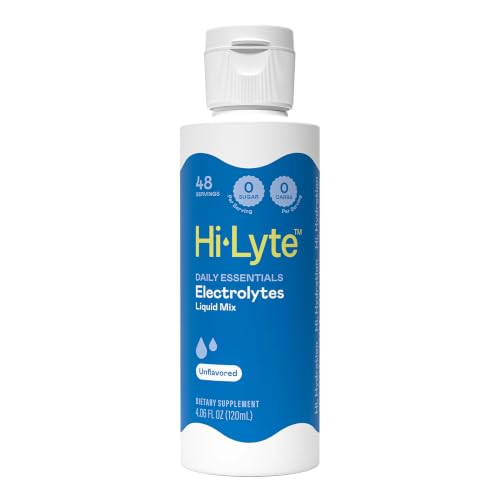
Long desk days have a quiet failure mode: plenty of coffee, not enough water. Hi-Lyte drops are a simple way to add electrolytes to a glass or bottle of water, which some people find makes staying hydrated through a long work session easier. The claims should stay modest. These drops are not a medicine, not an energy product, and not a treatment for anything. Plain water is fine for most people, most of the time, and nothing in this guide suggests otherwise. If you use the drops, follow the label directions, and if you have a medical condition or take medication that affects hydration or electrolytes, ask a clinician before making them a habit.
Specs
- Electrolyte drops added to water
- Use according to label directions
- Not a medicine, energy, or treatment product
- Plain water remains fine for most people
FAQ
Is Cat6 enough, or should a home desk buy Cat8?
Cat6 is enough for the overwhelming majority of home desks. It handles gigabit speeds at any household distance and short 10-gigabit runs. Cat8’s headline speeds require equipment most homes do not own, and the router and switch ports cap performance first. Cat6a is the reasonable step up for long or in-wall runs; beyond that, the extra category is mostly marketing.
How long should a desk ethernet cable be?
As long as the actual route requires, plus a little slack. Measure along the baseboard and around obstacles rather than straight across the room, then add enough extra for gentle curves and easy plugging. Avoid large amounts of spare cable coiled behind the desk, and avoid a run so short that the cable pulls tight against the ports.
Does an ethernet cable improve video calls?
Usually, yes — not by raising the speed of the internet plan, but by removing Wi-Fi jitter and dropouts, which are what make calls freeze and voices break up. A wired connection delivers steady latency regardless of walls, distance, or other devices. If calls are still poor on a wired connection, the plan speed or the router is the next place to look.
Are flat ethernet cables worse than round ones?
Flat cables are a routing tool, not a defect. They run neatly under carpets and along baseboards, which makes them useful in rentals and finished rooms. They do kink more easily and age faster at sharp bends, so round cable remains the more durable default. Pick flat when the route genuinely needs it and avoid tight bends either way.
Final Verdict
Choosing the best ethernet cable for a home desk comes down to four unglamorous checks: Cat6 for most desks and Cat6a for long runs, solid pure copper rather than copper-clad aluminum, a length matched to the real route with a little slack, and a round build unless the route demands flat. Get those right and the wired desk delivers what Wi-Fi promises but cannot guarantee — the same steady connection every hour of the day. The five companions in this guide will not change your network, and they do not pretend to. They simply make the desk at the end of that cable a tidier, calmer place to work.
Product and ASIN Reference
| Product | ASIN |
|---|---|
| SANY DAYO jewelry organizer, 30 hooks | B07QFZSVQW |
| HEKEE dusk-to-dawn light bulbs, A19 | B07HGZMYZ4 |
| ULANZI super clamp | B09C882D4M |
| tomtoc laptop case | B073TVX735 |
| Hi-Lyte electrolyte drops | B01MXDAHIB |
FAQ
Is Cat6 enough, or should a home desk buy Cat8?
How long should a desk ethernet cable be?
Does an ethernet cable improve video calls?
Are flat ethernet cables worse than round ones?
More from Amazon
Programs that pair well with the guide above. Offers and eligibility are set by Amazon and may change.
Free shipping on eligible items, Prime Video and more. Eligible new members can start with a free trial.
Start a Prime free trialAudiobooks and podcasts to listen to on the go. Eligible new members can start with a free trial.
Try Audible freeAd-free music streaming. Eligible new subscribers can start with a free trial.
Try Music Unlimited freeA free business account with business pricing and bulk-buying tools for work, shop or home office.
Create a business accountAs an Amazon Associate we earn from qualifying purchases.










Write Your Review
No reviews yet. Be the first to share your experience!