
Key takeaways
- Find the best cooperative game table picks for family nights, with warm-up games, shared storage, even light, and tidy drink and campaign kit ideas.
Cooperative board games change the mood of family night in the best possible way. Instead of one winner and everyone else watching the clock, the whole table shares the same goal, the same setbacks, and the same final turn. That shared pressure only works when the table itself supports teamwork: components stay visible, cards stay sorted, drinks stay away from the board, and the next session can be set up without a long search through drawers and closets.
This guide gathers five practical picks that help a family game table run like a team station. The mix covers a warm-up game for younger players, wall storage for shared pieces, automatic lighting, a protective case for campaign materials, and a sturdy glass set for drinks during long scenarios. Each pick solves a small problem that can slow down a cooperative night.
As an Amazon Associate, we earn from qualifying purchases.
QuTZ Talking Flash Cards

The QuTZ talking flash cards earn the first spot because cooperative nights often include mixed ages, and not every player arrives ready for a long rulebook. These cards turn vocabulary practice into a light, spoken warm-up that gets everyone talking before the main game begins. A younger player can lead a round, an older sibling can help with pronunciation, and adults can join in without turning the activity into a lesson.
For a family table, the value is in the transition. Dinner ends, the board is still being set up, and restless players need something shared to do. A small deck of talking cards fills that gap with quick prompts and clear audio feedback. The activity is cooperative by nature: players listen, repeat, encourage, and laugh at the tricky words together. It also helps quieter family members find their voice before a bigger game asks them to share plans and negotiate moves.
The cards suit short attention spans because a round can last just a few minutes. They can also become a gentle scoring-free opener on nights when the main game is intense. Used this way, the deck is less about study and more about warming up the table’s communication, which is exactly what cooperative play depends on.
Specs
- Product type: Talking flash card learning set
- Play style: Spoken vocabulary prompts with audio feedback
- Best table role: Warm-up activity before the main cooperative game
- Group fit: Helpful for mixed-age family groups
- Setup: Compact deck that stores easily beside board game boxes
- Use pattern: Short rounds that need no scorekeeping
SANY DAYO Jewelry Organizer 30 Hooks

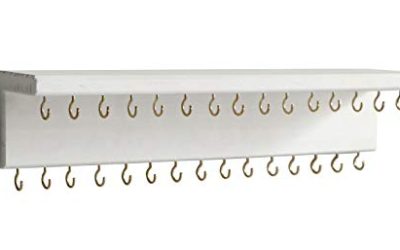
The SANY DAYO jewelry organizer with 30 hooks may sound like a bedroom product, but on a game table wall it becomes a surprisingly useful shared component station. Cooperative games often spread tokens, character markers, dice bags, pencils, and small card decks across every corner of the surface. Hooks give those small items a visible home off the board, where every player can reach them without leaning across the map or scenario tiles.
Mounted near the table, the rail keeps frequently used pieces in a single row of sight. One hook can hold a drawstring bag of tokens, another can hold rubber bands for sleeved cards, and another can keep a small pouch of spare dice. Because the items hang instead of stacking, the table stays clearer and the shared inventory is easier to check at the end of the night. That matters in campaign games, where one missing token can stall the next session.
The organizer also helps families build a routine. When the game ends, each player returns a category of pieces to an assigned hook. Cleanup becomes part of the teamwork rather than a chore left to one person. The rail is simple, but simple storage that everyone understands is often the storage that actually gets used.
Specs
- Product type: Wall-mounted organizer rail
- Capacity: 30 hooks for hanging small items
- Best table role: Shared storage for tokens, dice bags, and card pouches
- Placement: Wall beside or behind the family game table
- Material style: Metal rail designed for hanging accessories
- Use pattern: Assign one hook per game component category
HEKEE Dusk to Dawn Light Bulbs A19

Good light decides whether a cooperative game feels welcoming or tiring. The HEKEE dusk to dawn bulbs use a built-in sensor to turn on as daylight fades and turn off when morning returns, which suits a family room or dining area that becomes a game space in the evening. Players do not need to interrupt setup to adjust lamps as the room darkens, and the table receives steadier light through a long scenario.
Even lighting is especially important for cooperative play because everyone reads the same board. Small icons, faded map details, and color-coded cards can cause mistakes when one side of the table sits in shadow. A consistent overhead or lamp setup helps every seat see the same information, which keeps discussion fair and reduces arguments about missed clues or overlooked symbols.
The A19 shape fits many common household fixtures, so the bulbs can support the room rather than serving only the game table. They are a practical choice for families who play after dinner, when natural light changes quickly. With the lighting handled automatically, the group can focus on planning moves, tracking the story, and enjoying the shared win or the narrow defeat.
Specs
- Product type: LED light bulb with dusk to dawn sensor
- Base and shape: A19 bulb for common household fixtures
- Best table role: Automatic evening light for shared board visibility
- Operation: Turns on at dusk and off at dawn without manual switching
- Group fit: Helps all seats read cards, icons, and map details clearly
- Use pattern: Install in the main room fixture or a nearby lamp
tomtoc Laptop Case

A campaign game creates paperwork: scenario notes, character sheets, rule summaries, and sometimes a tablet or laptop with a digital companion guide. The tomtoc laptop case gives those materials a protected home between sessions. Instead of leaving the campaign kit in a loose pile that gets moved for meals and homework, the family can store the core set together and bring it back to the table as one unit.
The padded design suits a laptop or tablet first, but the same slim case can also hold flat game materials that benefit from protection. A printed scenario log, a folder of character records, and a tablet used for rules lookups can travel together from shelf to table. That single-kit habit makes setup faster and helps the group remember where the last session ended.
For families whose game table is also the dining table, portability matters as much as protection. The case lifts away in seconds when the room needs to return to daily life, then comes back without scattering the campaign across the house. It is a quiet organizational pick, but cooperative campaigns depend on continuity, and continuity depends on keeping the story materials intact and easy to find.
Specs
- Product type: Padded laptop carrying case
- Best table role: Protected storage for campaign notes and a tablet or laptop
- Portability: Slim profile for moving between shelf, closet, and table
- Protection: Cushioned interior for everyday bumps and stacking
- Group fit: Keeps shared campaign materials together between sessions
- Use pattern: Pack the kit at cleanup and reopen it at the next setup
JoyJolt Faye Highball Glasses 13 oz 6 Pack

Long cooperative sessions need drinks, but drinks and cardboard components are uneasy partners. The JoyJolt Faye highball glasses give the table a dedicated set of tall, clear glasses that feel more stable and intentional than a mix of random cups collected from the kitchen. A set of six covers most family groups, and the uniform look helps players spot their own drink during a crowded game.
The 13 oz size works well for water, iced tea, lemonade, and other family night drinks that need room for ice. Tall glasses also encourage a simple table rule: drinks live on coasters at the edge of the surface, never beside the board. Because the glasses match, the rule feels like part of the ritual rather than a warning repeated all evening. Clear glass makes the fill level easy to see, which helps prevent overfilled cups being carried across the table.
No glass can make a spill impossible, so placement still matters. The real benefit here is consistency. When every player has the same sturdy glass in the same safe zone, the table stays calmer, the components stay drier, and the group can stay inside the game instead of pausing for cleanup.
Specs
- Product type: Highball drinking glass set
- Capacity: 13 oz per glass
- Quantity: 6 glasses per pack
- Best table role: Dedicated drinks for long cooperative sessions
- Design: Tall, clear profile that shows fill level at a glance
- Use pattern: Keep glasses on coasters along the table edge, away from the board
How to Choose
Start with the way your family actually plays. A group that loves long campaign scenarios needs storage and continuity first, so the case and the hook rail will do the most work. A group with younger children may benefit more from a warm-up activity that builds confidence before the main game. Choose the picks that remove your most common friction, not the ones that simply add more gear to the room.
Next, protect the playing surface. Cooperative boards tend to grow as tiles, cards, and tokens spread outward. Keep drinks in a defined edge zone, hang small components where they can be seen, and leave the center of the table for shared information only. If a piece is not part of the current decision, it should have a home off the board. That single habit prevents many lost pieces and confused turns.
Lighting deserves a deliberate decision as well. Sit in every seat before game night and check whether cards and icons are equally readable. If one side of the table is dimmer, adjust the fixture or add the automatic bulbs before the group gathers. Shared information only stays shared when everyone can see it clearly.
Finally, build a cleanup routine the whole family can repeat. Assign one person to tokens, one to cards, one to notes, and one to drinks. Store the campaign kit together, return hanging items to their hooks, and leave the table ready for ordinary life. A cooperative game teaches teamwork during play; a good table routine extends that teamwork to setup and cleanup, which is why the night feels easy to repeat.
FAQ
How large should a cooperative game table be?
The table should fit the board, each player’s personal cards, and a shared area for tokens without crowding drinks into the play space. If elbows and glasses compete with the board, choose a larger surface or move storage and drinks to the wall and the table edge.
How can families keep small game pieces from getting lost?
Give every category of piece a fixed home and return it there during cleanup. Hanging pouches on hooks, using one case for campaign materials, and doing a quick token count before the box closes will prevent most losses between sessions.
What is the best way to include younger players in cooperative games?
Start with a short warm-up that lets them speak, listen, and succeed quickly, then give them a clear job in the main game, such as tracking tokens or reading a card aloud. Shared roles help younger players contribute without carrying the full rules load.
How should drinks be handled around cardboard game components?
Use one matching set of glasses, keep them on coasters in a defined edge zone, and never place a drink beside the board or above open cards. Clear, tall glasses make fill levels easy to check before anyone carries a drink across the table.
Final Verdict
A cooperative family game night succeeds when the table quietly supports the team. The QuTZ talking flash cards warm up communication, the SANY DAYO hook rail keeps shared pieces visible and sorted, and the HEKEE dusk to dawn bulbs give every seat clear evening light. The tomtoc case protects the campaign kit between sessions, while the JoyJolt Faye glasses give drinks a consistent, safer place at the edge of the action.
Families do not need all five picks at once. Start with the problem that interrupts your games most often, whether that is lost tokens, dim light, scattered notes, or drinks crowding the board. Add the matching pick, build the routine around it, and the next night will start faster and end with far less searching.
Product and ASIN Reference
| Product | ASIN |
|---|---|
| QuTZ talking flash cards | B09B7YT5H9 |
| SANY DAYO jewelry organizer 30 hooks | B07QFZSVQW |
| HEKEE dusk to dawn light bulbs A19 | B07HGZMYZ4 |
| tomtoc laptop case | B073TVX735 |
| JoyJolt Faye highball glasses 13 oz 6 pack | B08BB62QWT |
FAQ
How large should a cooperative game table be?
How can families keep small game pieces from getting lost?
What is the best way to include younger players in cooperative games?
How should drinks be handled around cardboard game components?
More from Amazon
Programs that pair well with the guide above. Offers and eligibility are set by Amazon and may change.
Free shipping on eligible items, Prime Video and more. Eligible new members can start with a free trial.
Start a Prime free trialAudiobooks and podcasts to listen to on the go. Eligible new members can start with a free trial.
Try Audible freeAd-free music streaming. Eligible new subscribers can start with a free trial.
Try Music Unlimited freeA free business account with business pricing and bulk-buying tools for work, shop or home office.
Create a business accountAs an Amazon Associate we earn from qualifying purchases.









Write Your Review
No reviews yet. Be the first to share your experience!