
Key takeaways
- Choose a letter tray that keeps paper moving, and see five honest desk companions for a tidy work corner, with clear limits stated for each pick.
Paper rarely arrives at a desk in an organized way. Mail lands in a pile, printouts come off the printer in a stack, forms wait for signatures, and receipts drift under the keyboard until the whole corner looks busy even when little is being worked on. A letter tray is the simplest answer to that drift: it gives every sheet a visible place to wait instead of letting it spread across the desk. But a tray only helps as part of a small, honest system, and that system matters far more than the tray itself.
This guide starts with the letter tray decision itself: how many trays a corner needs, where they should sit, and how to keep them from turning into storage. It then looks at five companion products that support a tidy paper corner, from managing light leads to keeping drinks off the paperwork. One point of honesty up front: none of the five picks below is itself a letter tray. They are supporting pieces for the same corner, each described with its real limits stated plainly.
As an Amazon Associate, we earn from qualifying purchases.
How to Choose a Letter Tray
A letter tray works as a flow, not as a container. The setup that holds up has three stages: incoming, working, and done. Incoming is where every new sheet lands, unjudged and unsorted. Working holds the few pages tied to whatever is active today. Done holds finished paper waiting to be filed, mailed, or recycled. When a sheet always knows its stage, a glance tells you how much is waiting and how much is nearly finished.
That flow is why the system matters more than the tray count. Three plain trays with clear jobs beat a tall tower of unlabeled levels, because the tower only adds places for paper to hide. If you handle little paper, two trays may be plenty: one for incoming, one shared by working and done. If paper arrives from several directions, a third tray earns its space. Beyond that, extra trays just spread the same clutter across more levels.
Watch the biggest failure mode: a tray that turns into permanent storage has failed at its job. If the same stack sits there for a month, the tray is no longer moving anything; it is just a shelf with walls. The fix is a habit, and the habit is part of the purchase. Once a week, empty every tray completely. Incoming paper gets a decision, stale working paper gets finished, rescheduled, or dropped, and the done tray leaves the desk for good. A tray you never empty is a pile with a frame.
Placement matters too. Vertical wall trays save desk surface and keep the stages at eye level, which suits small corners. Stacked trays cost no wall space and are easy to move, but they hide the bottom layer, and hidden paper gets forgotten. If you stack, keep the working tray on top and the done stage at the bottom.
Labels sound fussy, but unlabeled trays lose the system within a month. Under deadline pressure, every tray looks like a fine place to drop a page, and the stages blur back into one pile. A small label on each tray, even tape with a handwritten word, keeps the flow intact when you are busy or tired.
Finally, paper still needs a final home. A tray is a waypoint, not a destination: finished documents belong in a file or binder, and junk belongs in recycling. If nothing ever leaves the trays, no setup will keep the corner tidy.
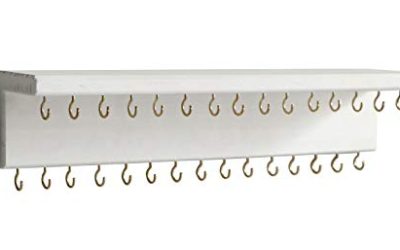
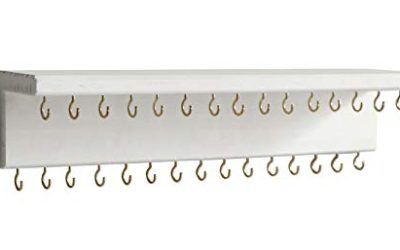
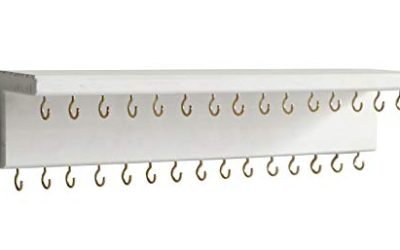
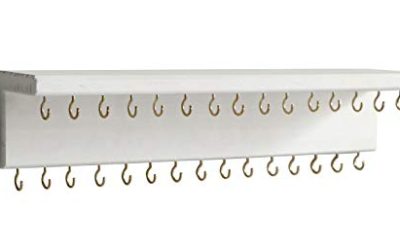
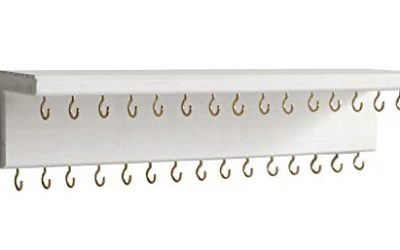
SANY DAYO Jewelry Organizer With 30 Hooks

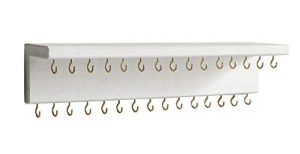
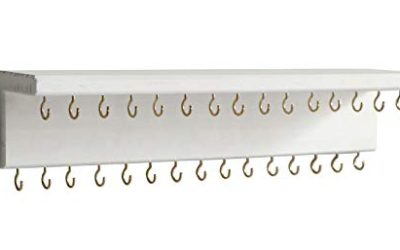
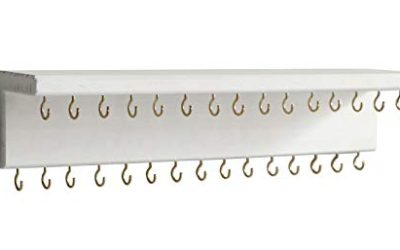
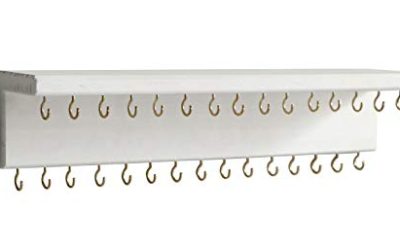
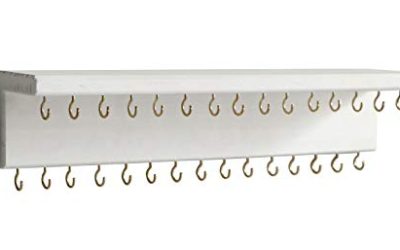
Paper is not the only clutter in a work corner. Light leads for earbuds, a phone charging cable, and similar small cords slide behind the desk or tangle around the tray stack. The SANY DAYO organizer is, plainly, a jewelry organizer: a rail with 30 hooks made for necklaces and bracelets. Used honestly, that rail works as a light-duty hanger for light leads and for one small card, such as a card listing which tray holds what.
Specs
- Product type: jewelry organizer rail
- Hook count: 30 hooks
- Intended use: hanging necklaces, bracelets, and similar jewelry
- Role in this corner: light-duty rail for light leads and a small card
- Load guidance: light items only, one per hook
The limits matter. This is not a charging station or a heavy storage rail, and it should never be described as holding consoles, drives, power strips, charging bricks, or heavy tools, because it is not built for that weight. Hang only genuinely light things: an earbud lead, a slim cable looped loosely, a lanyard, or a routing card clipped to a hook. Within those limits, it clears the cord tangle that creeps across the trays. Mount it at the wall edge beside the trays, out of the paper flow.
HEKEE Dusk to Dawn Bulbs A19

A paper corner often sits in the dimmest part of the room, and sorting mail in weak light is slow, tiring work. The HEKEE bulbs are plain automatic sensor bulbs in the A19 shape: a built-in sensor turns each bulb on when the surroundings go dark and off when daylight returns. That is the whole feature set. They are not smart bulbs, so there is no app, voice control, or scheduling, and they are not task lighting, so they do not replace a desk lamp aimed at your paperwork.
Specs
- Bulb shape: A19 with a standard screw base
- Sensor: built-in dusk to dawn light sensor
- Operation: automatic on at dark, off at daylight
- Controls: no app, no remote, no smart features
- Best fit: lamps and open fixtures in low-light corners
Used in a room lamp near the desk, they keep the corner from going fully dark in the evening, so the tray area stays usable without thinking about switches. Two cautions apply. In a windowless room, the sensor may read the space as permanently dark and keep the bulb on far longer than expected; that is normal sensor behavior, not a defect. And before using any bulb in an enclosed fixture, check the enclosed-fixture rating, because heat buildup shortens bulb life. Treat these as background light alongside a real desk lamp.
ULANZI Super Clamp

Small corners often need one flexible mounting point: a spot to hold a lightweight accessory at the desk edge, up off the paper. The ULANZI super clamp is exactly that, a clamp and nothing more. It is a mount only: it has no light, no phone, and no camera of its own, and anything attached to it must be something you already own. On those terms, it lifts a small item off the desk so the trays keep their footprint.
Specs
- Product type: accessory clamp mount
- Function: grips an edge or tube and holds a small accessory
- Built-in gear: none, it is a mount only
- Jaw care: pad the jaws on finished surfaces
- Placement: desk edges, shelves, and rails within its grip range
Two handling rules prevent damage. Never clamp a screen: displays are not mounting points, and clamping pressure can crack a panel. On finished surfaces, such as a varnished desk edge, pad the jaws with cloth or felt so the grip leaves no marks. Within those rules, the clamp suits small jobs around a paper corner, like holding a lightweight accessory arm at the desk edge, without colonizing the space the trays need.
tomtoc Laptop Case

In many work corners, the laptop and the paperwork share one surface, and the laptop usually wins. A padded case gives the machine a parking place at the side of the desk, so closing it and sliding it away becomes part of the end-of-day routine, leaving the trays visible. The tomtoc case is a padded soft case with plain limits: it is not a hard shell, so it softens bumps and scratches rather than protecting against drops or crushing weight, and it is not waterproof.
Specs
- Product type: padded soft laptop case
- Protection: padding against bumps and scratches
- Closure: zippered opening
- Water resistance: not waterproof
- Fit note: check internal dimensions before ordering
Fit decides whether the case works at all. Laptops are described by screen size, but cases fit by physical dimensions, and two machines with the same screen size can differ in width, depth, and thickness. Before ordering, measure your laptop and compare it with the case’s stated internal dimensions, leaving a little room so the machine slides in without forcing the zipper. A good fit parks the laptop beside the trays instead of spreading across them.
JoyJolt Faye Highball Glasses 13 oz, Set of 6

A glass of water belongs in a long sorting session, but not on top of the paperwork. The JoyJolt Faye set gives the corner a proper set of highball glasses, each holding 13 oz, so a drink can live where drinks should live: on a side table at the edge of the desk, away from the trays. These are real glass, and that deserves plain language. Real glassware can break, so keep it away from electronics, card collections, and paper stacks that a spill would ruin.
Specs
- Product: Faye highball glasses
- Capacity: 13 oz per glass
- Set size: 6 glasses
- Material: real glass
- Care note: retire any glass with a chipped rim
The chipped rim rule matters most. A chipped rim is sharp and signals weakened glass, so retire a chipped glass rather than keeping it in rotation because it still holds water. Kept on a side table, washed regularly, and checked at the rim now and then, a set like this quietly protects the corner: drinks stop migrating onto documents, and the trays stay dry.
Frequently Asked Questions
How many letter trays do I actually need?
Most corners need two or three. Two trays cover incoming and done when volume is low; three support the full flow of incoming, working, and done. More than three usually adds hiding places rather than order, so add a tray only when a stage overflows every week, not just on one busy day.
Should I choose stacked trays or wall-mounted trays?
Choose by the space you can spare. Wall trays save desk surface and keep every stage visible, suiting small corners. Stacked trays are easier to move and need no wall, but they hide the bottom layer, so keep the working tray on top and clear the bottom one weekly.
How do I stop a letter tray from becoming permanent storage?
Empty every tray once a week, completely. Decide each incoming sheet, finish or reschedule each working sheet, and send the done tray to a file or recycling. Labels help too, because they remind you what each tray is for when you are in a hurry.
What should happen to paper after it leaves the tray?
Every sheet needs a final home. Keepers go into a file, folder, or binder. Paper that needed one action, such as a form to sign and return, leaves the desk once the action is done. Junk and drafts go straight to recycling. The tray is a waypoint, never the destination.
Final Verdict
The best letter tray setup is a small flow you can maintain: incoming, working, and done, labeled clearly, placed where the stages stay visible, and emptied once a week without exception. Choose two or three trays that fit your paper volume, and give finished paper a real home in a file or the recycling bin. Around that core, each companion covers one honest job: the SANY DAYO rail keeps light leads off the desk, the HEKEE bulbs add automatic background light, the ULANZI clamp lifts a small accessory off the surface, the tomtoc case parks the laptop, and the JoyJolt glasses keep drinks away from the paperwork. None of them replaces the tray system; the system does the organizing, and these pieces stop everything else from getting in its way.
Product and ASIN Reference
| Product | ASIN |
|---|---|
| SANY DAYO jewelry organizer 30 hooks | B07QFZSVQW |
| HEKEE dusk to dawn bulbs A19 | B07HGZMYZ4 |
| ULANZI super clamp | B09C882D4M |
| tomtoc laptop case | B073TVX735 |
| JoyJolt Faye highball glasses 13 oz 6 pack | B08BB62QWT |
FAQ
How many letter trays do I actually need?
Should I choose stacked trays or wall-mounted trays?
How do I stop a letter tray from becoming permanent storage?
What should happen to paper after it leaves the tray?
More from Amazon
Programs that pair well with the guide above. Offers and eligibility are set by Amazon and may change.
Free shipping on eligible items, Prime Video and more. Eligible new members can start with a free trial.
Start a Prime free trialAudiobooks and podcasts to listen to on the go. Eligible new members can start with a free trial.
Try Audible freeAd-free music streaming. Eligible new subscribers can start with a free trial.
Try Music Unlimited freeA free business account with business pricing and bulk-buying tools for work, shop or home office.
Create a business accountAs an Amazon Associate we earn from qualifying purchases.
Write Your Review
No reviews yet. Be the first to share your experience!