
Key takeaways
- Compare tape dispenser picks for a tidy desk corner, with safety notes on sharp blades, weighted bases, refill roll sizes, and five honest desk picks.
A tape dispenser earns its place on a desk by doing one small job well: holding a roll steady so a strip can be pulled and torn with one hand, in the second it is needed. When the dispenser is too light, the wrong size for the rolls on hand, or parked in a corner where nobody reaches it, that small job turns into a two-handed wrestling match with a sticky strip folded onto itself. Choosing well comes down to weight, roll fit, blade condition, and a sensible permanent home on the desk it serves.
To be plain about what follows: none of the five picks in this guide is itself a tape dispenser. They are desk-corner companions — the small organizers, lights, mounts, cases, and basics that share the same few square inches as a good dispenser and keep that corner working. The buying advice below covers how to choose the dispenser itself first, then looks at each companion honestly, including what it cannot do.
As an Amazon Associate, we earn from qualifying purchases.
How to Choose a Tape Dispenser for Your Desk Corner
Respect the serrated cutting edge
The metal teeth on a desktop dispenser are genuinely sharp, and they stay sharp for years. That edge is the reason tape tears cleanly, and it is also a real hazard for small fingers. Position the dispenser where small children cannot reach it — toward the back of the desk or on a raised shelf, never at the front edge of a family desk. Teach everyone who uses it to tear tape downward, pressing the strip against the teeth and pulling away from the body, so fingers never slide along the blade. A dispenser stored loose in a drawer, teeth up among pens and scissors, is the version most likely to nick someone reaching in blind.
Weight in the base is what makes one-handed use work
One-handed tearing only works when the dispenser stays put. A weighted base — sand-filled or simply heavy — anchors the unit so the pull of the tape meets resistance instead of dragging the dispenser across the desk. A light plastic dispenser travels with the tape, and the usual ending is the whole thing yanked off the desk edge onto the floor, sometimes onto a foot. If a dispenser slides when tested with a firm pull, it will slide in daily use. Non-slip pads under the base help on smooth desktops, but they are a supplement to real weight, not a substitute for it.
Match the refill roll to the core
Dispensers are built around a core size, and rolls come in matching widths and core diameters. A roll that is too narrow for the core wobbles side to side as it turns, feeding the tape off-center so it tears crooked or folds at the edge. A roll that is too wide binds against the sides and tears in ragged strips. Before stocking up on refill multi-packs, check which roll size the dispenser takes and buy that size. It is a dull detail that decides whether the dispenser feels precise or sloppy daily.
Give the dispenser one desk and keep it there
A dispenser belongs on the desk it serves, within arm’s reach of where wrapping, labeling, and sealing actually happen. The habit that shortens a dispenser’s life is carrying it room to room by the loose end of the tape: the strip stretches, the grip fails, and a weighted base drops on toes or a hard floor, which can crack the housing or bend the blade plate. If two desks need tape, two modest dispensers beat one good one in transit.
Keep the blade clean so tape tears cleanly
Adhesive residue builds up on the cutting teeth over time, especially in warm rooms. A gummed blade stops slicing and starts grabbing, so the strip stretches, folds back, and sticks to itself instead of tearing. Wipe the teeth with a cloth lightly dampened with rubbing alcohol whenever tears start looking ragged, and pull off any tape scraps stuck between the teeth. A clean blade is also a safer one, because clean tears need less force and fewer attempts near the edge.
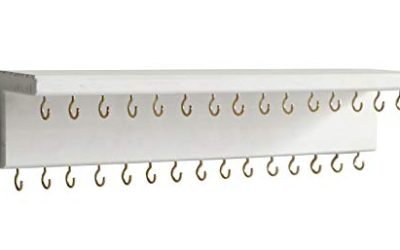
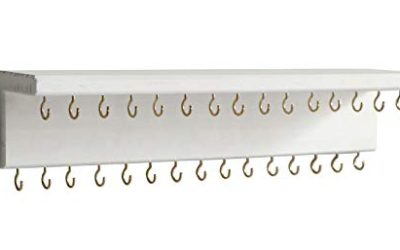
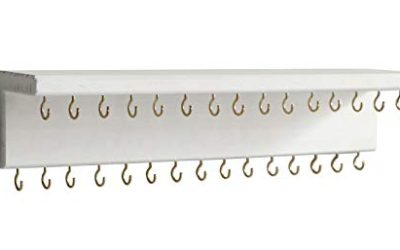
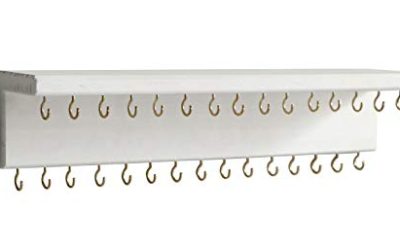
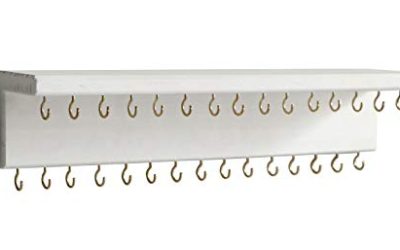
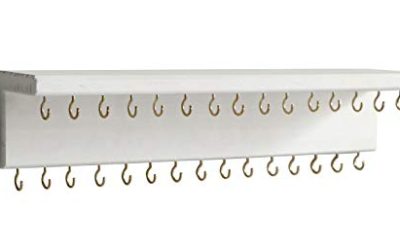
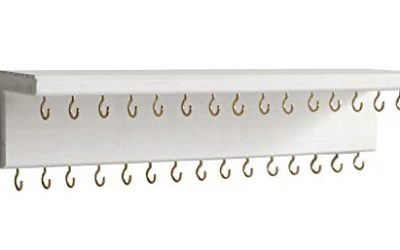
SANY DAYO Jewelry Organizer With 30 Hooks

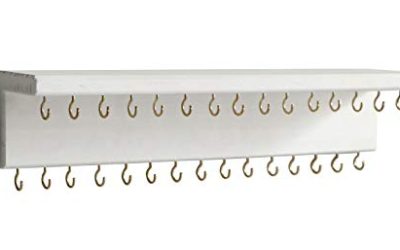
This organizer is, plainly, a jewelry organizer: a rail with thirty small hooks made for necklaces, bracelets, and similar light items. On a desk, its honest second job is as a light-duty rail for light leads — a charging cable, a lanyard, a set of keys, or a small card that needs a visible home near the tape dispenser corner. Hung beside the desk, it keeps those small, easily lost items off the work surface and out of the tape’s path.
Its limits matter as much as its uses. The hooks are sized and spaced for jewelry-weight loads, so this rail is never the place for consoles, drives, power strips, charging bricks, or heavy tools. Kept to light duty, though, it clears the corner clutter that otherwise migrates in front of the dispenser.
Specs
- Thirty individual hooks on a single rail
- Designed for necklaces, bracelets, and light accessories
- Wall or door mounting for off-desk storage
- Best used for light leads, keys, lanyards, and small cards
- Not rated for heavy electronics, bricks, or tools
HEKEE Dusk to Dawn Bulbs A19

These are plain automatic sensor bulbs: a photocell in the bulb senses darkness and switches the light on at dusk and off at dawn, with no app, no hub, and no schedule to program. Fitted in a porch fitting, a hallway sconce, or a lamp near the desk room’s door, they handle the come-home lighting that a desk corner otherwise borrows a task light for. They are explicitly not smart bulbs — there is no dimming, no color control, and no remote — and they are not task lighting for reading or detailed work at the desk.
Two honest caveats come with the sensor design. In a windowless room, or any fitting that stays dark all day, the bulb may simply stay on, because its sensor never sees daylight. And like any bulb, it should only go into an enclosed fixture if it is rated for enclosed use, so check that rating before fitting one under a shade or in a sealed housing.
Specs
- A19 shape with a standard screw base
- Built-in dusk-to-dawn photocell sensor
- Automatic on at dark, off at daylight
- No app, hub, dimming, or color control
- Check enclosed-fixture rating before use in sealed fittings
ULANZI Super Clamp

The super clamp is a mount and only a mount: it has no light, phone, or camera of its own. What it provides is a strong jaw that grips a desk edge, shelf, or pole and a mounting point for a small accessory the user supplies — a lightweight light panel, a phone holder, or a small camera on a standard thread. Near a tape dispenser corner, it suits the desk that doubles for video calls or product photos, holding a small light up and off the work surface.
Used within its limits, it is a tidy tool. Never clamp it to a screen — the jaw pressure can crack a display. Pad the jaws with the included pads or a layer of cloth when gripping finished wood, both to protect the surface and to stop the clamp creeping under load. And keep loads small: it is a clamp for accessories, not a bracket for monitors or heavy gear.
Specs
- Clamp-on mount for desk edges, shelves, and poles
- Standard mounting thread for user-supplied accessories
- Mount only — no light, phone, or camera included
- Padded jaws recommended on finished surfaces
- Never clamp onto a screen; keep loads light
tomtoc Laptop Case

This is a padded soft case for carrying and storing a laptop, with cushioning that absorbs the everyday knocks of a commute or a trip across the room. As part of a desk corner setup, it gives the laptop a defined parking place at the side of the desk instead of leaving the machine loose among tape, paper, and cups. The padding handles bumps and minor drops; it is not a hard shell, so it will not protect against crushing weight or a serious fall, and it is not waterproof, so a spilled drink nearby is still a problem to avoid rather than a test to run.
Fit is the one decision that matters. Laptop makers measure screens diagonally, and case interiors vary, so check the internal dimensions of the case against the actual machine — including its thickness — before ordering. A case that is slightly too small stresses the zipper and corners; slightly too large lets the laptop slide.
Specs
- Padded soft-shell construction for everyday knocks
- Sized for laptops; check internal dimensions before ordering
- Zippered closure with accessory storage
- Not a hard shell and not waterproof
- Suits commuting, storage, and desk-side parking
Hi-Lyte Electrolyte Drops
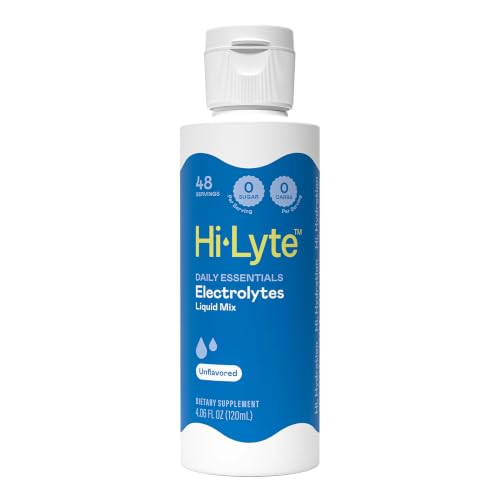
These drops add electrolytes to a glass or bottle of water, aimed at people who want a simple way to replace salts lost through sweat during long workdays, exercise, or hot weather. The claims worth making are deliberately modest: this is not a medicine, not an energy product, and not a treatment for any condition. For most people, most of the time, plain water is fine, and the drops are a preference for taste and convenience rather than a necessity.
Used sensibly, they are straightforward: follow the label directions for how much to add, and do not treat more as better. Anyone with a medical condition, or anyone on a restricted diet where sodium or potassium intake is managed, should check with a clinician before using electrolyte products regularly. Kept on the desk near the water bottle, the small bottle takes almost no room in the corner.
Specs
- Liquid electrolyte concentrate for water
- Add to a glass or bottle per label directions
- Unflavored mineral profile; no energy ingredients
- Not a medicine or treatment product
- Consult a clinician if managing sodium or potassium intake
Frequently Asked Questions
Is a weighted tape dispenser really safer than a light one?
Yes, in a practical sense. A weighted base stays where it is parked, so the tearing motion is controlled and predictable, and the dispenser is far less likely to be dragged off the desk edge. A light dispenser that travels with the tape encourages yanking and fumbling near a sharp blade, which is where nicks happen. Weight also makes one-handed use possible, keeping the free hand away from the cutting edge entirely.
What roll size should be bought as refills?
The size the dispenser’s core was built for — check the dispenser listing or measure the core and the roll width before ordering refills. A roll that is too narrow wobbles and tears crooked; one that is too wide binds and shreds. Buying the correct size from the start is cheaper than a drawer of rolls that almost fit.
Where is the best place to keep a dispenser in a shared home office?
Toward the back of the desk or on a raised shelf within the main user’s reach, out of the reach of small children, and away from the front edge where it can be knocked down. The spot should be the same every day, so reaching for tape is automatic and nobody goes hunting through drawers where the blade sits among other tools.
How often does the cutting blade need cleaning?
Whenever tears start to look ragged or the strip begins folding onto itself — for a busy desk, a quick wipe every few weeks is typical. A cloth lightly dampened with rubbing alcohol removes adhesive buildup from the teeth. If cleaning no longer restores a clean tear, the blade plate itself may be bent or worn, and replacing the dispenser is the safer fix.
Final Verdict
A good tape dispenser is a small purchase that rewards a little care: real weight in the base, the right refill size on the core, a clean blade, and one fixed home at the back of the desk where small children cannot reach it. The five companions in this guide support that corner rather than replace the dispenser — a light-duty hook rail for cables and keys, automatic bulbs for ambient light, a clamp mount for a small light, a padded case that parks the laptop, and modest electrolyte drops for the water bottle. Set the corner up once, and tape stops being a two-handed chore.
Product and ASIN Reference
| Product | ASIN |
|---|---|
| SANY DAYO jewelry organizer 30 hooks | B07QFZSVQW |
| HEKEE dusk to dawn bulbs A19 | B07HGZMYZ4 |
| ULANZI super clamp | B09C882D4M |
| tomtoc laptop case | B073TVX735 |
| Hi-Lyte electrolyte drops | B01MXDAHIB |
FAQ
Is a weighted tape dispenser really safer than a light one?
What roll size should be bought as refills?
Where is the best place to keep a dispenser in a shared home office?
How often does the cutting blade need cleaning?
More from Amazon
Programs that pair well with the guide above. Offers and eligibility are set by Amazon and may change.
Free shipping on eligible items, Prime Video and more. Eligible new members can start with a free trial.
Start a Prime free trialAudiobooks and podcasts to listen to on the go. Eligible new members can start with a free trial.
Try Audible freeAd-free music streaming. Eligible new subscribers can start with a free trial.
Try Music Unlimited freeA free business account with business pricing and bulk-buying tools for work, shop or home office.
Create a business accountAs an Amazon Associate we earn from qualifying purchases.
Write Your Review
No reviews yet. Be the first to share your experience!