
Key takeaways
- Compare kids clock styles for a calmer morning routine, with ok-to-wake signals, dim night light, analog learning, and simple safe setup tips.
A calmer morning usually starts the night before, with a predictable bedtime, a dim room, and a wake-up signal a young child can understand without needing to read numbers. A well-chosen kids’ clock can support that routine by making one idea clear: when the light changes color or the face shows the agreed time, it is time to get up, and before that moment it is still time to stay in bed and rest quietly. That visual promise can reduce early calls across the hallway and give children a small sense of control over their morning.
This guide explains how to choose that clock honestly, and then looks at five supporting picks for the room around it. To be plain from the start, none of the 5 picks in this guide is itself a kids’ clock. Each one is a practical companion for a child’s bedroom or family corner — a light-duty rail, automatic bulbs, a clamp mount, a padded case, and an adults-only item for the parents’ shelf — chosen to help you set up a safer, tidier space while you decide on the clock itself.
As an Amazon Associate, we earn from qualifying purchases.
How to Choose a Kids Clock for a Calmer Morning
Start with the signal, not the styling. An ok-to-wake clock gives young children a clear color signal for when to get up, which works well for toddlers and preschoolers who cannot yet tell time. One color means stay in bed, another means the day can begin. Be honest about its limits: the clock supports a routine, it does not fix sleep habits on its own. Consistent bedtimes do the heavy lifting, along with a steady wind-down, a dark room, and the same wake time on weekends as on school days.
Next, decide between analog and digital faces. Analog faces teach time-telling as a skill children can build on at school. Digital faces are read earlier, because a child only needs to recognize numbers and match them to the time you have practiced together. There is no single correct order, only the face your child can actually use at their current age.
Light deserves careful attention. Keep the clock’s light dim at night, because bright displays work against sleep. Look for adjustable brightness, a display that can be turned down or off, and a warm rather than harsh glow. Place the clock where the child can see the signal from bed without the light shining into their eyes.
Power and placement matter more than extra features. Battery backup matters when the power blips overnight, because a clock that resets or goes blank can confuse a child who wakes and finds no signal. For safety, place cords and the clock out of reach of toddlers, and route cables so they cannot be pulled or chewed. Finally, choose simple buttons a child cannot reprogram at 3 a.m. Child locks or hidden controls are useful, because a toddler who changes the wake time has undone the routine in seconds.
1. SANY DAYO Jewelry Organizer 30 Hooks

In a child’s room, small daily items create surprising clutter: hair ties, a library card, a lanyard, light charging leads, and the little card that shows the morning routine in pictures. The SANY DAYO organizer is, plainly, a jewelry organizer with 30 hooks, and in this guide it is used only as a light-duty rail for light leads and a small card. Hung at adult height inside a cupboard door or on a wall away from the bed, it gives those items a fixed home so the bedside stays clear for the clock itself.
That limit needs to be stated clearly. This organizer should never be used for consoles, drives, power strips, charging bricks, or heavy tools, and it is not a toy or a climbing aid. Keep it out of a toddler’s reach, fix it securely, and load it only with items that weigh very little. Used within those limits, it supports the calmer morning modestly: the routine card hangs in the same place every day, light leads are not tangled across the floor, and the child can see the steps — bed, clock signal, get up, dress — in order.
Specs
- Product type: Jewelry organizer with 30 hooks
- Intended use here: Light-duty rail for light leads and a small routine card
- Placement: Wall or cupboard door, at adult height, out of toddler reach
- Load guidance: Light items only, never heavy electronics or bricks
- Care: Check fixings regularly and remove anything a child could pull loose
2. HEKEE Dusk to Dawn Bulbs A19

Hallway light shapes how a child experiences the early morning. A bulb that turns itself on at dusk and off at dawn can make a trip to the bathroom feel safe without a parent switching lights on and off. The HEKEE bulbs are plain automatic sensor bulbs that respond to ambient light. They are explicitly not smart bulbs, with no app or voice control, and they are not task lighting for reading or homework.
One honest note matters in a child’s room: in dim corners, shaded landings, or rooms where curtains keep light low, these bulbs may stay on when you expect them to switch off, because the sensor reads the low light as dusk. Test a bulb in the actual fitting before relying on it, and avoid placing one where its glow reaches the child’s pillow, since light at night works against sleep. Also check the enclosed-fixture rating before using any bulb inside a covered shade or sealed fitting. Used on a landing or in a hallway, rather than over the bed, the bulbs offer simple, automatic light with no switches for small hands to flick.
Specs
- Product type: A19 dusk to dawn sensor bulbs
- Operation: Automatic on at dusk, off at dawn, based on ambient light
- Controls: No app, no smart features, no scheduling
- Best placement: Hallway, landing, or bathroom approach, away from the pillow
- Check first: Enclosed-fixture rating and sensor behavior in dim corners
3. ULANZI Super Clamp

A clamp has a narrow but useful role in setting up a child’s room safely: holding a lightweight item in a fixed position on a shelf edge or desk frame, so it stays where an adult put it. The ULANZI super clamp is a mount only. It has no light, phone, or camera of its own, and anything it holds must be supplied separately and kept within sensible weight for its size. Think of it as an adult setup tool for a parent’s corner of the room, not as part of the child’s own space.
The safety rules are firm. Never clamp a screen, monitor, or tablet in a way that could let it fall, and never position a clamped item above a bed, cot, or play area. Pad the jaws, check the clamp regularly for loosening, and keep clamps out of children’s play entirely — a strong spring can pinch small fingers. When the job is done, remove the clamp and store it with adult tools.
Specs
- Product type: Super clamp mount
- Included function: Mounting only, no light, phone, or camera included
- Use here: Adult setup tasks on a shelf edge or desk frame
- Safety: Pad the jaws, never clamp a screen, keep out of children’s play
- Check first: Surface thickness, grip, and position away from beds and cots
4. tomtoc Laptop Case

In many homes the child’s bedroom doubles as the place where a parent’s work gear waits for the morning, or where an older child’s school laptop is stored overnight. A padded case keeps that device off the floor, away from bedding, and separate from toys. The tomtoc case is a padded soft case that offers everyday protection against bumps and scratches, and gives the device a defined parking place children can learn to leave alone.
Its limits are equally clear. It is not a hard shell, so it should not be expected to protect a device from a serious drop or a heavy weight placed on top, and it is not waterproof, so a spilled drink can still reach the device inside. Check the internal dimensions before ordering, because a case that is too tight stresses zips and corners, while one that is too loose lets the device slide. Store the case on a shelf out of a toddler’s reach, with charging handled by an adult at a proper desk rather than in bed.
Specs
- Product type: Padded soft laptop case
- Protection: Everyday bumps and scratches, not drop-proof hard-shell cover
- Water resistance: Not waterproof
- Fit guidance: Check internal dimensions against the device before ordering
- Storage: Shelf or cupboard, out of toddler reach, charging supervised by an adult
5. Hi-Lyte Electrolyte Drops
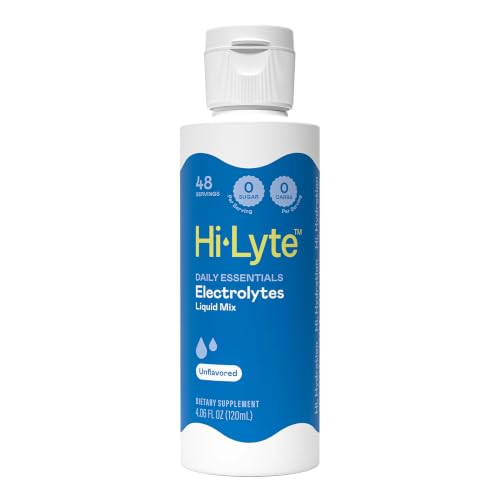
The final pick is for the parents, not the child, and that distinction is the whole point. Early wake-ups are tiring for adults too, and some parents keep electrolyte drops on their own shelf for their own drinks during busy mornings. Hi-Lyte drops are framed here as adults only: a parents’-shelf item stored well out of children’s reach, ideally in a kitchen cupboard or a high shelf. They are never a children’s drink item, should never be added to a child’s bottle, cup, or school drink, and should be treated with the same care as any other adult-only product in the house.
The claims should stay deliberately modest. These drops are not a medicine, an energy product, or a treatment for any condition, and they do not replace sleep, meals, or rest. Plain water is fine for most people, most of the time. If you do use it, follow the label directions exactly and keep the bottle closed and upright. Adults with medical conditions, those taking regular medication, and anyone on a restricted diet should check with a clinician before using electrolyte products, and questions about a child’s hydration belong with the child’s own clinician.
Specs
- Product type: Electrolyte drops for adult use
- Audience: Adults only, never a children’s drink item
- Storage: Parents’ shelf or kitchen cupboard, well out of children’s reach
- Claims: Not a medicine, energy, or treatment product
- Use: Follow label directions, clinician note for medical conditions or restricted diets
Frequently Asked Questions
At what age does an ok-to-wake clock start to help?
Many families find the color signal useful from around age two or three, once a child can connect a simple rule with a color. Younger toddlers may not wait for the signal even if they understand it, so keep expectations gentle while bedtime consistency does the main work.
Should we choose an analog or a digital clock first?
Choose the face your child can use now. Digital displays are read earlier because matching numbers is simpler, while analog faces teach time-telling over time. Some families use a color-signal clock first, then add analog for learning once school introduces it.
How dim should the clock be at night?
Dim enough that the room still feels like night from the pillow. If the display lights up bedding or walls, it is too bright. Use the lowest setting that still shows the wake signal and angle the clock away from the child’s eyes.
What should we check before the first night?
Set the wake time together, practice what each color means, confirm the battery backup works, route cords out of reach, and check that buttons cannot be easily reprogrammed by small hands. A short practice run during the day prevents confusion at dawn.
Final Verdict
A kids’ clock works best as one clear signal inside a routine adults keep steady: the same bedtime, a dim and quiet room, and a wake time that does not swing between school days and weekends. Choose an ok-to-wake signal for younger children, a readable digital face when numbers are familiar, or an analog face when learning to tell time becomes the goal. Keep the light low, insist on battery backup, place cords out of reach, and pick controls a child cannot reset in the night.
The five supporting picks play smaller, honest roles around that decision. The SANY DAYO organizer keeps light leads and a routine card tidy as a light-duty rail only. The HEKEE bulbs give automatic hallway light, with limits in dim corners. The ULANZI clamp is an adult setup mount to be used carefully and kept out of play. The tomtoc case parks a device safely as a soft, non-waterproof case. Hi-Lyte drops sit on the parents’ shelf only, adults only, with modest claims. Build the routine first, let the clock carry the signal, and mornings should feel calmer for the whole household.
Product and ASIN Reference
| Product | ASIN |
|---|---|
| SANY DAYO jewelry organizer 30 hooks | B07QFZSVQW |
| HEKEE dusk to dawn bulbs A19 | B07HGZMYZ4 |
| ULANZI super clamp | B09C882D4M |
| tomtoc laptop case | B073TVX735 |
| Hi-Lyte electrolyte drops | B01MXDAHIB |
FAQ
At what age does an ok-to-wake clock start to help?
Should we choose an analog or a digital clock first?
How dim should the clock be at night?
What should we check before the first night?
More from Amazon
Programs that pair well with the guide above. Offers and eligibility are set by Amazon and may change.
Free shipping on eligible items, Prime Video and more. Eligible new members can start with a free trial.
Start a Prime free trialAudiobooks and podcasts to listen to on the go. Eligible new members can start with a free trial.
Try Audible freeAd-free music streaming. Eligible new subscribers can start with a free trial.
Try Music Unlimited freeA free business account with business pricing and bulk-buying tools for work, shop or home office.
Create a business accountAs an Amazon Associate we earn from qualifying purchases.










Write Your Review
No reviews yet. Be the first to share your experience!