
Key takeaways
- Find the best tool chest for a home workshop: drawer sizing, wheel and layout tips, plus five honest companion picks for the bench, wall and garage.
A home workshop runs better when every tool has a home it returns to. A rolling tool chest makes that possible: drawers sized for different tool families, a flat top that doubles as a staging surface, and wheels that let the whole collection move to wherever the work is happening. Choosing the best tool chest is less about chasing the biggest cabinet and more about matching drawer depth, layout, and mobility to the tools already owned and the space available.
One point deserves to be stated plainly: none of the five products featured in this guide is itself a tool chest. They are companions around the workshop — a light-duty wall rail, automatic bulbs, a mounting clamp, a padded laptop case, and electrolyte drops — that support the bench, the lighting, and the person working there. The advice below explains how to choose the chest itself, and the product sections explain honestly what each companion does and does not do.
As an Amazon Associate, we earn from qualifying purchases.
How to Choose a Tool Chest for a Home Workshop
Match Drawer Sizes to the Tools You Own
Drawer depth is the decision that matters most. Shallow drawers suit wrenches, sockets, screwdrivers, and pliers laid out in a single visible layer, where nothing hides under anything else. Deep drawers are for bulkier gear: drills, sanders, and other power tools with their chargers and cases. Before choosing a chest, lay the current tool collection out on the bench and group it honestly. A chest with many shallow drawers frustrates anyone storing power tools, while a chest with only deep drawers turns small hand tools into a jumbled pit. The right mix mirrors the collection on the bench, not the one imagined for someday.
Give Each Tool Family Its Own Drawer
The real payoff of a chest is findability. One drawer per tool family — one for measuring and marking, one for wrenches, one for drivers, one for power tools — means a tool can be located in seconds and, just as importantly, its absence is obvious at cleanup time. Labeling the drawer fronts sounds fussy until the first project ends with everything back in place in two minutes. One deliberate junk drawer is fine; five accidental ones are a sign the layout needs rethinking.
Choose Wheels When the Chest Needs to Move
A stationary chest against the wall suits a workshop where all work happens at one bench. Wheels earn their keep when the chest has to roll to a car in the driveway, or simply out of the way when a large project needs floor space. Look for casters that lock, because a chest that creeps during use is worse than one that never moves. A fully loaded chest is heavy, so wheel size and floor surface matter: small casters struggle over cracks, thresholds, and rough concrete.
Put the Heaviest Tools in the Lowest Drawers
Weight placement is a stability rule, not a preference. Heavy items — power tool cases, socket sets in steel rails, bench vises waiting for mounting — belong in the lowest drawers so the chest stays planted and the drawers glide without straining. Light, frequently grabbed items belong at comfortable height. A top-heavy chest can tip when several drawers are open at once, which is also why opening one drawer at a time is a habit worth building.
Measure the Space Before Falling for a Cabinet
A tool chest organizes tools; it does not make a small workshop bigger. Measure the floor footprint and the space needed to open drawers fully and stand in front of them. A chest that fits its footprint but blocks a doorway or crowds the bench creates a new problem while solving an old one. In a genuinely small workshop, a narrower chest with a disciplined layout often serves better than a wide cabinet that swallows the room.
Think About the Top Surface and the Years Ahead
The top of a chest becomes a working surface whether planned or not: a staging area for parts mid-project, or a parking spot for the tool currently in hand. A raised edge or a mat keeps small parts from rolling off. Finally, consider growth modestly. A chest with one or two empty drawers leaves room for the tools a hobby naturally accumulates, without paying for a wall of empty storage today. Steel thickness, drawer slide quality, and a finish that wipes clean matter more over a decade than any single feature.
SANY DAYO Jewelry Organizer With 30 Hooks

Despite the name, this wall-mounted rail earns a place in the workshop as a light-duty organizer for the small things that otherwise vanish into drawers: keys, lanyards, ID badges, charging cables, and other light accessories that benefit from hanging in plain sight near the door or bench. Thirty hooks give each item its own spot, and the rail keeps everything visible at a glance, which is exactly what small, easily lost items need.
The honesty requirement here is absolute: this is a light-duty rail, and it must never be treated as heavy storage. It does not hold consoles, drives, power bricks, heavy tools, or anything with real weight, and loading it that way risks pulling it from the wall. Hung beside the chest for keys and light accessories, it is genuinely useful; asked to do a shelf’s job, it is the wrong product.
Specs
- Type: wall-mounted hook rail
- Hooks: 30
- Intended load: light accessories only — keys, lanyards, cables, badges
- Mounting: wall installation near a bench or doorway
- Best workshop role: a visible home for small, easily lost light items
HEKEE Dusk to Dawn Bulbs A19

Lighting decides whether a workshop is usable after dark, and these A19 bulbs handle the ambient part automatically. A built-in sensor turns them on at dusk and off at dawn, so the garage or workshop is lit when arriving home in the evening and dark again by morning without anyone touching a switch. They suit porches, garage fixtures, and general room lighting where a steady, unattended glow is the goal.
Two limits need stating clearly. These are plain automatic sensor bulbs: they are not smart bulbs, with no app control, dimming schedules, or voice features, and they are not task lighting for detailed bench work, which still calls for a dedicated lamp aimed at the job. In a windowless garage or workshop they may stay on, reading the darkness as permanent dusk. Check the enclosed-fixture rating before installing them in covered fittings.
Specs
- Type: A19 LED bulb with dusk-to-dawn sensor
- Operation: automatic on at dusk, off at dawn
- Smart features: none — not a smart bulb
- Role: ambient and security-style lighting, not task lighting
- Note: may stay on in windowless spaces; check enclosed-fixture rating
ULANZI Super Clamp

A super clamp is one of those workshop accessories that finds new jobs every month. The ULANZI clamp grips a bench edge, shelf, or pole and provides a mounting point for whatever the project needs held in place — a phone recording a repair for later reference, or an accessory that needs to stay put at an angle a flat surface cannot offer. For anyone who documents projects or follows repair videos, a clamp-mounted phone at the bench is a practical convenience.
The clamp’s nature must be understood: it is a mount only. It has no light, phone, or camera of its own, and it adds a grip point rather than any function. Never clamp a monitor screen, which can crack under point pressure. Pad the jaws when clamping finished wood or painted surfaces, and check the load limit before trusting it with anything heavier than a phone or small accessory.
Specs
- Type: super clamp mount
- Function: mounting point only — no light, phone, or camera included
- Typical uses: holding a phone or small accessory at a bench or shelf
- Caution: never clamp a monitor screen; pad jaws on finished surfaces
- Best workshop role: flexible third hand for filming and holding small gear
tomtoc Laptop Case

Many home workshops double as the place where the household laptop lives between uses, and a padded case keeps it protected from the dust, bumps, and casual knocks of a working space. The tomtoc case wraps the laptop in padding for storage on a shelf or transport between the workshop and the house. It also keeps the laptop off the bench surface itself, where it would otherwise compete with tools and parts.
Set expectations correctly: this is a padded soft case, not a hard shell, so it protects against scratches and everyday bumps rather than drops onto concrete or crushing weight. It is not waterproof, and a spill or rain shower calls for more than this case offers. Check the internal dimensions before buying, because laptop sizes vary and a case that is too small is useless while one that is too large lets the machine slide around inside.
Specs
- Type: padded soft laptop case
- Protection: scratches and everyday bumps; not a hard shell
- Water resistance: not waterproof
- Fit: check internal dimensions against the laptop before buying
- Best workshop role: protected storage and transport for the household laptop
Hi-Lyte Electrolyte Drops
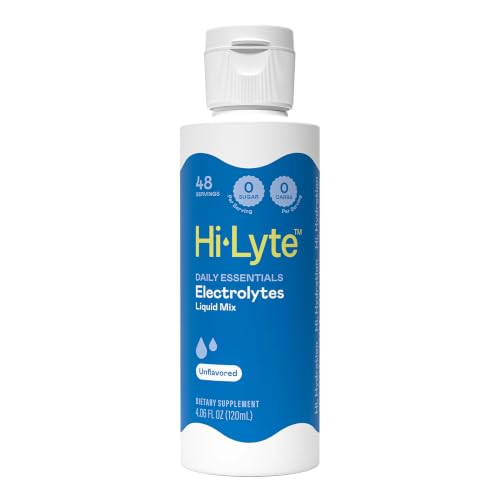
Long workshop sessions, especially in a warm garage, involve more sweating than people tend to notice, and these drops add electrolytes to a bottle of water without sugar or flavoring. A few drops turn plain water into an electrolyte drink, which some people find helps them stay on top of hydration during physical work like sanding, lifting, and yard projects.
The claims here stay deliberately modest. This is not a medicine, an energy product, or a treatment for anything, and it should not be presented as one. Plain water is fine for most people in most situations. Follow the label directions for dosing rather than guessing, and anyone with a medical condition — particularly anything involving kidneys, blood pressure, or fluid restrictions — should check with a clinician before using electrolyte products regularly.
Specs
- Type: electrolyte drops for water
- Use: add to a bottle of water per label directions
- Claims: none — not a medicine, energy, or treatment product
- Suitability: plain water remains fine for most people
- Note: check with a clinician first if managing a medical condition
FAQ
How many drawers does a home workshop tool chest need?
There is no universal number, because the right count follows the tool collection. A practical approach is one drawer per tool family, plus one spare for growth. For most home workshops that lands between five and ten drawers of mixed depths. Counting tool families on the bench before shopping gives a better answer than any general rule.
Are wheels worth it on a tool chest?
Wheels are worth it when the chest genuinely moves — between bench and driveway, or out of the way for large projects. Locking casters are essential, since a chest that rolls during use is a hazard. If the chest will live permanently against one wall, wheels add cost without returning much, and a fixed cabinet may serve better.
Can one of the featured products replace a tool chest?
No. Each featured product is a companion around the workshop: a light-duty rail for keys and small accessories, automatic bulbs for ambient light, a clamp mount, a laptop case, and electrolyte drops. None of them stores tools in drawers, so the chest itself remains a separate purchase.
How should drawers be organized to stay tidy over time?
Assign each drawer a single tool family, label the fronts, and return tools at the end of every session rather than in a weekly batch. Keep the heaviest items low and the most-used items at easy height. A short reset after each project preserves the system; once drawers become mixed, a full re-sort is the honest fix.
Final Verdict
The best tool chest for a home workshop is the one whose drawers match the tools actually owned: shallow drawers for hand tools in a single visible layer, deep drawers for power tools, one drawer per family, weight kept low, and wheels if — and only if — the chest truly travels. Measure the space first, and remember that a chest organizes a workshop without enlarging it. Around that centerpiece, the five companions each do a small, honest job: the SANY DAYO rail keeps keys and light accessories visible, the HEKEE bulbs handle ambient light automatically, the ULANZI clamp holds a phone where it is needed, the tomtoc case protects the household laptop, and the Hi-Lyte drops offer a modest hydration option for warm work.
Product and ASIN Reference
| Product | ASIN |
|---|---|
| SANY DAYO jewelry organizer 30 hooks | B07QFZSVQW |
| HEKEE dusk to dawn bulbs A19 | B07HGZMYZ4 |
| ULANZI super clamp | B09C882D4M |
| tomtoc laptop case | B073TVX735 |
| Hi-Lyte electrolyte drops | B01MXDAHIB |
FAQ
How many drawers does a home workshop tool chest need?
Are wheels worth it on a tool chest?
Can one of the featured products replace a tool chest?
How should drawers be organized to stay tidy over time?
More from Amazon
Programs that pair well with the guide above. Offers and eligibility are set by Amazon and may change.
Free shipping on eligible items, Prime Video and more. Eligible new members can start with a free trial.
Start a Prime free trialAudiobooks and podcasts to listen to on the go. Eligible new members can start with a free trial.
Try Audible freeAd-free music streaming. Eligible new subscribers can start with a free trial.
Try Music Unlimited freeA free business account with business pricing and bulk-buying tools for work, shop or home office.
Create a business accountAs an Amazon Associate we earn from qualifying purchases.










Write Your Review
No reviews yet. Be the first to share your experience!