
Key takeaways
- Shopping for the best pliers set for home jobs? See the plier types that matter, grip and storage tips, plus five workshop companions worth adding.
A good pliers set is one of the first tool purchases that actually earns its drawer space in a home workshop. Pliers pull staples, hold small parts steady, bend wire, snip cable ties, and reach into gaps where fingers simply cannot go. The trouble is that sets range from a handful of genuinely useful tools to large assortments padded with duplicates nobody touches. Choosing well means knowing which few plier types cover real home jobs, how the handles should feel in your hand, and how to store the set so the cutting edges and springs stay in good shape for years.
This guide takes a slightly different approach. The five picks below are companions that work around a pliers set in a home workshop — storage, light, mounting help, carrying protection, and a small comfort for long project days. To be plain about it: none of the five picks is itself a pliers set, and none of them replaces one. What they do is support the bench where the pliers live, so the set stays organized, visible, and ready. First, though, it helps to know what to look for in the pliers themselves.
As an Amazon Associate, we earn from qualifying purchases.
How to Choose a Pliers Set for Home Jobs
Start With the Three Jobs: Grip, Cut, and Reach
Most home repairs call for three basic plier jobs. Gripping pliers, such as slip-joint or groove-joint designs, hold pipes, nuts, and stubborn parts steady while the other hand works. Cutting pliers snip wire, cable ties, and small nails cleanly instead of chewing through them. Needle nose pliers reach into tight spaces to bend wire, retrieve dropped screws, and hold tiny components. A compact set that covers those three jobs honestly will handle the large majority of household tasks. Extra specialty pliers can wait until a specific project demands them.
Handles That Fit Your Hand Give You Control
Pliers are controlled by squeeze and angle, so handle fit matters more than looks. Grips should fill the hand without forcing the fingers wide, and the coating should stay secure when hands are dusty or slightly damp. A handle that is too large tires smaller hands quickly, while one that is too small concentrates pressure and slips at the worst moment. If possible, judge a set by how the largest and smallest pliers both feel, because a kit that only suits one grip size will frustrate everyone else in the household who borrows it.
Store Pliers Dry and Closed
Cutting edges and return springs are the parts of a pliers set that age first, and moisture is their main enemy. Wipe pliers down after messy jobs, store them dry, and keep them closed so edges are not knocked against other tools in a crowded drawer or box. A light habit of putting each pair back in the same spot also means the needle nose pair is findable when a screw drops behind the workbench. Damp garages are especially hard on tools, so a closed box or case indoors beats an open tray near a cold wall.
Keep Sharp Cutters Away From Children
Diagonal cutters and needle nose points are genuinely sharp, and a workshop that shares space with a family needs a simple rule: cutting pliers live up high, in a latched box, or in a room children do not enter alone. Teach older children that pliers are tools, not toys, and that the cutting pair is never the one to grab for play. It takes one careless moment for a small hand to find the sharpest tool in the drawer, so storage height and a closed container do the real safety work.
The Right Tool Still Matters
Finally, a plain statement worth keeping on the bench: pliers grip and cut, but they are not universal substitutes. Forcing a bolt or fastener with pliers because a wrench is in another room usually rounds the fastener, chews the plier jaws, and turns a two-minute job into a repair. Use pliers for holding, bending, pulling, and cutting within their size range, and walk to get the wrench, screwdriver, or socket when the job calls for it. A modest set used correctly will outlast and outperform a large set used as a hammer, lever, and wrench combined.
1. SANY DAYO Jewelry Organizer With 30 Hooks

Workshop walls collect small, easy-to-lose things: keys for the shed, lanyards, tape measures on loops, and light hand tools that vanish into drawers. This wall-mounted organizer offers 30 hooks in a row, giving those light items a visible home near the bench. In a workshop it works best as a light-duty rail beside the main tool storage, holding the small accessories that otherwise scatter across the worktop while the pliers set itself stays in its box or roll.
Be clear about its limits. This is a jewelry organizer repurposed as a hanging rail, and it suits keys, lanyards, and light accessories only. It is explicitly not a place for consoles, drives, power bricks, or heavy tools, and heavy pliers should not hang from it either. Used within those limits, it clears bench clutter and keeps the small daily items in one predictable place.
Specs
- Product type: Wall-mounted jewelry organizer with 30 hooks
- Workshop role: Light-duty rail for keys, lanyards, and light accessories
- Not suited for: Consoles, drives, power bricks, or heavy tools
2. HEKEE Dusk to Dawn Light Bulbs A19

Garages and workshops often sit dark until someone walks in carrying a box with both hands. These A19 bulbs have a built-in light sensor, so they switch on at dusk and off at dawn on their own, giving a workshop or garage a basic level of light without anyone touching a switch. That ambient light is genuinely useful for walking in safely and finding the main light switch.
Set expectations correctly, though. These are plain automatic sensor bulbs — not smart bulbs, with no app, dimming scenes, or voice control — and they are not task lighting for detailed bench work. A windowless garage or workshop room may keep them on far longer than expected, since the sensor reads darkness rather than time of day. Also check that your fixture is rated for enclosed use if the bulb will sit inside a closed fitting. Pair them with a proper bench lamp for close work.
Specs
- Product type: A19 dusk to dawn sensor light bulbs
- Behavior: Automatic on at dusk, off at dawn, via built-in sensor
- Not suited for: Smart home control or focused task lighting
- Note: Check enclosed-fixture rating before use in closed fittings
3. ULANZI Super Clamp

A super clamp earns its place in a workshop by holding things that hands cannot: a work light aimed at an engine bay, a phone filming a repair for reference, or a small camera pointed at the bench. The ULANZI clamp grips bars, shelves, and table edges, and its mounting points let you attach accessories you already own. Around a pliers job, it shines when both hands are busy gripping and turning while a light needs to stay aimed at the work.
Understand what it is: a mount only. It includes no light, phone, or camera of its own, so it adds holding power, not equipment. Two cautions matter. Never clamp it onto a monitor screen, which can crack under point pressure, and pad the jaws when clamping finished or painted surfaces so the grip does not leave marks. Within those rules it is a flexible extra hand for the bench.
Specs
- Product type: Super clamp mount for accessories
- Workshop role: Holds a light, phone, or camera you already own
- Includes: Mount only — no light, phone, or camera
- Caution: Never clamp a monitor screen; pad jaws on finished surfaces
4. tomtoc Laptop Case

Many home workshops double as the place where a laptop shows repair videos, parts diagrams, and torque charts. A padded case like this tomtoc sleeve protects that laptop when it travels between desk and bench, and gives it a safer resting place than a bare worktop scattered with screws. The soft padding cushions everyday bumps and keeps dust and scratches off the machine while tools are out.
Know its boundaries before relying on it. This is a padded soft case, not a hard shell, so it will not protect a laptop from a dropped toolbox or a serious crush, and it is not waterproof against spills or rain. Fit matters as well: check the internal dimensions against your laptop before ordering, because a case that is too tight stresses zips and corners, while a loose one lets the machine slide. Treated as light, everyday protection, it does its job well.
Specs
- Product type: Padded soft laptop case
- Workshop role: Everyday carry and bench-side protection for a laptop
- Not suited for: Hard-shell impact protection or waterproof use
- Fit note: Check internal dimensions against your laptop first
5. Hi-Lyte Electrolyte Drops
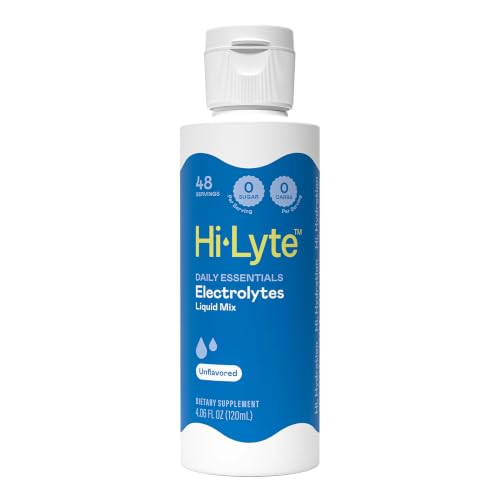
Long workshop projects — a fence repair in summer, a full afternoon of sanding and assembly — are thirsty work, and plain hydration is easy to neglect when a job is nearly done. These electrolyte drops are added to a bottle of water, offering a simple way to vary the routine of drinking water during long, sweaty tasks around the home and garage.
The claims here should stay deliberately modest. This is not a medicine, not an energy product, and not a treatment for anything; plain water is fine for most people most of the time, and these drops simply add electrolytes and flavor for those who want them. Follow the label directions for amounts, and direct any real health questions — about hydration, conditions, or medications — to a clinician rather than a product page. Kept in that honest frame, the drops are a small, sensible comfort for project days.
Specs
- Product type: Electrolyte drops for adding to drinking water
- Workshop role: Optional hydration companion for long project days
- Not suited for: Medicine, energy, or treatment claims of any kind
- Use note: Follow label directions; ask a clinician about health questions
FAQ
Which plier types should a first home set include?
Cover the three basic jobs: a gripping pair such as slip-joint pliers, a cutting pair for wire and cable ties, and needle nose pliers for reaching into tight spaces and holding small parts. That trio handles most household repairs. Add specialty pliers later, only when a real project calls for them, rather than buying a large assortment full of duplicates on day one.
How should pliers be stored so they last?
Wipe them clean after messy work and store them dry and closed, ideally in a box, roll, or case where the cutting edges are not rattling against other tools. Damp garages age springs and edges fastest, so indoor storage helps. Keep sharp cutters up high or in a latched container where children cannot reach them.
Can pliers replace a wrench in a pinch?
Not without cost. Pliers can grip a fastener, but their jaws are not shaped to turn it cleanly, so forcing a bolt usually rounds the fastener and damages the plier teeth. For one loose nut it might work once; as a habit it ruins both the hardware and the tool. Keep a basic wrench or socket set near the pliers and use each tool for its own job.
Why does this guide list companions instead of pliers?
Because a pliers set works best as part of a bench setup. Storage keeps small items findable, automatic bulbs make a dark garage safer to enter, a clamp holds a light where hands cannot, a case protects the laptop showing the repair guide, and hydration helps on long project days. None of the picks replaces a pliers set — they support the workshop around it.
Final Verdict
Choosing the best pliers set for a home workshop comes down to a few honest basics: cover gripping, cutting, and needle nose reach; pick handles that fit your hand; store the set dry, closed, and out of children’s reach; and resist using pliers as a wrench, since forcing fasteners ruins both the hardware and the tool. Around those basics, the five companions in this guide each solve a small, real workshop problem — light-duty hanging storage, automatic ambient light, an extra holding hand, laptop protection, and a modest hydration option for long days. Build the bench around the pliers with that kind of care, and a modest set will serve reliably for years.
Product and ASIN Reference
| Product | ASIN |
|---|---|
| SANY DAYO Jewelry Organizer 30 Hooks | B07QFZSVQW |
| HEKEE Dusk to Dawn Bulbs A19 | B07HGZMYZ4 |
| ULANZI Super Clamp | B09C882D4M |
| tomtoc Laptop Case | B073TVX735 |
| Hi-Lyte Electrolyte Drops | B01MXDAHIB |
FAQ
Which plier types should a first home set include?
How should pliers be stored so they last?
Can pliers replace a wrench in a pinch?
Why does this guide list companions instead of pliers?
More from Amazon
Programs that pair well with the guide above. Offers and eligibility are set by Amazon and may change.
Free shipping on eligible items, Prime Video and more. Eligible new members can start with a free trial.
Start a Prime free trialAudiobooks and podcasts to listen to on the go. Eligible new members can start with a free trial.
Try Audible freeAd-free music streaming. Eligible new subscribers can start with a free trial.
Try Music Unlimited freeA free business account with business pricing and bulk-buying tools for work, shop or home office.
Create a business accountAs an Amazon Associate we earn from qualifying purchases.










Write Your Review
No reviews yet. Be the first to share your experience!