
Key takeaways
- The best daily planner works harder with the right desk companions. Compare a light-duty hook rail, sensor bulbs, a clamp mount, a soft case and drops.
A daily planner earns its place on a study desk when it turns a scattered morning into a short, visible plan. The book itself is only part of the routine, though. The desk around it decides whether the page stays open, whether the small tools of the day have a home, and whether the evening review actually happens. This guide looks at five companion products that support a planner habit, from giving daily items a fixed place to keeping the room lit after dark.
One point deserves to be stated plainly at the start: none of the five picks below is itself a daily planner. There is no notebook, diary or planning app among them. Each one is a companion that sits around the planner and makes the routine easier to keep — a rail for the things you grab before a study session, automatic bulbs for a room that goes dark early, a clamp that holds a device where you need it, a padded case for the laptop, and a small bottle of electrolyte drops for the water glass beside the book.
As an Amazon Associate, we earn from qualifying purchases.
How to Choose Companions for a Daily Planner Routine
A Page Layout With Room for Real Priorities
Look for a daily page that gives the day a short priority list rather than an endless ruled column. Three to five priority lines is usually enough space for what genuinely matters, with a separate area for appointments and a notes corner for stray thoughts. A layout that forces everything into timed slots can work for scheduled study days, but a flexible layout survives the days when plans change by mid-morning. Leave a little blank space too; a crowded page discourages the quick notes that keep a planner useful.
Keep the Planner Open Where It Is Seen
A planner only works when it is visible. Choose a spot on the desk where the book can live open all day, beside the keyboard rather than under a pile of printouts. A closed planner in a drawer quickly becomes a diary of good intentions. Keeping it open also makes the evening review effortless, because the page is already in front of you when the session ends. If space is tight, a smaller format that stays open beats a large one that gets put away.
A Two-Minute Evening Review Keeps Tomorrow Honest
The routine that keeps a planner honest takes about two minutes. At the end of the day, cross off what is done, move what is unfinished onto tomorrow’s page without guilt, and write down the first task for the morning while it is still fresh. This short review is where the planner stops being a wish list and becomes a record you can trust. It also reveals patterns: the task that keeps migrating from day to day usually needs breaking into smaller steps.
Paper or App, Matched to How You Remember
Neither paper nor an app is automatically better. Paper suits people who remember by writing and who like seeing the whole day at a glance without unlocking a screen. An app suits people who need reminders that travel between the desk, a phone and a classroom. The honest test is which one you actually open. Many students keep a paper planner on the desk for the daily page and use phone reminders only for fixed appointments, combining the strengths of both without doubling the work.
A Planner Records Intentions, Not Outcomes
It is worth saying plainly: a planner records intentions, and the follow-through still belongs to the person using it. No page layout can do the revision, write the essay or make the phone call. What a good planner does is remove the small frictions — forgetting, re-deciding, hunting for the list — so effort goes into the work itself. Judge any planner, and any companion, by whether it removes friction from your day.
SANY DAYO Jewelry Organizer With 30 Hooks

The SANY DAYO organizer is, honestly described, a jewelry organizer: a rail fitted with 30 small hooks made for necklaces and bracelets. Around a study desk, that same rail earns a second life as a light-duty hanging point for the small things a study session needs — house keys, a lanyard, a looped charging cable, earbuds in their case. Everything hangs in view and off the desk surface, so the planner page stays clear.
The limits matter as much as the uses. This is a light-duty rail for light accessories only. It is explicitly not a place for games consoles, external drives, power bricks or heavy tools; those belong on a shelf or in a drawer where their weight is properly supported. Hang the rail within arm’s reach of the chair, and it quietly removes the daily hunt for small items.
Specs
- Product type: jewelry organizer rail with 30 hooks
- Best role at the desk: light-duty hanging storage for keys, lanyards and light accessories
- Not suited for: consoles, drives, power bricks or heavy tools
HEKEE Dusk to Dawn A19 Bulbs

The HEKEE A19 bulbs are plain automatic bulbs with a built-in dusk-to-dawn sensor: they switch on when the surrounding light falls and off when it rises. They are not smart bulbs — no app, no voice control, no colour changing — and they are not task lighting for close study work, which still calls for a proper desk lamp. Their role is background light that looks after itself.
In a room with a window, the bulbs simply follow the day. In a windowless room, note that the sensor may read the darkness as permanent dusk and the bulbs may stay on, so they suit hallways and general room fittings better than a lamp you switch by hand. Before fitting them in any enclosed fixture, check the enclosed-fixture rating on the packaging. For the planner routine, their value is simple: the room is never fully dark when you sit down for the evening review.
Specs
- Product type: A19 bulbs with built-in dusk-to-dawn light sensor
- Behaviour: automatic on at dusk, off at dawn, no app or smart controls
- Best role at the desk: self-managing background room light
- Note: may stay on in windowless rooms; check enclosed-fixture rating before use
ULANZI Super Clamp

The ULANZI super clamp is exactly what its name says and nothing more: a strong clamp mount. It has no light, no phone and no camera of its own — it simply grips an edge or a pole and holds whatever compatible accessory you attach to it. Around a study desk, that makes it useful for positioning a small lamp arm, phone holder or webcam mount at the desk edge, keeping the surface free for the open planner.
Two cautions keep the clamp in its proper role. Never clamp it onto a monitor screen; screens are not load-bearing edges, and a tightened clamp can damage the panel. And pad the jaws when you grip a finished desk edge, so the teeth do not mark the surface. Used on a desk edge, shelf lip or stand pole, it holds a device where you need it during a video call, then removes afterwards without leaving holes behind.
Specs
- Product type: clamp mount only, with no light, phone or camera included
- Best role at the desk: holding a compatible accessory at a desk edge, shelf lip or pole
- Caution: never clamp onto a monitor screen; pad the jaws on finished surfaces
tomtoc Laptop Case

The tomtoc case is a padded soft case for a laptop — the machine that shares most study desks with the planner. Its padding cushions the laptop against the everyday knocks of a bag or the trip between desk and lecture room, and its slim shape slides into a backpack without adding much bulk. It keeps the desk routine tidy too: at the end of the day the laptop goes into the case, and the desk returns to being a planning surface.
Be clear about what it is not. It is a soft case, not a hard shell, so it will not protect a laptop from a serious drop or from heavy weight stacked on top of it. It is also not waterproof; it shrugs off a light splash, but it is not protection in heavy rain. Before ordering, check the internal dimensions against your laptop’s actual measurements, including its thickness, because a case that is even slightly small will strain its zip. Matched correctly, it keeps the desk’s most expensive resident safe between sessions.
Specs
- Product type: padded soft laptop case
- Best role at the desk: everyday cushioning and tidy storage for the study laptop
- Not suited for: serious drops, heavy stacking loads or heavy rain
- Fit note: check internal dimensions against the laptop before ordering
Hi-Lyte Electrolyte Drops
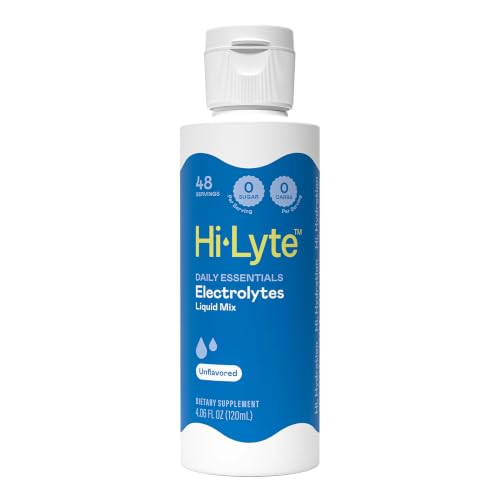
Hi-Lyte is a bottle of electrolyte drops that you add to a glass or bottle of water. The honest description is a modest one: the drops add electrolytes and a light mineral taste to plain water, and some people find that makes it easier to keep a water bottle going through a long study session. That is the whole claim, and for a desk companion it is enough. Kept beside the planner, the bottle is simply a small prompt to drink some water during a long afternoon.
The drops are not a medicine, not an energy product and not a treatment for anything. Plain water is fine for most people, most of the time, and nobody needs electrolyte drops in order to sit at a desk and study. If you use them, follow the directions on the label rather than adding extra for luck, and treat any real health question as a question for a clinician, not for a product page.
Specs
- Product type: electrolyte drops for adding to drinking water
- Best role at the desk: a small hydration prompt during long study sessions
- Claims boundary: not a medicine, energy product or treatment
- Use note: follow label directions; health questions belong with a clinician
Frequently Asked Questions
Can these companions replace choosing a good daily planner?
No. The planner itself — its page layout, size and format — does most of the work in a planning routine. The five products here are companions that reduce friction around the desk: somewhere for small items to hang, light that manages itself, a mount for a device, protection for the laptop and a prompt to drink water. Choose the planner first, then add only companions that solve a problem you actually have.
Where should a daily planner sit on a study desk?
Open, flat and in plain sight, in the spot your eyes land when you sit down. Beside the keyboard is the classic position because the page stays visible between tasks. If the planner has to be closed and moved to make room for other work, it will gradually stop being consulted, so give it a permanent home on the desk.
How long should the evening planner review take?
About two minutes is enough for most days. Cross off finished tasks, carry unfinished ones onto tomorrow’s page, and note the first task for the morning. The review is a tidying habit, not a second study session. On a Sunday it can stretch a little longer to glance at the week ahead, but the daily version should stay short.
Do I need every companion in this guide?
No, and most desks will need only one or two. Start from the friction you notice most: if you lose the first minutes of every session hunting for keys and cables, the rail helps; if the room goes dark while you work, the bulbs help. Add companions one at a time and keep only the ones that genuinely make the routine easier.
Final Verdict
A daily planner works when the desk around it supports the habit: the page stays open and visible, the small tools of the day have a home, and the evening review takes two quiet minutes. None of the five companions here is a planner, and none will do the follow-through for you. What they can do is remove friction — the SANY DAYO rail for light accessories, the HEKEE bulbs for self-managing light, the ULANZI clamp for holding a device at the desk edge, the tomtoc case for the laptop, and the Hi-Lyte drops as a modest hydration prompt. Pick the one or two that match your desk, keep the planner open, and let the routine do the rest.
Product and ASIN Reference
| Product | ASIN |
|---|---|
| SANY DAYO Jewelry Organizer 30 Hooks | B07QFZSVQW |
| HEKEE Dusk to Dawn Bulbs A19 | B07HGZMYZ4 |
| ULANZI Super Clamp | B09C882D4M |
| tomtoc Laptop Case | B073TVX735 |
| Hi-Lyte Electrolyte Drops | B01MXDAHIB |
FAQ
Can these companions replace choosing a good daily planner?
Where should a daily planner sit on a study desk?
How long should the evening planner review take?
Do I need every companion in this guide?
More from Amazon
Programs that pair well with the guide above. Offers and eligibility are set by Amazon and may change.
Free shipping on eligible items, Prime Video and more. Eligible new members can start with a free trial.
Start a Prime free trialAudiobooks and podcasts to listen to on the go. Eligible new members can start with a free trial.
Try Audible freeAd-free music streaming. Eligible new subscribers can start with a free trial.
Try Music Unlimited freeA free business account with business pricing and bulk-buying tools for work, shop or home office.
Create a business accountAs an Amazon Associate we earn from qualifying purchases.










Write Your Review
No reviews yet. Be the first to share your experience!