
Key takeaways
- Choose a gentle pet ramp for your dog with honest guidance on slope, grip, and stability, plus five calm corner companions for a pet-friendly home office.
A home office corner that shares space with a dog eventually faces one small, daily problem: the pet wants up, and jumping is no longer the right way to get there. Whether the destination is a sofa beside the desk, a low bed in the corner, or a favorite cushion, a pet ramp offers a gentler route than stairs for animals that cannot or should not step up. This guide explains how to choose that ramp honestly, then looks at five corner companions that keep the whole spot calmer, tidier, and easier to live with during the workday.
One point needs to be plain before anything else: none of the five picks below is itself a pet ramp. They are companions around the pet’s spot — small organizers, lighting, a mount, a case, and glassware chosen with the ramp’s traffic pattern in mind. The ramp decision itself is taught in the How to Choose section, because it matters more than any accessory. Get the slope, grip, and stability right first, and the companions simply make the arrangement pleasant.
As an Amazon Associate, we earn from qualifying purchases.
How to Choose a Pet Ramp for a Home Corner
Start with the animal, not the furniture. A ramp suits pets that will not or cannot step: long-backed dogs whose spines should not take stair impacts, post-surgery pets moving under a veterinarian’s recovery plan, arthritic seniors, and very small dogs facing furniture built at human scale. Stairs ask for repeated lifting of each leg; a ramp asks for a steady walk. But the honest counterpoint matters too — some pets fear a slope more than they fear steps, freezing at the base or scrambling halfway. The pet’s actual reaction decides. A ramp that the dog refuses to use is furniture, not an aid, so watch the first attempts carefully before committing the corner to it.
Slope is the core safety specification. A ramp that is too steep for the furniture height is not a ramp at all; it is a slide with good intentions. Match the ramp’s length to the height it must reach: the taller the sofa or bed, the longer the ramp needs to be, because length is what makes a slope gentle. A short ramp against a tall bed forces a climb the pet’s joints were supposed to be spared. Check the surface grip with the pet’s actual paws in mind, too. Smooth plastic or polished wood lets claws skate; a high-traction surface — carpet, rubberized tread, or a textured coating — gives the animal purchase on both the way up and, just as importantly, the way down, when momentum builds.
Stability is non-negotiable. The ramp must lock, brace, or wedge firmly against the furniture so it never shifts mid-climb; a ramp that slides an inch at the worst moment teaches the pet to fear it permanently. Check the stated weight rating and stay inside the pet’s weight class with margin. A ramp is for the animal it was rated for only — never a child’s toy, never a human step, and never a loading plank for boxes. Folding designs are convenient for storage, but the hinge and locking mechanism become part of the safety check every single time the ramp is set up.
Remember that a ramp is an aid, not a treatment. If a pet shows pain, weakness, trembling, or a sudden new reluctance to climb, that is a signal for a veterinarian visit, not a shopping trip. A ramp can make a managed condition easier to live with, and it can protect a healing joint during recovery, but it cannot diagnose or fix what is wrong. For a small pet, carrying may honestly remain the kindest answer, and there is no failure in that. Place the ramp where the pet already tries to climb — beside the usual sofa arm or the bed’s near side — rather than where it looks neatest, and budget a training week: treats on the surface, short sessions, no forcing, and patience while confidence builds.
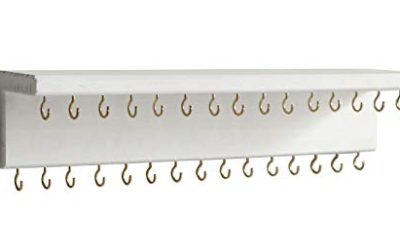
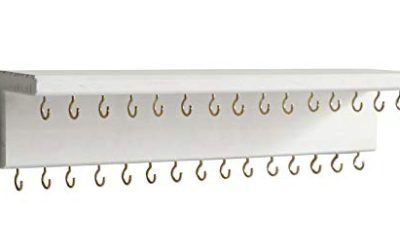
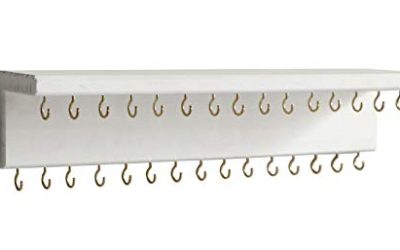
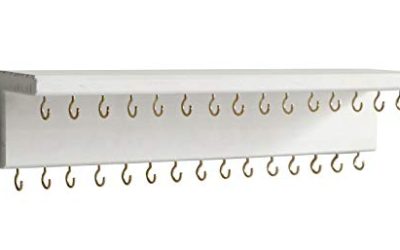
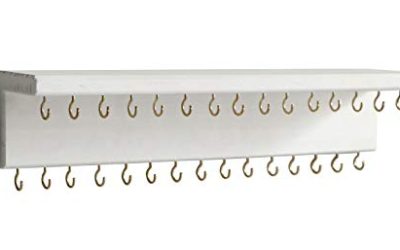
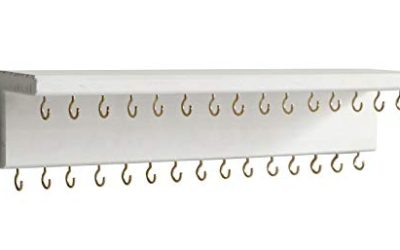
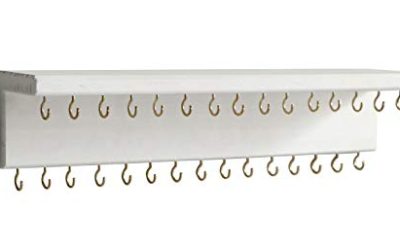
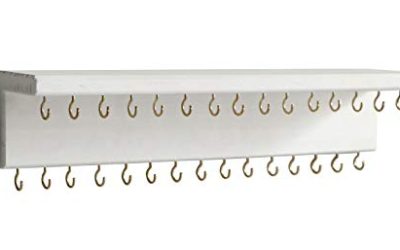
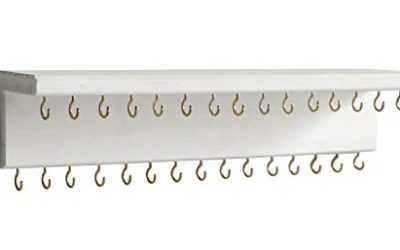
SANY DAYO Jewelry Organizer With 30 Hooks

This wall-mounted organizer earns its place in the pet corner by doing one modest job well: holding light leads and a small card on its hooks so the floor and desk edge stay clear of loose cables near the ramp’s landing zone. A tidy traffic path matters around a ramp, and small dangling cords are exactly the kind of clutter that ends up underfoot. It is, honestly, a jewelry organizer repurposed as a light-duty rail — nothing more, and it should be chosen with that limit in mind.
Specs
- 30 hooks for small, lightweight items
- Wall-mounted rail format that keeps the floor clear
- Best for light leads, lanyards, and a small reminder card
- Not rated for heavy loads of any kind
Treat the limits as the product description, not fine print. This organizer never holds consoles, drives, power strips, charging bricks, or heavy tools, and it should never carry anything a pet could pull down. Mounted beside the desk at adult height, it keeps the ramp’s approach lane open while giving charging leads for a phone or a reading light a consistent home. Households that expect it to behave like a equipment rack will be disappointed; households that use it as a light rail will find it quietly useful.
HEKEE Dusk to Dawn Bulbs A19

Evening light matters in a pet corner because animals moving at dusk are easy to trip over and easy to startle. These A19 bulbs switch themselves on at dusk and off at dawn, keeping a low, steady glow around the ramp area without anyone remembering a switch. That automatic behavior is the whole appeal: the path between desk, ramp, and sofa stays softly visible through the evening hours when a senior pet is most likely to wander.
Specs
- Standard A19 bulb shape for common household fixtures
- Built-in dusk-to-dawn sensor, automatic on and off
- Plain automatic bulbs — not smart bulbs, not app controlled
- Not task lighting; output suits ambient evening light
Set expectations plainly. These are ordinary sensor bulbs, not smart bulbs: there is no app, no scheduling, and no dimming scene. They are also not task lighting for reading or desk work, since the corner still needs a proper lamp for human eyes. Two practical notes apply. In a windowless room or a fixture that sees little daylight, the sensor may keep the bulb on longer than expected, because it judges darkness, not the clock. And before fitting one in a covered fixture, check the enclosed-fixture rating on the packaging so the bulb is used within its stated limits.
ULANZI Super Clamp

A clamp sounds like an odd companion for a pet corner until the desk beside the ramp needs a small light, a phone for a video call, or a lightweight accessory held at a fixed angle. This super clamp grips a desk edge or shelf and holds such items steady, freeing the desk surface itself and keeping small gear off the floor, out of the pet’s walking route.
Specs
- Heavy-duty clamp mount for desks, shelves, and poles
- Adjustable jaw with protective padding
- Standard mounting points for lightweight accessories
- A mount only — includes no light, phone, or camera of its own
The framing matters: this is purely a mount. It brings no light, phone, or camera of its own, and whatever it holds must be supplied separately and stay within sensible weight limits. Never clamp a screen with it — monitor panels are not built for jaw pressure. Pad the jaws on finished furniture to protect varnish and veneer, and position the clamp high on the desk’s far edge, well away from the ramp, so nothing overhangs the pet’s climb path. Set up that way, it is a tidy, honest piece of hardware.
tomtoc Laptop Case

A laptop case belongs in this roundup because the desk corner and the pet corner share a room, and the laptop needs a safe home when work ends and the floor becomes the dog’s territory again. This padded tomtoc case gives the machine a defined parking spot — in a drawer, on a shelf, or hanging by the desk — instead of leaving it on the sofa cushion the pet is about to climb toward.
Specs
- Padded soft case sized for slim laptops
- Zippered main compartment with soft lining
- Additional pocket space for a charger and small accessories
- Soft construction — not a hard shell, and not waterproof
Honesty about the format prevents disappointment. A padded soft case cushions against scuffs, dust, and minor bumps; it is not a hard shell and will not protect a laptop from a serious drop or a heavy object, and it is not waterproof, so a spilled water bowl nearby is still a threat to plan around. Check the internal dimensions against the exact laptop model before ordering, since a snug fit protects and a sloppy fit does not. Used as a daily parking spot, it keeps work gear and pet space from colliding.
JoyJolt Faye Highball Glasses 13 oz, 6 Pack

Long work sessions beside a resting pet call for a proper glass of water within reach, and this set of six highball glasses covers that job with a clean, everyday design. The 13 oz size suits water, iced tea, or juice without constant refills, and a full set means a clean glass is always available.
Specs
- Set of 6 highball glasses
- 13 oz capacity per glass
- Real glass construction with a weighted feel
- Everyday design suited to water and cold drinks
The one rule that matters here is placement. These are real, breakable glass, so keep them on a side table well away from the ramp’s path and its landing zone — a pet arriving at speed and a glass at floor level are a bad combination. A coaster on a stable side table, out of the tail-sweep and paw range, is the right home for them. And retire a glass with a chipped rim rather than returning it to service; a chipped edge has no place near anyone’s lips, human or otherwise. Handled with that small care, the set is an uncomplicated pleasure.
FAQ
Should a dog use a ramp or stairs?
It depends on the dog. Ramps suit long-backed breeds, post-surgery pets under a veterinarian’s plan, and seniors who struggle to lift each leg onto a step. Some dogs, however, distrust a slope and prefer the familiar rhythm of stairs. Watch the animal’s honest reaction during the first sessions; the pet’s confidence, not the product category, gives the answer.
How steep is too steep for a pet ramp?
If the pet scrambles, slides, or hesitates partway, the slope is too steep for that furniture height. Gentler is always safer: a longer ramp reaching the same sofa or bed lowers the angle and gives the paws time to grip. When in doubt, choose the longer option and a high-traction surface, and let the pet set the pace.
Can a pet ramp replace a visit to the vet?
No. A ramp is an aid for mobility, not a treatment. Pain, weakness, or a sudden refusal to climb can signal injury or illness that only a veterinarian can assess. Use the ramp to support a recovery or management plan the vet has set — and for some small pets, being carried remains the kindest option of all.
How long does ramp training usually take?
Budget about a week of short, relaxed sessions. Place the ramp where the pet already tries to climb, reward each step onto the surface, and never force or carry the animal onto it midway. Most pets build confidence gradually; a ramp that shifts or wobbles will undo that progress, so check its bracing before every session.
Final Verdict
Choosing a pet ramp comes down to four honest checks: the ramp must suit a pet that genuinely cannot or should not step, its slope must be gentle for the furniture height, its surface must grip real paws, and it must brace so firmly that it never shifts mid-climb. Anything less is decoration. The five companions in this guide then do the quieter work — the SANY DAYO organizer clearing light leads from the traffic path, the HEKEE bulbs keeping the evening route softly lit, the ULANZI clamp holding small gear off the floor, the tomtoc case parking the laptop safely, and the JoyJolt glasses keeping drinks on a side table where they belong. Ramp first, companions second, and the corner works for everyone in it.
Product and ASIN Reference
| Product | ASIN |
|---|---|
| SANY DAYO jewelry organizer 30 hooks | B07QFZSVQW |
| HEKEE dusk to dawn bulbs A19 | B07HGZMYZ4 |
| ULANZI super clamp | B09C882D4M |
| tomtoc laptop case | B073TVX735 |
| JoyJolt Faye highball glasses 13 oz 6 pack | B08BB62QWT |
FAQ
Should a dog use a ramp or stairs?
How steep is too steep for a pet ramp?
Can a pet ramp replace a visit to the vet?
How long does ramp training usually take?
More from Amazon
Programs that pair well with the guide above. Offers and eligibility are set by Amazon and may change.
Free shipping on eligible items, Prime Video and more. Eligible new members can start with a free trial.
Start a Prime free trialAudiobooks and podcasts to listen to on the go. Eligible new members can start with a free trial.
Try Audible freeAd-free music streaming. Eligible new subscribers can start with a free trial.
Try Music Unlimited freeA free business account with business pricing and bulk-buying tools for work, shop or home office.
Create a business accountAs an Amazon Associate we earn from qualifying purchases.
Write Your Review
No reviews yet. Be the first to share your experience!