
Key takeaways
- Set up a paper notebook study corner with one notebook per subject, handwritten notes, a weekly review habit, and five honest desk picks that support it.
The paper notebook study method is simple on purpose: one notebook per subject, notes written by hand during each study block, and a short weekly review where every notebook gets opened, skimmed, and marked for the pages that still matter. Writing by hand forces a student to summarize instead of copy, and the weekly review turns loose pages into a record of what was actually learned. None of that works, though, if the study corner itself fights the habit. A desk buried under chargers and a phone buzzing face-up next to the page will break the routine faster than any hard subject will.
This guide is built around the corner, not the notebooks themselves. The five picks below support the method in practical ways: a light-duty rail that keeps small leads off the page, automatic bulbs that handle background room light, a clamp mount for a device the student already owns, a padded case that parks the laptop away during paper-only blocks, and a modest hydration option for long sessions. The most important accessory costs nothing: the phone goes face-down in a drawer for the whole study block.
As an Amazon Associate, we earn from qualifying purchases.
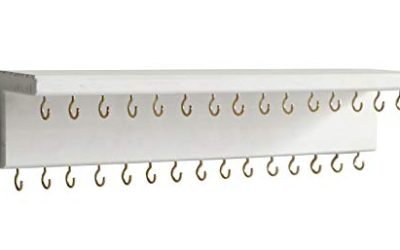
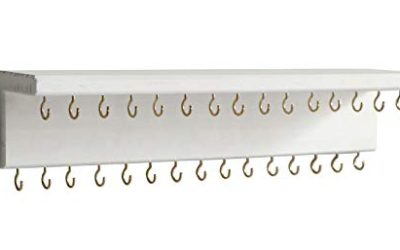
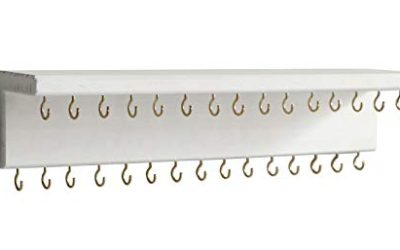
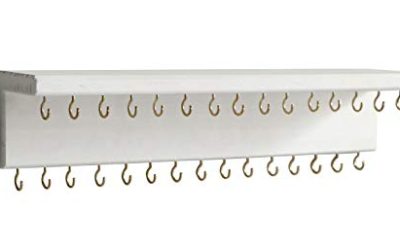
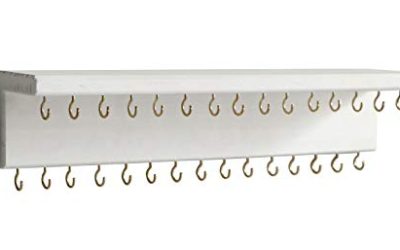
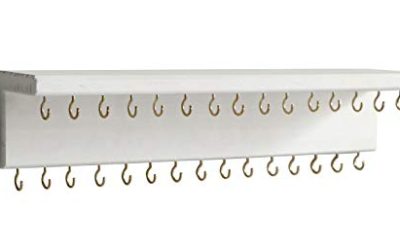
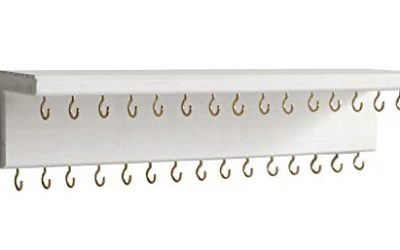
SANY DAYO Jewelry Organizer With 30 Hooks

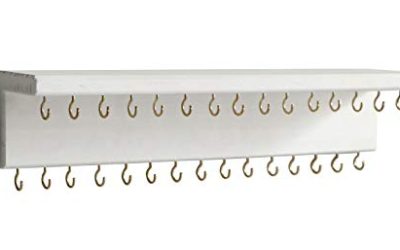
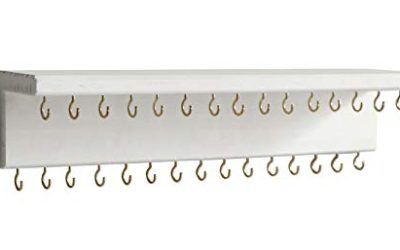
The first problem in any study corner is the slow creep of small things across the desk: a charging lead here, a sticky note there, a spare pen rolling into the writing space. The SANY DAYO organizer answers that creep honestly. It is a jewelry organizer, designed for necklaces and bracelets, repurposed here as a light-duty rail mounted beside or above the desk. Its thirty hooks give light charging leads, earbud cords, and clipped reminder notes a fixed home that is off the page but still within reach.
That framing matters. This is a light-duty rail for light items only. It should never be asked to hold power strips, charging bricks, or anything heavy, and it is not a substitute for a proper cable tray. What it does well is separation: the notebook stays in the center of the desk, the clutter hangs in a row to the side, and the weekly review starts with a clear surface instead of a cleanup project. During a study block, the only things on the desk should be the open notebook, a pen, and the textbook for that subject.
The hooks also solve the spare-notes problem. Loose index cards and summaries that do not belong inside a subject notebook can be clipped to a hook until the weekly review decides where they belong, keeping the one-notebook-per-subject rule intact.
Specs
- Wall-mountable jewelry organizer with 30 hooks
- Designed for necklaces, bracelets, and similar light items
- Repurposed here as a light-duty rail for light leads and notes
- Not rated for power strips, charging bricks, or heavy loads
HEKEE Dusk to Dawn Bulbs A19

Lighting in a study corner has two jobs. The study light itself, the lamp aimed at the page, is a separate purchase chosen for brightness and direction. The HEKEE bulbs handle the other job: general background light in the room. These are plain automatic dusk-to-dawn sensor bulbs in a standard A19 shape. A built-in sensor turns them on when the room darkens and off when daylight returns, with no app, no timer, and no voice assistant involved.
To be direct about what they are not: these are not smart bulbs. There is no color changing, no dimming schedule, and no remote control. They are also not the study light, and no one should do close reading under a general room bulb alone. Their value is that evening sessions start in a room already lit at a steady level, so the desk lamp becomes the single focused pool of light on the page.
Two caveats deserve attention. In a windowless room, the sensor may read the space as permanently dark, and the bulbs may stay on far longer than expected. And before using any bulb in a fully enclosed fixture, the fixture and bulb guidance should be checked, since enclosed fixtures trap heat.
Specs
- A19 bulb shape with a standard screw base
- Built-in dusk-to-dawn sensor for automatic on and off
- No app, hub, timer, or smart home connection required
- Intended for general background room light, not task lighting
- Sensor may stay on in windowless rooms; check enclosed-fixture guidance
ULANZI Super Clamp

Some study methods pair paper with a screen at controlled moments: a recorded lecture paused while notes are taken, or a reference diagram kept open beside the page. The ULANZI super clamp makes those moments tidy. It grips the edge of a desk or shelf and holds a device the student already owns at a fixed angle, off the writing surface and out of the notebook’s way.
The honest description is that this is a mount only. It includes no light, no phone, and no camera of its own; anything it holds is something the buyer already has. That is why it fits this method: the clamp adds no new gadget to manage, it just gives the existing one a parking spot that is not the middle of the desk. Clamped to the back edge, a phone or small tablet can show a timer or a reference page while both hands stay on the notebook.
The clamp also reinforces the phone rule. During pure writing blocks, the phone belongs face-down in the drawer. When a block genuinely calls for a reference screen, the phone comes out, goes on the clamp at the edge of the desk, and returns to the drawer when the block ends.
Specs
- Clamp-style mount that grips desk edges and shelves
- Mount only; includes no light, phone, or camera
- Holds a device the buyer already owns at a fixed angle
- Check jaw opening and load limits against the device before ordering
tomtoc Laptop Case

A paper-first study corner still lives in a room with a laptop, and the laptop is the strongest distraction in it. The tomtoc case gives the laptop a closed, parked home during notebook blocks. Slide it in, zip it shut, stand it in a drawer or beside the desk, and the block becomes paper-only by default rather than by willpower.
The case is a padded soft case, bought with that understanding. It is not a hard shell, so it protects against scratches, bumps, and everyday knocks rather than serious drops or crushing weight. It is also not waterproof; a spill or a rainy walk is beyond what a soft padded case promises. For a device that mostly travels between a desk, a drawer, and a bag, that level of protection is proportionate.
Fit is the detail to get right before ordering. Laptop sizes are nominal, and internal dimensions decide whether a machine slides in with room for the zipper to close without forcing. Measure the laptop, compare against the stated internal dimensions, and leave a small margin.
Specs
- Padded soft case for everyday bump and scratch protection
- Not a hard shell; not designed for serious drops or crushing loads
- Not waterproof
- Sized by internal dimensions; measure the laptop before ordering
Hi-Lyte Electrolyte Drops
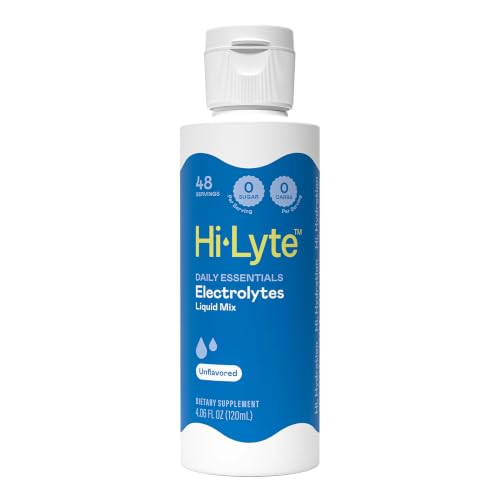
Long study blocks have a quiet failure mode: the student sits down alert, and ninety minutes later focus has thinned out for no obvious reason, sometimes from simple thirst. The Hi-Lyte drops are a concentrated electrolyte addition for a glass or bottle of water, offered here with deliberately modest claims. They are not a medicine, not an energy product, and not a treatment for anything, and they are no substitute for sleep, meals, or the weekly review.
Plain water is fine for most people, most of the time, and for short study blocks it is all anyone needs. The drops earn their place for longer sessions, warm rooms, or students who drink more water when it tastes like something.
Use them as directed on the label. Anyone with a medical condition, or on a restricted diet that limits minerals such as sodium or potassium, should check with a clinician before using electrolyte products at all.
Specs
- Concentrated electrolyte drops added to water
- Follow the label directions for serving and dilution
- Not a medicine, energy product, or treatment
- Plain water remains fine for most people and short sessions
- Consult a clinician first if a medical condition or restricted diet applies
How to Choose
Start with the method, not the shopping. The notebook system needs four habits before it needs any gear: one notebook per subject with the subject name on the cover, notes taken by hand during timed blocks, the phone face-down in a drawer for the whole block, and a weekly review where every notebook is opened and the important pages are flagged. Set those habits for a week first; the friction that remains is the shopping list.
Then buy in the order the friction appears. If small clutter keeps invading the page, the light-duty rail solves the widest problem for the least effort, as long as its limits are respected: light leads and clipped notes only, never power strips, bricks, or heavy items. If evening sessions feel dim, separate the lighting jobs: background light can be automatic and plain, like the sensor bulbs, while the real study lamp deserves its own careful choice.
If a reference screen keeps landing mid-desk, a clamp mount gives it a fixed edge position, knowing it is a mount only with nothing included. If the laptop is the distraction, park it in a padded case during paper blocks, after measuring for internal fit and accepting that a soft case is neither hard nor waterproof. And if long sessions fade, fix the water habit first, plain or with drops used per the label, with a clinician consulted where health or diet restrictions apply.
FAQ
How many notebooks does the one-per-subject method actually need?
One per subject being studied right now, not one per subject ever taken. For most students that means four to six notebooks in active rotation. When a subject ends, its notebook goes to a shelf as the archive for that course, and a fresh one starts for the next subject. Keeping only active notebooks at the desk protects the clear-surface rule, and the weekly review stays short enough to actually happen.
Where should the phone go during a study block?
Face-down in a closed drawer, silenced, for the entire block. Not beside the notebook, not on the clamp, and not in a pocket where it can be checked by reflex. If a block needs a reference screen or a timer, that is a planned exception: the phone comes out, sits on the clamp at the edge of the desk, and returns to the drawer when the block ends.
Are the sensor bulbs enough light to study by?
No. The dusk-to-dawn bulbs are background room light only, and they are plain automatic bulbs, not smart bulbs with adjustable output. Close reading and writing need a dedicated desk lamp aimed at the page. The sensor bulbs keep the room at a steady level so the lamp is the one focused light source. In a windowless room they may stay on more than expected, and enclosed fixtures should be checked against the bulb guidance.
Do the electrolyte drops improve focus or grades?
No, and they are not sold here on that basis. The drops are not a medicine, an energy product, or a treatment, and no drink mix substitutes for sleep, food, or the review habit. Their only role is making it easier to keep water at the desk during long blocks, which plain water also does well for most people. Follow the label directions, and anyone with a medical condition or restricted diet should ask a clinician first.
Final Verdict
A paper notebook study corner succeeds on habits: one notebook per subject, notes written by hand, the phone face-down in a drawer, and a weekly review that never gets skipped. The five picks here exist to remove the small frictions that break those habits. The jewelry organizer, used honestly as a light-duty rail, keeps the page clear. The sensor bulbs settle the room light while a real desk lamp does the study work. The clamp gives a reference screen an edge to live on, the padded case parks the laptop out of sight during paper blocks, and the drops support the discipline of keeping water nearby.
Buy them in the order your own friction appears, respect each product’s stated limits, and let the method lead. A clear desk, a closed drawer with the phone inside it, and subject notebooks reviewed every week will do more than any accessory.
Product and ASIN Reference
| Product | ASIN |
|---|---|
| SANY DAYO jewelry organizer 30 hooks | B07QFZSVQW |
| HEKEE dusk to dawn bulbs A19 | B07HGZMYZ4 |
| ULANZI super clamp | B09C882D4M |
| tomtoc laptop case | B073TVX735 |
| Hi-Lyte electrolyte drops | B01MXDAHIB |
FAQ
How many notebooks does the one-per-subject method actually need?
Where should the phone go during a study block?
Are the sensor bulbs enough light to study by?
Do the electrolyte drops improve focus or grades?
More from Amazon
Programs that pair well with the guide above. Offers and eligibility are set by Amazon and may change.
Free shipping on eligible items, Prime Video and more. Eligible new members can start with a free trial.
Start a Prime free trialAudiobooks and podcasts to listen to on the go. Eligible new members can start with a free trial.
Try Audible freeAd-free music streaming. Eligible new subscribers can start with a free trial.
Try Music Unlimited freeA free business account with business pricing and bulk-buying tools for work, shop or home office.
Create a business accountAs an Amazon Associate we earn from qualifying purchases.
Write Your Review
No reviews yet. Be the first to share your experience!