
Key takeaways
- Compare knee pillow picks for side sleepers, with honest notes on thickness, foam warmth, straps, and five desk-home companions worth a look.
Side sleepers who spend their days at a desk often end the night the same way they spent the day: slightly twisted. When the top knee drops forward and down, the hips rotate, and many people wake with a stiff lower back or an aching hip that makes the next day’s sitting harder. A knee pillow is a simple idea — a shaped cushion between the knees so the legs stay stacked and the hips stay level. This guide explains how to choose one honestly, then looks at five desk-home companion products that support the same routine.
One point needs to be stated plainly: none of the five picks reviewed below is itself a knee pillow. They are companion products for the desk worker’s home and bedtime setup, not cushions. The How to Choose section covers knee pillows directly, so you can judge any knee pillow against it. The five products that follow solve the small, real problems around a side sleeper’s evening: loose leads by the bed, harsh light on night-time trips, a laptop that travels between desk and bedroom, and plain hydration habits.
As an Amazon Associate, we earn from qualifying purchases.
How to Choose
Alignment help, not treatment
A knee pillow keeps the hips and knees aligned for some side sleepers, and that is the whole of its job. It does not treat back pain, sciatica, or hip conditions, and should never be bought as if it does. If you have persistent pain, pain that radiates down a leg, numbness, or weakness, that is a conversation for a clinician, not a shopping decision. Think of it as a comfort aid that may help you wake up less stiff — nothing more — and judge it on whether your sleep feels better over several nights.
Thickness is the fit decision
The single most important choice is thickness. The pillow’s job is to fill the gap between your knees so the top leg rests level instead of dropping. A pillow that is too thin changes almost nothing: the knees still nearly touch, the top leg still rolls forward, and you have bought a soft spacer with no real effect. A pillow that is too thick forces the top leg too high, pushing the hips out of line the other way and creating its own ache by morning. Body size matters — broader hips generally need a thicker pillow. Compare listed dimensions against the gap between your knees when lying on your side, and favor a contoured, hourglass profile, which stays centered better than a plain block.
Foam, warmth, and the washable cover
Memory foam is the common fill because it holds its shape under the knees and does not flatten the way cheap fiberfill can within a few weeks. The trade-off is warmth: memory foam sleeps warm, and a pillow held between the knees all night sits in one of the warmer spots in the bed. If you run hot, look for ventilated foam or a breathable cover fabric. Whatever the fill, insist on a removable, washable cover. This pillow sits against skin every night and collects sweat and skin oils; a washable cover is basic hygiene, not a luxury feature.
Straps: helpful for some, annoying for others
Many knee pillows include an elastic strap meant to hold the pillow to the top leg so it stays in place when you shift position. For restless sleepers, a strap can be the difference between a pillow that works all night and one found on the floor by morning. For others, the strap is simply annoying — it can feel restrictive or ride up. Neither reaction is wrong. If you move a lot in your sleep, a strap is worth having, ideally one that detaches. If you sleep fairly still, skip it.
Surgery recovery follows the surgeon, not a guide
Anyone recovering from hip or knee surgery should follow their surgeon’s guidance, not a buying guide. Post-surgical positioning rules are specific to the operation and the patient: some recoveries require a particular pillow or abduction support approved by the care team, and some positions are restricted outright for a time. A consumer knee pillow is not a medical device and is no substitute for what your surgeon prescribed. If your care team clears you to choose your own sleep support, the points above apply — but the clearance comes first.
SANY DAYO Jewelry Organizer 30 Hooks

The SANY DAYO organizer is a wall- or door-mounted rail fitted with 30 hooks, sold for hanging necklaces and other jewelry without tangles. In a desk worker’s bedroom it works as a light-duty rail for the small things that otherwise pile up on the nightstand: a lightweight phone charging lead looped over a hook, a sleep mask, a watch, or a small card. Keeping those items on hooks instead of in a heap keeps the nightstand clear, which matters when you are half asleep.
Be clear about its limits. This is a jewelry organizer and should only ever carry light-duty loads: light leads and a small card — never consoles, drives, power strips, charging bricks, or heavy tools, which belong on proper shelving or rated mounts. Expect a tidier bedside, not a cable-management system.
Specs
- 30 hooks on a single rail for necklaces, bracelets, and similar light items
- Wall- or door-mount format keeps the nightstand surface clear
- Best used as a light-duty rail for light leads and a small card
- Not rated for consoles, drives, power strips, charging bricks, or heavy tools
HEKEE Dusk to Dawn Bulbs A19

The HEKEE A19 bulbs have a built-in light sensor: they switch themselves on at dusk and off at dawn, with no app, no hub, and no programming. For a side sleeper who gets up in the night, one in a hallway fixture gives low, automatic light for the trip to the bathroom and back, without a blinding main light.
Honesty matters here: these are plain automatic sensor bulbs. They are explicitly not smart bulbs — no app control, no dimming schedule, no voice assistant — and they are not task lighting, so do not plan to read or work by them. Two practical notes: in windowless rooms the sensor may never see enough daylight, so the bulb may stay on far longer than expected; and before fitting one in a covered fixture, check the enclosed-fixture rating. Within those limits, they are a set-and-forget comfort for moving around the home at night.
Specs
- A19 bulb shape with a standard screw base for common home fixtures
- Built-in dusk-to-dawn sensor switches the bulb automatically
- No app, hub, or smart-home connection — plain automatic operation only
- Not smart bulbs and not task lighting; suited to hallways and landings
- May stay on in windowless rooms; check the enclosed-fixture rating before covered use
ULANZI Super Clamp

The ULANZI super clamp is a sturdy clamp with a mounting point for small accessories. Around a desk or bedside, it can grip a desk edge, a shelf, or a headboard rail and hold a lightweight accessory in a fixed position — for example keeping a small reading light aimed at a book rather than at a sleeping partner.
Frame it truthfully: the ULANZI is a mount only. It has no light, no phone, and no camera of its own — anything you attach is a separate product you supply. Two rules keep it safe: never clamp a screen, since jaw pressure can crack a display; and pad the jaws so the clamp does not mark furniture finishes.
Specs
- Heavy-duty clamp with an accessory mounting point
- Grips desk edges, shelves, and rails to position small, light accessories
- Mount only — no light, phone, or camera included with it
- Never clamp a screen; jaw pressure can crack displays
- Pad the jaws to protect furniture finishes
tomtoc Laptop Case

A desk worker’s laptop often travels the shortest commute in the world: desk to sofa to bedside table and back. The tomtoc case is a padded soft case that protects the machine from knocks and scratches, and gives it a defined parking spot at night instead of leaving it loose on the bed.
Its limits are simple. It is a padded soft case, not a hard shell: it cushions everyday bumps but will not protect a laptop from a serious drop or a heavy object landing on it. It is also not waterproof, so a spilled drink or rainy walk will soak through given time. Before ordering, check the internal dimensions against your exact laptop model, including thickness — too snug stresses the zips, too loose lets the machine slide.
Specs
- Padded soft case for everyday laptop carrying around the home
- Cushions light bumps and scratches during desk-to-sofa-to-bedside moves
- Not a hard shell — not intended for serious drops or crushing loads
- Not waterproof; offers no protection against soaking
- Check internal dimensions against your exact laptop model before ordering
Hi-Lyte Electrolyte Drops
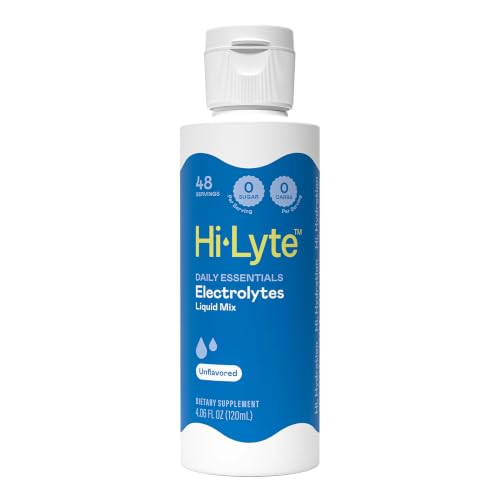
Hi-Lyte drops are an unflavored electrolyte concentrate you add to water, aimed at people who want minerals without sweeteners or flavoring. For a desk worker, the realistic use is modest: a glass of water by the bed or on the desk, as part of an ordinary hydration habit.
The claims here are deliberately modest, because they should be. Hi-Lyte is not a medicine, not an energy product, and not a treatment for anything — it will not fix poor sleep or cure cramps. For most people, plain water is fine, and thirst is a reasonable guide. If you use the drops, follow the label directions on dilution rather than guessing stronger mixtures. And if you have a medical condition or a restricted diet — particularly anything involving sodium or potassium limits, kidney issues, or blood-pressure medication — check with your clinician first.
Specs
- Unflavored electrolyte drops added to water by the label directions
- No sweeteners or flavoring; suited to a glass of water at the desk or bedside
- Not a medicine, energy, or treatment product; plain water is fine for most people
- Check with a clinician first if you have a medical condition or restricted diet
Frequently Asked Questions
How thick should a knee pillow be for a side sleeper?
Thick enough that your top leg rests level, parallel to the bottom leg, without your knees quite touching. Too thin and nothing changes; too thick and the top leg is forced too high, tilting the hips the other way. Broader hips usually need a thicker pillow. Judge by how your hips feel after several nights, not by a first impression.
Does a knee pillow fix back pain or sciatica?
No. A knee pillow is a comfort aid that keeps the hips and knees aligned for some side sleepers; it does not treat back pain, sciatica, or hip conditions. Persistent pain, pain radiating down a leg, numbness, or weakness should be assessed by a clinician, not managed with bedding purchases.
Is a strap worth it on a knee pillow?
If you change position or roll over often, a strap helps the pillow stay between your knees instead of ending up on the floor, and a detachable strap gives you the choice. If you sleep fairly still, a strap mostly adds fuss. Neither design is better in general — it depends on how you sleep.
Can I use a knee pillow after hip or knee surgery?
Only if your surgeon or care team says so. Post-surgical positioning is specific to your operation, and some recoveries require a prescribed support or restrict certain positions entirely. Ask your care team first, and follow their answer over anything in this guide.
Final Verdict
Choosing a knee pillow well is mostly an exercise in honest expectations. Get the thickness right for your build, pick memory foam if you want shape retention and accept that it sleeps warm, insist on a washable cover, and decide on a strap based on how much you move at night. Expect a comfort aid that may help you wake less stiff — not a treatment — and route real pain, and all post-surgical questions, to clinicians. The five companion picks support the same routine in smaller ways: the SANY DAYO rail keeps light bedside items off the nightstand, the HEKEE bulbs light night-time trips automatically without pretending to be smart, the ULANZI clamp positions a small accessory safely, the tomtoc case protects a laptop on its daily trip around the home, and Hi-Lyte drops are an optional hydration habit. Together they make the desk worker’s corner of the home a calmer place to end the day.
Product and ASIN Reference
| Product | ASIN |
|---|---|
| SANY DAYO jewelry organizer 30 hooks | B07QFZSVQW |
| HEKEE dusk to dawn bulbs A19 | B07HGZMYZ4 |
| ULANZI super clamp | B09C882D4M |
| tomtoc laptop case | B073TVX735 |
| Hi-Lyte electrolyte drops | B01MXDAHIB |
FAQ
How thick should a knee pillow be for a side sleeper?
Does a knee pillow fix back pain or sciatica?
Is a strap worth it on a knee pillow?
Can I use a knee pillow after hip or knee surgery?
More from Amazon
Programs that pair well with the guide above. Offers and eligibility are set by Amazon and may change.
Free shipping on eligible items, Prime Video and more. Eligible new members can start with a free trial.
Start a Prime free trialAudiobooks and podcasts to listen to on the go. Eligible new members can start with a free trial.
Try Audible freeAd-free music streaming. Eligible new subscribers can start with a free trial.
Try Music Unlimited freeA free business account with business pricing and bulk-buying tools for work, shop or home office.
Create a business accountAs an Amazon Associate we earn from qualifying purchases.










Write Your Review
No reviews yet. Be the first to share your experience!