
Key takeaways
- Find the best planner setup for a calmer home office week, with dated and undated formats, page layouts, sizes, and honest companion picks for the desk.
A home office week rarely falls apart because of one big problem. It unravels through small ones: a deadline remembered a day late, a meeting noted in one app and forgotten in another, tasks scattered across sticky notes and memory. A paper planner answers that drift with a single visible place where the week lives. It does not ping, sync, or run out of battery; it sits open on the desk.
This guide covers the planner decision itself and the desk setup that supports it. To be plain about the picks: none of the five products below is itself a planner. They are companions around the planning desk — a light-duty rail that keeps cables off the writing surface, automatic bulbs for the hallway, a clamp mount for a phone, a padded laptop case for the end of the workday, and glasses that mark the break between work hours and home hours.
As an Amazon Associate, we earn from qualifying purchases.
How to Choose a Planner for Home Office Work
Dated vs Undated: Forgiveness or Rhythm
A dated planner prints the calendar for you, and that creates rhythm: turning to a page that already says today nudges a steady weekly review habit. The cost is waste — skip two weeks for a holiday or a heavy project stretch, and the blank pages sit there quietly accusing. An undated planner forgives all of that, because you write the date in yourself and a skipped week costs nothing. The trade-off is discipline: nothing in an undated book tells you that you have drifted. Choose dated for rhythm, undated for forgiveness.
Daily Pages vs Weekly Spreads
Daily pages give a full page per day, which suits time-blockers who plan hour by hour and want room for notes beside the schedule. Daily formats grow thick quickly, though, and can make a light day look emptier than it is. Weekly spreads show the whole week across two facing pages, which suits deadline thinkers who plan by what is due: three deadlines landing on Thursday announce themselves on Monday morning. Many home office workers land on a weekly spread for the plan and a scratch notebook for the day.
Size Is a Habit Decision
Planner size behaves less like a preference and more like a habit decision. A large desk planner earns its footprint only if it stays open on the desk, in view, all day; the moment it gets closed and stacked under other papers, it stops planning anything. A mid-size book that lives open beside the keyboard beats a beautiful large one in a drawer. Portability cuts the other way: if the workday moves between rooms, a smaller planner that travels in a laptop bag gets consulted more often. Match the size to where planning actually happens.
Paper Complements the Phone Calendar
A paper planner does not replace the phone calendar, and it should not try. Shared scheduling — family events, team meetings, anything another person can move — belongs in the digital calendar, where invitations and reminders live. Paper does a different job: it holds your intentions. Priorities, task order, call notes, and the end-of-week review all sit better on paper, where nothing competes for the screen. The phone answers what is scheduled; the planner answers what matters.
The Weekly Review Is the Real System
A planner works through the weekly review ritual, not through the purchase. Ten quiet minutes at the end of the week is where the system lives: move unfinished tasks forward deliberately, check next week’s appointments against your written priorities, and note what actually consumed the week. That record is how next month’s planning gets realistic. Without the review, any planner becomes a diary of good intentions. With it, even a plain undated book becomes a working system — and a reviewed week rarely ambushes you on Wednesday.
Keep It Where the Workday Starts
Placement closes the loop. The planner belongs where the workday starts: beside the keyboard, in the first place your eyes land when you sit down. A planner stored across the room gets opened rarely. The companions below all serve that one spot — light that turns itself on, cables kept off the page, the laptop packed away when the day ends.
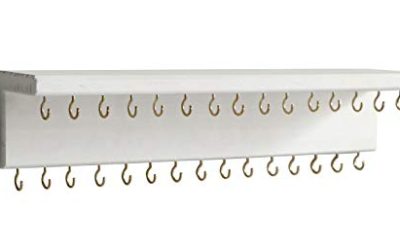
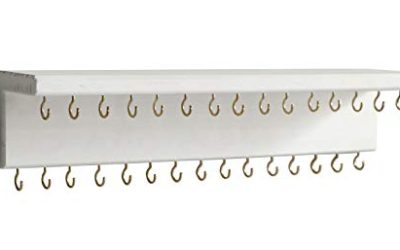
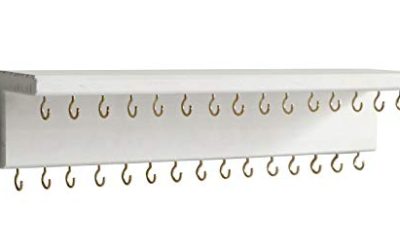
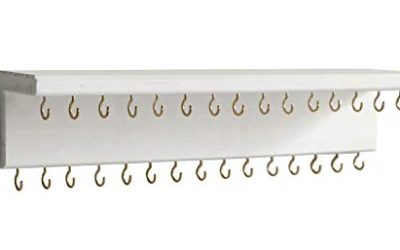
SANY DAYO Jewelry Organizer With 30 Hooks

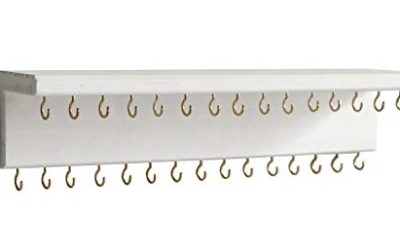
The SANY DAYO organizer is a rail fitted with 30 hooks, sold as a jewelry organizer for necklaces and similar light items. Around a planning desk, its honest job is the same at a smaller scale: a light-duty rail for the small, stringy things that otherwise colonize the writing surface — charging cables, a lanyard, earbuds on their cord — exactly what ends up draped across an open planner.
The framing matters. This rail is for cables, lanyards, and light accessories only. It should never be asked to hold consoles, drives, power bricks, or heavy tools, and it is not a substitute for an equipment shelf. Hung beside the desk, it gives the end-of-day reset a fixed address: cables go back to the rail, the planner stays open to tomorrow, and the desk reads as finished rather than abandoned. A clear page invites the morning review.
Specs
- Product: SANY DAYO jewelry organizer, 30 hooks
- Format: Hook rail for light items
- Best use: Cables, lanyards, light accessories
- Load honesty: Light-duty only; never consoles, drives, power bricks, or heavy tools
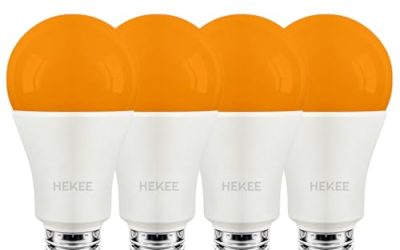
HEKEE Dusk to Dawn Light Bulbs, A19

The HEKEE bulbs are A19 bulbs with a built-in light sensor: they switch on at dusk and off at dawn on their own. That automation suits the spaces near the desk — a hallway, a porch, an entry — where light is needed predictably but nobody wants to manage a switch.
Two honest limits define them. They are plain automatic sensor bulbs; they are explicitly not smart bulbs, so there is no app control, no color changing, and no scheduling beyond what daylight does. They are also not task lighting: the desk still needs a proper lamp for reading a planner page. In windowless rooms they may stay on, since the sensor reads darkness rather than time. Check the enclosed-fixture rating before using any bulb inside a covered fitting. Within those limits, the route to the desk stays lit without a single decision.
Specs
- Product: HEKEE dusk to dawn bulbs, A19
- Format: A19 bulbs, built-in dusk-to-dawn sensor
- Control: Automatic only; no app, not smart bulbs
- Limits: Not task lighting; may stay on in windowless rooms; check enclosed-fixture rating
ULANZI Super Clamp

The ULANZI super clamp is a mounting clamp, and only a mounting clamp: it has no light, phone, or camera of its own. It provides a firm grip on a desk edge, shelf, or pole, plus a mounting point for a small device you already own — most often a phone. For a planner workflow, the phone can sit clamped at the desk edge during a planning session, showing the digital calendar while the paper page stays in front of you: appointments on the raised screen, priorities on the paper below.
Two cautions keep it honest. Never clamp a monitor screen; the jaws are built for edges and frames, and a display panel is neither. Pad the jaws on finished surfaces, to improve hold and leave furniture unmarked. Its real value is positional: it lifts the phone off the planner page, exactly where a distraction prefers to sit.
Specs
- Product: ULANZI super clamp
- Format: Mount only; no light, phone, or camera included
- Best use: Phone at the desk edge during planning or calls
- Cautions: Never clamp a monitor screen; pad the jaws
tomtoc Laptop Case

The tomtoc case is a padded soft case for a laptop, and its place in this guide is the boundary at the end of the workday. A planner system works best when the day visibly ends: the review is done, tomorrow’s page is open, and the laptop goes away. Sliding the machine into a case turns the planning corner back into part of the home.
The honest framing is straightforward. This is a padded soft case, not a hard shell, so it guards against scratches and bumps rather than drops or crushing weight. It is not waterproof, and a spill or rainy commute deserves more protection than padding alone. Fit deserves care too: check the internal dimensions against the laptop before ordering, because a case sized for a different machine class either swallows the laptop loosely or refuses to close. The case makes closing the workday a physical act — and routines built on physical acts survive busy weeks.
Specs
- Product: tomtoc laptop case
- Format: Padded soft case
- Protection: Scratches and light bumps; not a hard shell, not waterproof
- Fit note: Check internal dimensions against the laptop first
JoyJolt Faye Highball Glasses, 13 oz, Set of 6

The JoyJolt Faye set is six highball glasses of 13 ounces each — real glassware for water, iced tea, and the ordinary drinks of a home day. In a planner routine, a glass like this marks the pause: the weekly review goes better with a drink beside the book, and morning planning pairs naturally with something cold after the coffee is done.
The honest notes are the usual ones for real glass. These are breakable glasses, so they belong on a stable side table away from electronics and paper — a planner page and a tipped highball are natural enemies. Retire chipped rims rather than demoting them to daily use; a chipped glass only gets worse, and a set of six makes retiring one painless.
Specs
- Product: JoyJolt Faye highball glasses, 13 oz, 6 pack
- Format: Six highball glasses, 13 oz each
- Material: Real glass; breakable
- Placement: Side table only, away from electronics and paper; retire chipped rims
FAQ
Should a home office worker choose a dated or undated planner?
Choose dated if a printed rhythm helps and the schedule is steady enough that few pages will be skipped. Choose undated if the workload swings, travel interrupts the routine, or blank dated pages would feel like failure. Undated books forgive skipped weeks, but they ask for a firmer review habit in return.
Can a paper planner replace a phone calendar?
No, and it works better when it does not try. Shared appointments, invitations, and reminders belong in the phone calendar, where other people can affect them. The paper planner holds priorities, task order, notes, and the weekly review — the intentions layer a calendar app handles poorly. Used together, each tool does the job it is good at.
What size planner works best on a home office desk?
The best size is the one that stays open on the desk, in view, all day. A mid-size planner beside the keyboard usually beats a large format that gets closed and buried. If the workday moves between rooms, favor the smaller size that travels with the laptop.
What is the weekly review, and why does it matter?
The weekly review is a short session — around ten minutes at the end or start of the week — where unfinished tasks are moved forward on purpose, next week’s appointments are checked against written priorities, and the past week’s actual work is noted. It matters because the review, not the planner itself, is the system. Without it, any planner becomes a record of intentions rather than a tool that shapes the week.
Final Verdict
The best planner for a home office is the format that matches how you think and the size that stays open where your workday starts. Pick dated for rhythm or undated for forgiveness, daily pages for time-blocking or a weekly spread for deadline thinking, and protect the system with a short weekly review. Let the phone keep the appointments; let the paper keep the priorities.
The five companions support that one spot on the desk. The SANY DAYO rail keeps cables off the page, within its light-duty limits. The HEKEE bulbs automate light at the edges of the home without pretending to be smart bulbs or desk lighting. The ULANZI clamp lifts the phone to the desk edge, so the calendar sits beside the planner instead of on top of it. The tomtoc case closes the workday by putting the laptop away. And the JoyJolt glasses give the review hour a small ritual, on a side table away from the paper. None of them is a planner; together, they make the habit easier to keep.
Product and ASIN Reference
| Product | ASIN |
|---|---|
| SANY DAYO jewelry organizer, 30 hooks | B07QFZSVQW |
| HEKEE dusk to dawn light bulbs, A19 | B07HGZMYZ4 |
| ULANZI super clamp | B09C882D4M |
| tomtoc laptop case | B073TVX735 |
| JoyJolt Faye highball glasses, 13 oz, 6 pack | B08BB62QWT |
FAQ
Should a home office worker choose a dated or undated planner?
Can a paper planner replace a phone calendar?
What size planner works best on a home office desk?
What is the weekly review, and why does it matter?
More from Amazon
Programs that pair well with the guide above. Offers and eligibility are set by Amazon and may change.
Free shipping on eligible items, Prime Video and more. Eligible new members can start with a free trial.
Start a Prime free trialAudiobooks and podcasts to listen to on the go. Eligible new members can start with a free trial.
Try Audible freeAd-free music streaming. Eligible new subscribers can start with a free trial.
Try Music Unlimited freeA free business account with business pricing and bulk-buying tools for work, shop or home office.
Create a business accountAs an Amazon Associate we earn from qualifying purchases.

Write Your Review
No reviews yet. Be the first to share your experience!