
Key takeaways
- Vision board picks for a focused work corner, with honest advice on keeping goals few and specific, smart placement, privacy, and quarterly refreshes.
A vision board is one of the most photographed corners of any home office, and one of the most oversold. The honest starting point is simple: a vision board is a reminder, not a mechanism. Pictures pinned to a board do not attract outcomes, manifest promotions, or pull opportunities toward your desk. At best, a board keeps a few chosen goals in daily sight, where they can compete with the inbox for a share of your attention. The actual work still happens in the calendar and the task list, not on the board itself. Treated as a quiet prompt rather than a promise, though, a board can earn its wall space.
This guide explains how to choose and set up a vision board for a focused work corner, then rounds up five picks that keep that corner tidy, lit, and pleasant to sit in. To be plain about it: none of the five products below is itself a vision board. They are the supporting cast around one: a rail for small clutter, automatic bulbs for a dim corner, a clamp for a call light, a case that clears the desk at the end of the day, and proper glasses for the planning session. The board does the reminding; these picks keep the corner working.
As an Amazon Associate, we earn from qualifying purchases.
How to Choose a Vision Board for a Work Corner
A Reminder, Not a Mechanism
Set expectations before choosing anything. A board cannot set a goal, break it into steps, or protect your mornings. What it can do is repeat a message at the exact moment you sit down to work: this is what this quarter is for. That repetition is modest but real. If a board is bought as a shortcut around planning, it will disappoint. If it is bought as the visible top layer of a plan that already exists in writing, it can help the plan survive a busy week. Choose the board after the goals are written down, never instead of writing them down.
Small and Specific Beats a Collage of Wishes
The boards that keep working are small. Three to five goals, each with a next action attached, beat a collage of thirty wishes every time. Thirty images blur into wallpaper within a week; the eye stops reading them. Five images stay legible, and each one can carry a concrete line underneath it: the course to finish, the portfolio piece to ship, the savings target with its monthly step. Specific beats scenic. A photo of a generic beach house says nothing actionable, while a printed course outline tells you what to do on Tuesday. If an image has no next action, it is decoration, and decoration is fine — just do not count it as a goal.
Placement Decides Whether It Works
A board only reminds you if you actually see it, so placement decides the effect. The board belongs where the workday starts: facing the chair, beside the monitor, or on the wall your eyes land on while the computer wakes up. A board behind the door is decor. A board behind you is a nice background for calls and nothing more. Keep it at eye level from your seated position, close enough that the words under the images are readable without leaning in. If the desk doubles as a dining table, a smaller board that can stand on the desk and be put away beats a large fixed one.
Boards Go Stale, So Plan the Refresh
Images chosen in January describe the person you were in January. By spring, some goals are done, some are abandoned, and some have quietly changed shape — but the board still argues for the old list. A quarterly refresh is part of the practice, not a sign of failure. Sit down four times a year, take everything off, and re-pin only what still matters. Taking images down is as important as adding them: a finished goal left hanging turns the board into a museum, and an abandoned goal left hanging turns it into an accusation. Leave blank space after each refresh.
Keep Private Goals Off the Wall
A work corner is rarely private. Salary targets, debt payoff charts, health goals, and family plans pinned to a wall are visible to everyone who walks past — and, more importantly, to everyone on every video call. Camera framing crops less than people think, and a board at the edge of the frame is still readable in a screenshot. Keep the public board to professional, shareable goals: skills, projects, and certifications you would happily discuss with a manager. Private goals belong in a notebook or a folder that opens only for you.
Digital Boards vs. Physical Boards: The Honest Trade
Digital boards, in an app or a desktop wallpaper folder, are easy to build and easy to change, and they hide. An app that is never opened reminds you of nothing, and most are opened twice: the day they are made and never again. A physical board stays in sight whether you remember it or not — and it gathers dust, fades in sunlight, and needs pins, printing, and wall space. The honest trade is visibility against upkeep. If your workday lives entirely on screens and you are disciplined about opening a planning app each morning, digital can work. For most people, the physical board’s stubborn presence is the point.
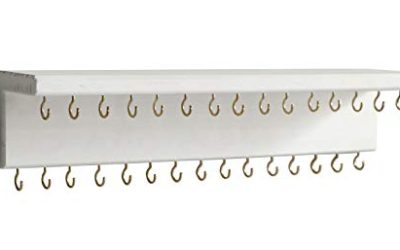
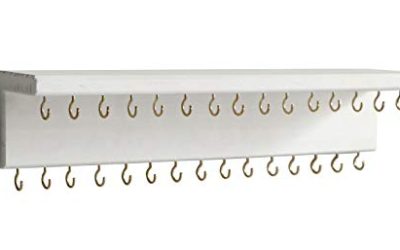
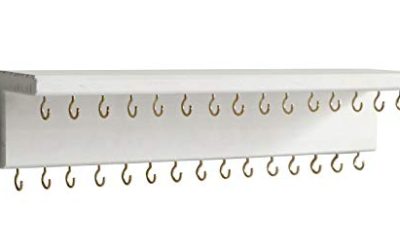
1. SANY DAYO Jewelry Organizer With 30 Hooks

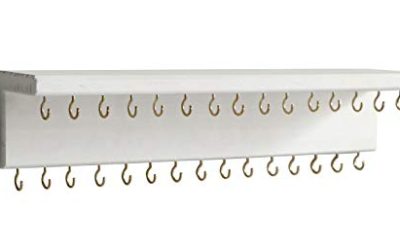
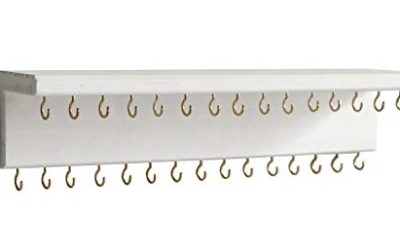
The corner around a vision board tends to collect small clutter: charging leads, a lanyard, sticky notes migrating off the board. This organizer is, plainly, a jewelry organizer — a rail with 30 hooks — and used honestly, it works as a light-duty rail mounted beside the board for exactly those light items. Hang light leads, a headset loop, keys, and a small card clipped where you can read it. It is not a power solution and should never carry power strips, charging bricks, consoles, drives, or heavy tools, which belong on a shelf or in a tray. Kept within its limits, it keeps the board’s frame clear and the goals readable.
Specs
- 30 hooks on a single rail for light items
- Wall-mounted format that sits beside a board or shelf
- Suited to light leads, lanyards, keys, and small cards
- Light-duty use only; not for bricks, strips, or heavy tools
2. HEKEE Dusk to Dawn Bulbs A19

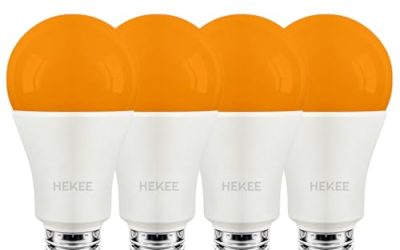
A board in a dim corner is a board nobody reads, so the corner’s ambient light matters. These are plain automatic sensor bulbs: they sense darkness and switch themselves on at dusk and off at dawn, with no app, no hub, and no schedule to set. Be clear about what they are not — they are not smart bulbs, and they are not task lighting. They will not replace the desk lamp you read and write by. What they do is keep a soft wash of light in a dim corner so the space never sits in gloom. Two cautions: in windowless rooms the sensor may read permanent night and keep the bulb on, and the bulb should be listed for enclosed fixtures before you fit one in a covered fitting.
Specs
- A19 bulb shape for standard household sockets
- Built-in dusk-to-dawn sensor; automatic on and off
- No app, hub, or programming required
- Ambient lighting only; not a task light and not a smart bulb
3. ULANZI Super Clamp

A small light aimed well makes more difference on video calls than a new camera. This clamp is a mount only — it has no light, phone, or camera of its own. Clamp it to a shelf edge or the board’s frame rail, attach your own small light or phone holder, and the board behind you stays lit and legible on calls. Two rules keep it safe: never clamp a screen, since the pressure can damage a panel, and pad the jaws when clamping finished wood or painted surfaces so the grip does not mark them. Used that way, it is the flexible joint that lets one small light serve both the desk and the call.
Specs
- Clamp-style mount for lights and phone holders
- Mount only; no light, phone, or camera included
- Fits shelf edges, rails, and desk lips within its jaw range
- Pad the jaws on finished surfaces; never clamp a screen
4. tomtoc Laptop Case

A focused corner stays focused when the day has a clear end, and this padded case is how the laptop leaves the desk instead of sprawling across it. Slide the machine in at shutdown, and the work surface — and the sightline to the board — stays clear for the evening. Be honest about the protection level: it is a padded soft case, not a hard shell, and it is not waterproof. It guards against scratches and light bumps in a bag or on a shelf, not drops onto concrete or rain on a commute. Check the internal dimensions against your laptop before ordering, since an oversized case lets the machine slide and an undersized one will not close.
Specs
- Padded soft case for everyday laptop carry and storage
- Soft protection against scratches and light bumps
- Not a hard shell and not waterproof
- Fit depends on internal dimensions; measure your laptop first
5. JoyJolt Faye Highball Glasses, 13 oz, Set of 6

The quarterly refresh and the weekly planning review both go better with a proper drink of water or iced tea in a real glass, and this set of six highball glasses covers the desk, the side table, and the occasional collaborator. They are real glassware, which means they are breakable: keep them on a side table away from electronics, pin boards, cards, and collections, never balanced on the desk edge beside the keyboard. Retire any glass with a chipped rim rather than demoting it to the desk; a chipped rim only gets worse. Six matching glasses also mean one is always clean when planning time comes around.
Specs
- Set of 6 highball glasses, 13 oz each
- Real glass; breakable and not desk-edge friendly
- Best kept on a side table, away from electronics and cards
- Retire any glass with a chipped rim
Frequently Asked Questions
Does a vision board actually help reach goals?
Only in a limited way. A board does not change outcomes by itself; it repeats a short list of goals where work starts, which can help those goals stay in mind. The reaching still happens through scheduled time and finished tasks. Think of the board as the cover of a plan, useful only when the plan exists underneath it.
How many goals should go on one board?
Three to five is the range that stays readable. Each goal should be specific enough to carry a next action written beneath it. More than that and the board turns into a collage the eye stops reading within a week. If a goal cannot be pictured or summarized in a line, it probably needs planning time before it needs wall space.
Where should a vision board hang in a home office?
Where the workday starts: facing the chair, beside the monitor, at seated eye level, close enough to read without leaning. Avoid the wall behind you, where it only decorates calls, and the wall behind a door, where it stays hidden. Check the camera view as well, and keep anything private out of the frame entirely.
How often should a vision board be updated?
About once a quarter works for most people. Take everything down, keep only what still matters, add the new season’s goals, and leave some blank space. Removing finished or abandoned goals matters as much as adding new ones; a board full of last year’s aims quietly argues for the wrong work.
Final Verdict
A vision board earns its place in a work corner when it is treated as a reminder with a maintenance schedule: three to five specific goals, each with a next action, placed where the workday starts, kept free of anything private, and refreshed every quarter. Skip the board entirely if there is no written plan beneath it — the calendar and the task list come first. Around the board, the five picks here keep the corner functional: the SANY DAYO rail for light clutter, the HEKEE bulbs for effortless ambient light, the ULANZI clamp for a better-lit call, the tomtoc case for a clean shutdown, and the JoyJolt glasses for the planning sessions themselves. Small corner, clear sightline, honest expectations.
Product and ASIN Reference
| Product | ASIN |
|---|---|
| SANY DAYO jewelry organizer 30 hooks | B07QFZSVQW |
| HEKEE dusk to dawn bulbs A19 | B07HGZMYZ4 |
| ULANZI super clamp | B09C882D4M |
| tomtoc laptop case | B073TVX735 |
| JoyJolt Faye highball glasses 13 oz 6 pack | B08BB62QWT |
FAQ
Does a vision board actually help reach goals?
How many goals should go on one board?
Where should a vision board hang in a home office?
How often should a vision board be updated?
More from Amazon
Programs that pair well with the guide above. Offers and eligibility are set by Amazon and may change.
Free shipping on eligible items, Prime Video and more. Eligible new members can start with a free trial.
Start a Prime free trialAudiobooks and podcasts to listen to on the go. Eligible new members can start with a free trial.
Try Audible freeAd-free music streaming. Eligible new subscribers can start with a free trial.
Try Music Unlimited freeA free business account with business pricing and bulk-buying tools for work, shop or home office.
Create a business accountAs an Amazon Associate we earn from qualifying purchases.

Write Your Review
No reviews yet. Be the first to share your experience!