
Key takeaways
- Cable picks for a music practice desk corner, with fixed lead paths for metronome and tuner cables, steady light, and an honest setup routine.
A music practice corner works best when the desk disappears into the background. The sheet music sits flat on its stand, the metronome is where a hand expects it, and the tuner lead is plugged in before the first note rather than hunted for under a chair. Most practice desks fail on one small thing: cables. Metronome leads, tuner cables, a tablet charger, and a lamp cord all drift across the surface until the corner looks like a drawer emptied itself. The fix is not a complicated system. It is a set of fixed paths: every lead in the practice routine runs along the back edge of the desk, in the same route every day, so it can be found by touch and never crosses the music stand, the instrument case, or the floor.
That honest framing matters before any product is discussed. Fixed cable paths keep leads findable and the floor clear. They do not change how an instrument sounds, improve timing, or make a difficult passage easier. What they do is remove the two minutes of untangling and searching that eat into a short practice session, and keep a trailing lead from being stepped on or rolled over by a chair. The five picks below support that simple idea: a parking rail for spare leads, plain automatic room light, a clamp that holds a small lamp at a fixed angle, a padded case for the laptop or tablet, and a modest hydration option for longer sessions.
As an Amazon Associate, we earn from qualifying purchases.
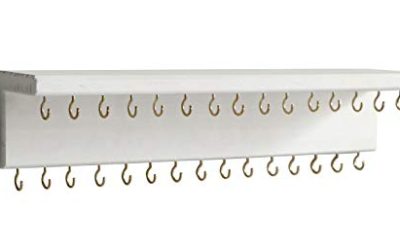
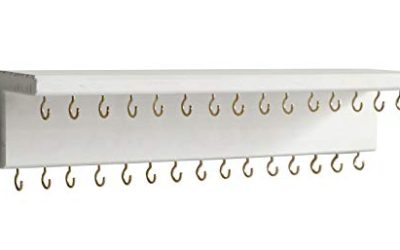
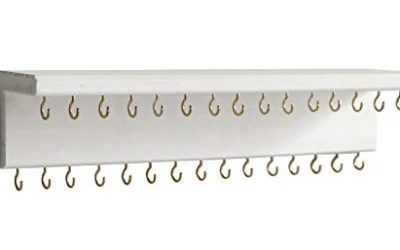
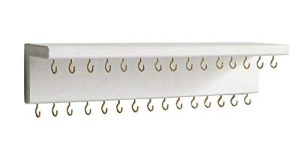
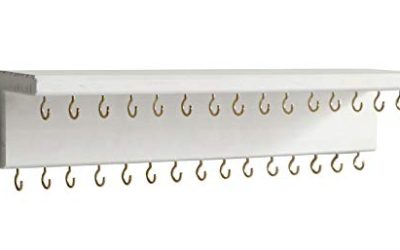
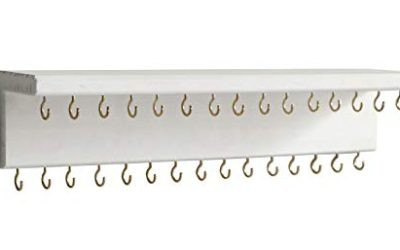
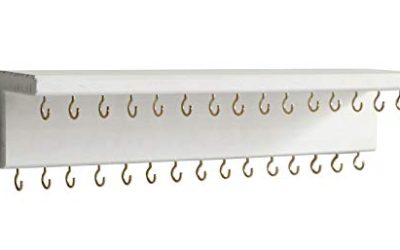
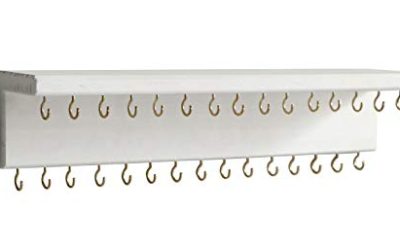
SANY DAYO Jewelry Organizer With 30 Hooks

This product is, plainly, a wall-mounted jewelry organizer with thirty small hooks, designed for necklaces and bracelets. In a practice desk corner it earns its place as a light-duty parking rail for spare leads. Short patch cables, a spare tuner lead, a coiled charging cable, and earbuds can each hang on their own hook along the wall beside the desk, so the lead needed for a session is visible at a glance instead of buried in a box. Keeping spares parked in fixed spots is the whole point: working leads stay in their back-edge paths, and backups hang where they can be reached without moving the music stand.
The limits need to be stated plainly. The hooks are sized and spaced for jewelry, so they suit light cables and small accessories only. Instruments never hang from this rail. Amplifiers never hang from this rail. Neither do heavy power supplies or anything with real weight, because the organizer was not built for loads like that and the hooks would bend or pull free. Treat it as a parking spot for light, coiled leads and nothing more, and it does that one small job neatly.
Specs
- Wall-mounted organizer with 30 individual hooks
- Designed for necklaces, bracelets, and small accessories
- Repurposed here as a light-duty parking rail for spare leads
- Best for short, light cables and earbuds
- Not rated for instruments, amplifiers, or heavy power supplies
HEKEE Dusk to Dawn Bulbs A19

These are plain A19 bulbs with a built-in light sensor, so each bulb switches itself on at dusk and off at dawn without a timer, an app, or a smart home hub. In a practice room they handle the background light: the general evening glow that means the corner is usable the moment practice time arrives, with no switch to think about. That is the entire job. They are not smart bulbs, they cannot be dimmed or scheduled from a phone, and they are not the practice light. Reading sheet music calls for a dedicated lamp aimed at the stand, covered by the clamp pick below, because sensor bulbs give ambient light rather than focused, even illumination.
Two honest caveats belong with any sensor bulb. First, the sensor responds to the light around the bulb itself, so in a shaded fixture or a dim room, a bulb may stay on longer than expected; placement matters. Second, these are automatic bulbs with a fixed behavior, so anyone who wants dimming or full manual control will find them too simple, and that simplicity is the trade being made. What they offer is reliability: the room light handles itself, the same way every evening, and the player can spend attention on the music instead of the room.
Specs
- A19 bulb shape for standard household sockets
- Built-in dusk-to-dawn light sensor, automatic on and off
- No app, hub, or timer required
- Plain automatic bulbs, not smart bulbs or task lighting
- Best for general room light, not for reading sheet music
ULANZI Super Clamp

The ULANZI super clamp is a mount, and only a mount. It includes no light, no phone, and no camera of its own. Its job in this setup is to grip the edge of the desk or a shelf and hold a small lamp at a fixed angle over the music stand, so the light that practice depends on stays in the same position session after session. A clamp beats a freestanding lamp base on a crowded practice desk for two reasons: it takes no surface space away from the stand and the instrument case, and once tightened it does not get knocked off line every time the desk is bumped. The lamp still has to be bought separately, sized to what the clamp can hold, and the clamp’s jaw and load limits should be checked before pairing the two.
One rule is absolute in this corner: the clamp is never clamped to an instrument. Not to a guitar neck, not to a stand tube it was not meant for, not to the edge of a keyboard casing. Instrument finishes scratch, thin parts flex, and a clamp under spring tension is the wrong thing to attach to something valuable and resonant. Clamp it to the desk edge or a shelf, and keep it on furniture only. Used that way, it quietly solves the drifting-lamp problem.
Specs
- Clamp-style mount for desks, shelves, and poles
- Mount only: includes no light, phone, or camera
- Holds a small lamp at a fixed, repeatable angle
- Check jaw width and load limits against the lamp being mounted
- Furniture only: never clamp it to an instrument
tomtoc Laptop Case

Practice desks increasingly share space with a laptop or tablet that runs the metronome app, the tuner, and lesson videos. When the session ends, that device needs a parking spot that is not the middle of the desk, and this padded soft case from tomtoc is that spot. It cushions the device against the small knocks of daily desk life and slides onto a shelf so the surface is clear for the instrument the next day. A case also makes the corner portable: the digital side of practice can be carried to a lesson in one grab.
The honest limits are simple. This is a padded soft case, not a hard shell, so it softens bumps and scratches rather than protecting against drops or crushing weight, and it is not waterproof. Fit matters more than anything: check the internal dimensions against the actual laptop or tablet, including its thickness with any cover fitted, because a case that is slightly too small is a case that will not be used.
Specs
- Padded soft case for a laptop or tablet
- Cushions against everyday bumps and scratches
- Soft case only: not a hard shell and not waterproof
- Room for the device plus small flat accessories
- Check internal dimensions against the device before ordering
Hi-Lyte Electrolyte Drops

Longer practice sessions, especially in a warm room, leave some players reaching for more than plain water. These electrolyte drops are added to a glass or bottle of water following the directions on the label, and that is the full extent of the claim that should be made for them. They are not a medicine, not an energy product, and not a treatment for anything. They will not steady a bow hand, improve intonation, or shorten the time a hard piece takes to learn. For most people, plain water is completely fine, and plenty of players will never want drops at all.
That modesty is exactly why they fit this list without overselling. A small bottle lives in the desk drawer and is there for the sessions where a player prefers it, prepared on a side table rather than anywhere near the sheet music, since drinks and paper notation should never share a surface. Anyone with a medical condition, a restricted diet, or medication that affects fluid or mineral intake should check with a clinician before using a product like this, and the label directions govern how much is used.
Specs
- Liquid electrolyte drops added to water
- Use only as directed on the product label
- Not a medicine, energy product, or treatment
- Plain water remains fine for most people and most sessions
- Consult a clinician first with medical conditions or restricted diets
How to Choose
Start with the paths, not the products. Decide which leads belong to the daily routine: usually the tuner lead, the metronome or its charger, and one device charging cable. Give each a fixed route along the back edge of the desk, secured loosely so it can be unplugged without pulling the whole run apart, and confirm that no lead crosses the floor, hangs off the front edge, or passes under the music stand where it can be kicked loose. Everything else is a spare, and spares belong parked on the rail.
Next, separate the two lighting jobs. Room light is background: it makes the space feel ready, and plain sensor bulbs handle it automatically. Practice light is a task: it must fall evenly on the full page of sheet music without glare or a shadow from the player’s own hand, and it must stay at the same angle every session, which is why a clamped lamp beats a movable one. Judging any bulb or lamp against the wrong job leads to disappointment, so name the job first.
Then give the screen a home. The laptop or tablet used for tuning apps should park in its case, off the main surface, so the desk’s center belongs to the stand and the instrument. Finally, measure before ordering: wall space for the rail, desk edge thickness for the clamp jaw, and device dimensions for the case.
FAQ
Do fixed cable paths change how an instrument sounds?
No. Cable routing is about tidiness and safety, not tone. Fixed paths keep leads findable, keep the floor clear of trip hazards, and stop cables from being crushed by chair legs or case lids. The sound comes from the instrument, the player, and the room, and no organizer, clamp, or bulb in this guide changes any of that.
Can the hook rail hold an instrument or amplifier between sessions?
It cannot, and it should never be asked to. The organizer is a jewelry product with small hooks meant for light items. In this setup it parks light spare leads, earbuds, and charging cords only. Instruments belong in their cases or on proper stands, and amplifiers belong on the floor or a sturdy shelf.
Are sensor bulbs enough light for reading sheet music?
Not on their own. Dusk-to-dawn bulbs provide general room light that turns itself on in the evening, which is useful background, but reading notation needs a dedicated lamp aimed at the stand at a fixed angle. That is why this setup pairs the bulbs with a clamped lamp mount: the bulbs handle the room, and the lamp handles the page.
Where should drinks stay during practice?
On a side table, never on the practice desk itself. Sheet music, instruments, and electronics all lose to a spilled glass. A drink belongs within reach but off the working surface, and the bottle of drops itself lives in a drawer away from the music.
Final Verdict
A good practice corner is a quiet one, and quiet here means nothing competes with the music for attention. The five picks in this guide build that quiet in a specific order: spare leads parked visibly on a light-duty rail, room light that switches itself on each evening, a clamp that holds the real practice lamp at one fixed angle over the stand, a padded case that gives the laptop or tablet a home off the desk, and a modest hydration option kept honestly in its place. None of them changes the sound, the difficulty, or the discipline of practice. What they change is the two minutes before the first note and the state of the desk after the last one. That is all it promises.
Product and ASIN Reference
| Product | ASIN |
|---|---|
| SANY DAYO jewelry organizer 30 hooks | B07QFZSVQW |
| HEKEE dusk to dawn bulbs A19 | B07HGZMYZ4 |
| ULANZI super clamp | B09C882D4M |
| tomtoc laptop case | B073TVX735 |
| Hi-Lyte electrolyte drops | B01MXDAHIB |
FAQ
Do fixed cable paths change how an instrument sounds?
Can the hook rail hold an instrument or amplifier between sessions?
Are sensor bulbs enough light for reading sheet music?
Where should drinks stay during practice?
More from Amazon
Programs that pair well with the guide above. Offers and eligibility are set by Amazon and may change.
Free shipping on eligible items, Prime Video and more. Eligible new members can start with a free trial.
Start a Prime free trialAudiobooks and podcasts to listen to on the go. Eligible new members can start with a free trial.
Try Audible freeAd-free music streaming. Eligible new subscribers can start with a free trial.
Try Music Unlimited freeA free business account with business pricing and bulk-buying tools for work, shop or home office.
Create a business accountAs an Amazon Associate we earn from qualifying purchases.
Write Your Review
No reviews yet. Be the first to share your experience!