
Key takeaways
- Floor cord cover picks for a corner desk walkway: five honest support picks, flat-cover safety rules, and why rerouting the cable always wins.
A corner desk often ends up in the one spot where the outlet is on the wrong wall. The desk sits in the quiet corner, the nearest socket sits across the walkway, and a single cable run has to cross the floor. That crossing is the problem. A loose cable across a walkway gets stepped on, caught by chair casters, and tugged at exactly the wrong moment. A low floor cord cover is the standard way to protect that one unavoidable run: it sits flat, its edges taper down to the floor, and it turns a trip hazard into a visible, stable bridge that feet and wheels can cross safely.
This guide takes an honest position from the start. A cord cover reduces a trip hazard, but it never makes a floor run ideal. The better fix is always to reroute the cable so it never crosses the floor at all: along the baseboard, behind furniture, or from a closer outlet. A cover is the right answer only for the run that genuinely cannot be moved. The five picks below are support products that make a covered crossing safer and tidier to live with: a light-duty rail, automatic walkway lighting, a device mount, a padded laptop case, and a modest hydration option. None of them replaces the cover itself, and none replaces rerouting when rerouting is possible.
As an Amazon Associate, we earn from qualifying purchases.
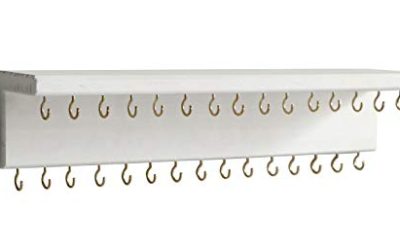
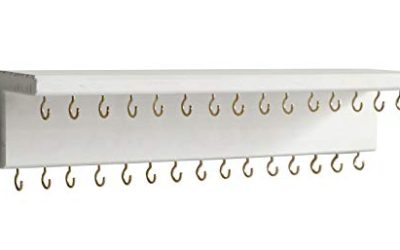
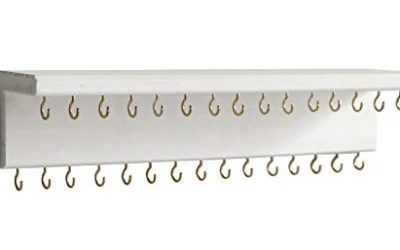
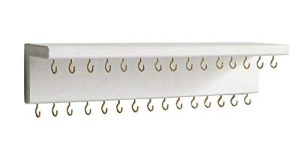
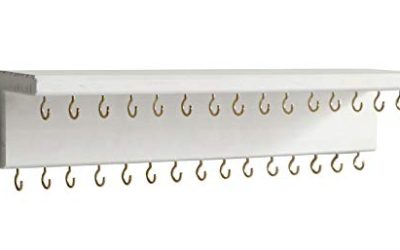
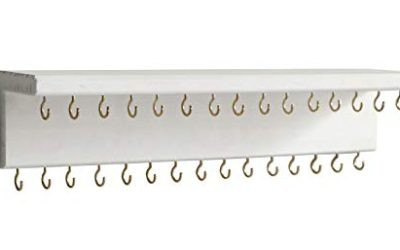
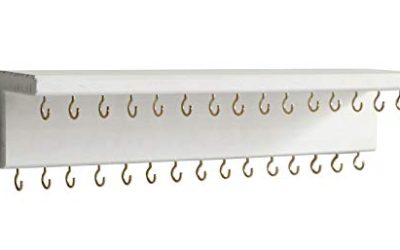
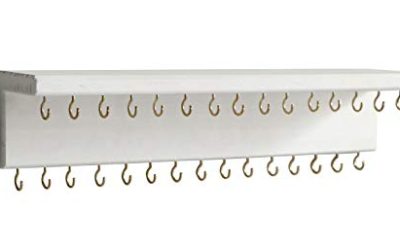
SANY DAYO Jewelry Organizer With 30 Hooks as a Light-Duty Desk Rail
At the desk end of a floor run, the main cable is rarely the only problem. Small leads multiply: a phone charging lead, a USB cable for a drive, a note about which switch controls what. The SANY DAYO organizer is, plainly, a jewelry organizer with 30 hooks, and the honest way to use it here is as a light-duty rail. Hung on the wall or desk side near where the floor run arrives, its hooks give light leads and small notes a home off the desk surface, so the area where the covered cable comes up stays clear instead of becoming a tangle.
The limits matter as much as the uses. This rail is for light leads and paper notes only. It should never be asked to hold power strips, charging bricks, or anything heavy; those belong on the desk or in a proper cable tray with real load capacity. Used within those limits, it keeps loose ends tidy where the floor run meets the desk, where clutter collects and a stray lead can get pulled into the walkway.
Specs
- Product type: jewelry organizer with 30 hooks
- Best use here: light-duty rail for light leads and small notes
- Placement: wall or desk side near the desk end of the floor run
- Load guidance: light items only; no power strips, bricks, or heavy gear
HEKEE Dusk to Dawn Bulbs A19 for a Walkway That Stays Lit
A covered cable crossing is safest when people can see it. The HEKEE bulbs are plain automatic dusk-to-dawn sensor bulbs: a built-in sensor turns them on when the room darkens and off when daylight returns. Where the walkway crosses to the corner desk, that means the crossing is lit in the evening without anyone remembering a switch, which is exactly when most trips over floor cables happen.
These bulbs need honest framing. They are not smart bulbs: there is no app, no scheduling, and no color control. They are also not task lighting; a focused desk lamp does that job, and a sensor bulb in a ceiling fixture is background light only. Two practical notes come with the sensor design. In a windowless room, the sensor may read the space as permanently dark and keep the bulb on, which wastes energy and shortens bulb life. And before using any bulb in an enclosed fixture, check that it is rated for enclosed use, since trapped heat is hard on electronics. Within those limits, a sensor bulb over the walkway is a simple, set-and-forget layer of safety.
Specs
- Product type: A19 bulbs with a built-in dusk-to-dawn sensor
- Behavior: turns on at dusk, off at daylight, automatically
- Best use here: background light over the walkway and crossing
- Not suitable as: smart lighting or focused task lighting
- Check first: enclosed-fixture rating; windowless-room behavior
ULANZI Super Clamp for Keeping Small Devices Off the Floor
Every device that lives on the floor near a cable crossing is one more thing to trip over or knock into the run. The ULANZI super clamp addresses that by moving a small device up onto the desk edge, a shelf, or a pole. Precision matters here: it is a mount only. It includes no light, no phone, and no camera of its own; it simply grips and holds whatever compatible device is attached to it.
Used well, the clamp keeps a small lamp, a phone on a separate holder, or a similar light accessory up at desk height, with its lead dropping straight down behind the desk instead of trailing across the floor toward the crossing. That short, vertical routing is the real benefit: the fewer cables traveling horizontally at floor level, the less work the cord cover has to do. Check the jaw range against the desk edge thickness first, and keep the mounted weight modest.
Specs
- Product type: super clamp mount for small devices
- Includes: the clamp only; no light, phone, or camera included
- Best use here: raising a small device to desk height near the corner
- Routing benefit: short vertical lead drops instead of floor trails
- Check first: jaw range versus desk edge thickness; mounted weight
tomtoc Laptop Case for Clearing the Desk Route
A corner desk with a floor cable run usually serves double duty: work during the day, and a clear surface the rest of the time. The tomtoc laptop case supports that rhythm by giving the laptop a padded home away from the desk, so the desk end of the run stays clear and the laptop is not sitting at the edge where a tugged cable can pull things down. It is a padded soft case, and it should be chosen and used as one.
That means two honest limits. It is not a hard shell, so it protects against bumps, scratches, and light knocks rather than crushing force or serious drops. And it is not waterproof, so it is not the case to carry through heavy rain without extra protection. Before ordering, check the internal dimensions against the laptop’s measurements, including any sleeve or hub it travels with; a case slightly too small is a daily annoyance, and one far too large lets the machine slide around. Sized correctly, the case makes the end of the workday simple: laptop away, desk clear, crossing easy to check at a glance.
Specs
- Product type: padded soft laptop case
- Protection level: bumps and scratches; not a hard shell
- Water resistance: not waterproof; keep out of heavy rain
- Best use here: storing the laptop off the desk between sessions
- Check first: internal dimensions against the laptop and accessories
Hi-Lyte Electrolyte Drops for Long Sessions at the Corner Desk
The last pick is the smallest part of this setup and deserves the most modest framing. Hi-Lyte electrolyte drops add electrolytes to a glass of water during long desk sessions, for people who prefer that option. They are not a medicine, not an energy product, and not a treatment for anything, and nothing here should be read that way. For most people, plain water is a perfectly fine choice at a desk, and the drops are simply an alternative for those who want it.
Anyone considering electrolyte products should follow the directions on the label exactly, and should not treat more as better. People with medical conditions, and anyone on a restricted diet that limits sodium, potassium, or other minerals, should talk with a clinician before using electrolyte drops regularly. Kept in that modest place, the drops are a small comfort item for the corner desk, no more and no less.
Specs
- Product type: electrolyte drops added to drinking water
- Best use here: optional hydration choice for long desk sessions
- Claims: none; not a medicine, energy product, or treatment
- Plain water: a fine choice for most people
- Guidance: follow label directions; clinician note for conditions or restricted diets
How to Choose
Start with the route, not the products. Walk the path from the outlet to the desk and ask whether the cable truly has to cross the floor. Moving the desk, using a closer outlet, or running the cable along the baseboard removes the hazard entirely, and any of those beats the best cover. Only when the crossing is unavoidable does a cord cover earn its place.
When a cover is the answer, choose it by fit and profile. It should sit flat with tapered edges that feet and chair casters can roll over without catching, run long enough to cross the walkway fully with no cable exposed at either end, and fit the cables inside without forcing a tight bend. Nothing should ever be taped over a cover, and a rug should not be laid over it either; tape and rugs hide the cover, lift its edges, and recreate the trip hazard it was meant to fix.
Respect the heat rule. No heat-producing charging bricks or power supplies should be sealed inside a closed cover, where warmth builds up with nowhere to go. Bricks belong in open air at the desk end. If a setup seems to need powered gear mid-run, the layout is wrong: reroute, relocate the gear, or ask an electrician about adding an outlet.
Then add the support picks in order of need. Light the walkway first if evenings are when the crossing gets used. Clear the desk end with the rail, raise small devices with the clamp, and give the laptop its case so the desk clears fully. Treat the drops as an optional comfort. Finally, re-check the run monthly: cover flat, edges down, nothing heavy on the rail.
FAQ
Is a cord cover as good as rerouting the cable?
No. A cover reduces the trip hazard of a cable that must cross the floor, but the run is still there underfoot. Rerouting along a wall or from a closer outlet removes the hazard completely, so rerouting is always the better fix when possible.
Can tape or a rug go over a cord cover?
No. Tape can lift, shift, and leave the cover’s edges raised, and a rug hides the cover so people cannot see where to step. Both recreate the trip risk. A cover should stay visible, sit flat with tapered edges down, and be easy to lift.
Can a charging brick or power strip sit inside the cover?
No. Heat-producing bricks and power supplies should never be sealed inside a closed cover, because the warmth has nowhere to escape. Keep bricks in open air at the desk end, and if a layout seems to need one mid-run, reroute or ask an electrician about a better outlet position.
How often should the covered run be checked?
A quick look once a month is enough for most homes. Confirm the cover still sits flat, the edges have not curled, no extra cables have been added beyond its capacity, and the desk end is still clear.
Final Verdict
For the corner desk whose one cable run truly cannot move, a low floor cord cover with tapered edges is a sensible, honest compromise: it flattens the hazard and keeps the cable protected. It is still a compromise. The moment the room changes, the first question should be whether the cable can be rerouted off the floor for good.
The five picks support that covered crossing without pretending to be more than they are. The SANY DAYO organizer works as a light-duty rail for light leads and notes, never for strips or bricks. The HEKEE sensor bulbs keep the walkway lit after dark, as plain automatic background light rather than smart or task lighting. The ULANZI clamp, a mount only with no device of its own, lifts small gear off the floor so leads drop vertically. The tomtoc padded case clears the laptop off the desk, within its honest limits as a soft, non-waterproof case sized by internal dimensions. And the Hi-Lyte drops are an optional, modest hydration choice, with plain water fine for most people and label directions respected. Together with a flat cover and a monthly once-over, they make the unavoidable crossing about as safe and tidy as a floor run can be.
Product and ASIN Reference
| Product | ASIN |
|---|---|
| SANY DAYO jewelry organizer 30 hooks | B07QFZSVQW |
| HEKEE dusk to dawn bulbs A19 | B07HGZMYZ4 |
| ULANZI super clamp | B09C882D4M |
| tomtoc laptop case | B073TVX735 |
| Hi-Lyte electrolyte drops | B01MXDAHIB |
FAQ
Is a cord cover as good as rerouting the cable?
Can tape or a rug go over a cord cover?
Can a charging brick or power strip sit inside the cover?
How often should the covered run be checked?
More from Amazon
Programs that pair well with the guide above. Offers and eligibility are set by Amazon and may change.
Free shipping on eligible items, Prime Video and more. Eligible new members can start with a free trial.
Start a Prime free trialAudiobooks and podcasts to listen to on the go. Eligible new members can start with a free trial.
Try Audible freeAd-free music streaming. Eligible new subscribers can start with a free trial.
Try Music Unlimited freeA free business account with business pricing and bulk-buying tools for work, shop or home office.
Create a business accountAs an Amazon Associate we earn from qualifying purchases.
Write Your Review
No reviews yet. Be the first to share your experience!